DPDPA Penalties Up to ₹250 Crore: The Real Cost of Waiting
July 2, 2026
December 17, 2025
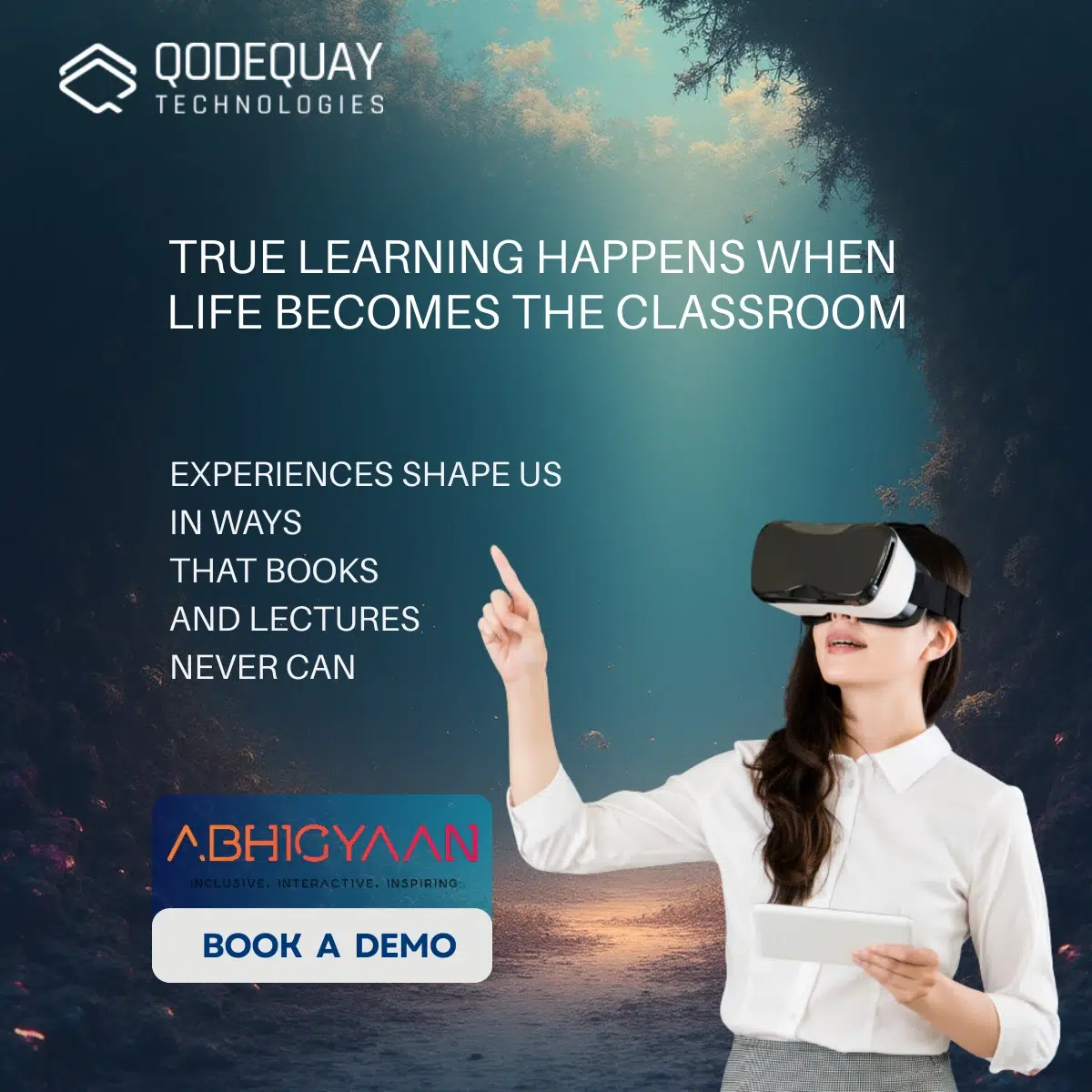
Experiential learning with VR is a teaching approach where students learn by experiencing concepts through immersive virtual environments rather than only reading or listening.
For schools, teachers, and parents, this matters because traditional education methods struggle to keep children engaged, confident, and curious. Many students memorize information for exams but forget it soon after. VR changes this by turning lessons into experiences that students can see, hear, and interact with.
Instead of learning about a concept, children step inside it. This approach builds understanding, confidence, and real world skills that go beyond textbooks.
In this article, you will learn how VR enables experiential learning, why the human brain retains immersive experiences better, how teachers can use VR effectively, what parents should know, and how VR is reshaping modern education.
Experiential learning is learning through direct experience, reflection, and interaction rather than passive consumption of information. Children learn best when they actively participate in the learning process.
Traditional learning often follows this pattern:
Listen to a lecture
Read a textbook
Memorize for exams
Experiential learning follows a different path:
Experience the concept
Interact with it
Reflect and apply understanding
VR enhances experiential learning by making experiences possible even when real world access is limited, unsafe, or impractical.
Virtual reality enables experiential learning by creating realistic, interactive environments aligned with school subjects.
Using VR headsets and 3D content, students can explore topics as if they were physically present.
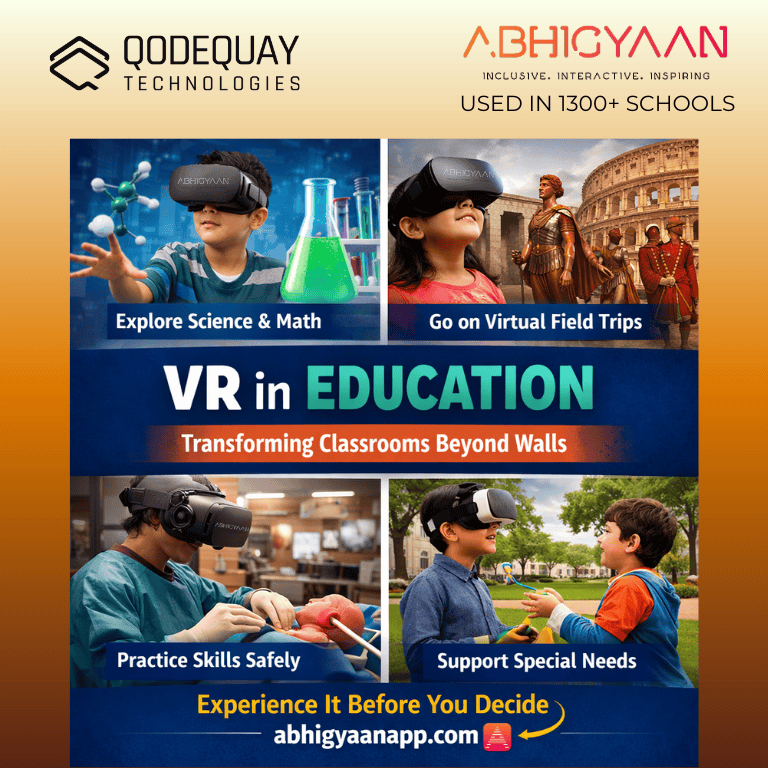
In classrooms, VR is used for:
Virtual science labs
Historical and cultural explorations
Geography and environmental studies
Mathematics and spatial learning
These experiences allow students to learn by doing, not just observing.
Immersive learning works better because the brain retains information more effectively when multiple senses are engaged at the same time. The human brain is wired to remember experiences, not isolated facts.
When students read a textbook, only limited parts of the brain are activated. When they enter a VR environment:
Visual senses are engaged
Auditory cues provide context
Movement and interaction activate motor pathways
This multi sensory stimulation strengthens neural connections, making learning more memorable and meaningful.
Sensory engagement improves memory by linking information to emotions and spatial awareness. Neuroscience shows that the brain stores experiential memories more deeply than abstract information.
In VR based learning:
Concepts are associated with movement and space
Emotions like curiosity and excitement are triggered
Learning feels personal rather than forced
This is why students often remember VR lessons long after traditional lectures fade.
Emotion plays a critical role because emotionally engaging experiences are remembered longer and understood better. Boredom shuts down attention. Curiosity and excitement open it.
VR helps by:
Reducing fear of failure
Encouraging exploration without pressure
Making learning enjoyable rather than stressful
When students feel safe and engaged, their brains are more receptive to learning.
VR builds confidence by allowing students to explore, make mistakes, and learn at their own pace. There is no public embarrassment or pressure to be perfect.
Creativity grows when students:
Explore environments freely
Solve problems interactively
Visualize ideas beyond textbooks
This is especially helpful for students who struggle in traditional classrooms but thrive in hands on environments.
Teachers can use VR as a powerful support tool to explain, reinforce, and expand classroom lessons. VR does not replace teachers, it enhances their ability to teach.
Teachers can use VR to:
Introduce new topics visually
Clarify difficult concepts
Encourage discussion after immersive sessions
Engage students with different learning styles
VR gives teachers a shared experience to build deeper classroom conversations.
Yes, VR supports visual, auditory, and kinesthetic learners simultaneously. Every classroom includes children who learn in different ways.
VR supports inclusivity by:
Showing concepts visually
Explaining ideas through guided audio
Allowing physical interaction and exploration
This helps reduce learning gaps and ensures more students stay engaged.
Parents benefit because experiential learning with VR leads to better understanding, stronger confidence, and improved academic outcomes.
Children who enjoy learning are more motivated and less anxious.
For parents, VR offers:
Reduced reliance on rote memorization
Safer alternatives to physical experiments
Clear improvement in concept clarity
Parents also notice that children talk more enthusiastically about what they learn.
When used in moderation and under supervision, VR is safe and appropriate for school aged children.
Schools follow age guidelines and structured usage plans.
Responsible VR use includes:
Short learning sessions
Curriculum aligned content
Teacher supervision
Balance with physical and social activities
Used thoughtfully, VR enhances education without replacing essential classroom interaction.
VR prepares students for real world skills by encouraging problem solving, critical thinking, and decision making.
Instead of memorizing answers, students learn how to explore and apply knowledge.
These skills include:
Observation and analysis
Creative thinking
Confidence in unfamiliar situations
Better spatial and conceptual understanding
These abilities are essential for future academic and career success.
The main challenges include planning, teacher training, and content selection.
VR works best when aligned with educational goals.
Common considerations include:
Choosing curriculum relevant content
Training teachers to guide VR sessions
Managing screen time responsibly
With proper planning, these challenges are manageable and worthwhile.
The future of education with VR is immersive, student centered, and experience driven.
As technology becomes more accessible, VR will become a regular part of school learning.
Future developments include:
Deeper curriculum integration
Personalized immersive lessons
Collaborative virtual classrooms
Greater focus on understanding over memorization
Experiential learning will move from optional enrichment to essential practice.
Experiential learning with VR helps students learn by experiencing concepts
The brain retains immersive, multi sensory learning better
VR increases engagement, confidence, and creativity
Teachers gain powerful tools to explain complex topics
Parents see improved understanding and reduced learning stress
Thoughtful implementation ensures safe and effective learning
Education becomes meaningful when students are actively involved in their learning. Experiential learning with VR transforms education by engaging the brain, emotions, and senses together. It helps children understand deeply, remember longer, and learn with confidence.
At Qodequay, design leads every solution. Technology follows purpose. By combining human centered design with immersive technologies like virtual reality, Qodequay helps education providers solve real learning challenges, using technology as the enabler for better outcomes.
10 Reasons Why Your School Needs an Abhigyaan VR Demo NOW!
👉 Book your Abhigyaan VR demo today: abhigyaanapp.com

As the CEO and Founder of Qodequay Technologies, I bring over 20 years of expertise in design thinking, consulting, and digital transformation. Our mission is to merge cutting-edge technologies like AI, Metaverse, AR/VR/MR, and Blockchain with human-centered design, serving global enterprises across the USA, Europe, India, and Australia. I specialize in creating impactful digital solutions, mentoring emerging designers, and leveraging data science to empower underserved communities in rural India. With a credential in Human-Centered Design and extensive experience in guiding product innovation, I’m dedicated to revolutionizing the digital landscape with visionary solutions.
Follow the expert :


July 2, 2026
July 2, 2026
July 2, 2026
July 2, 2026

July 2, 2026
Monthly insights on AI, VR and DPDPA compliance — straight from our team to your inbox.
Free 30-minute consultation with our team — or see our products in action.