How long can an Indian company keep customer data in its CRM under DPDPA?
October 22, 2026
January 14, 2026
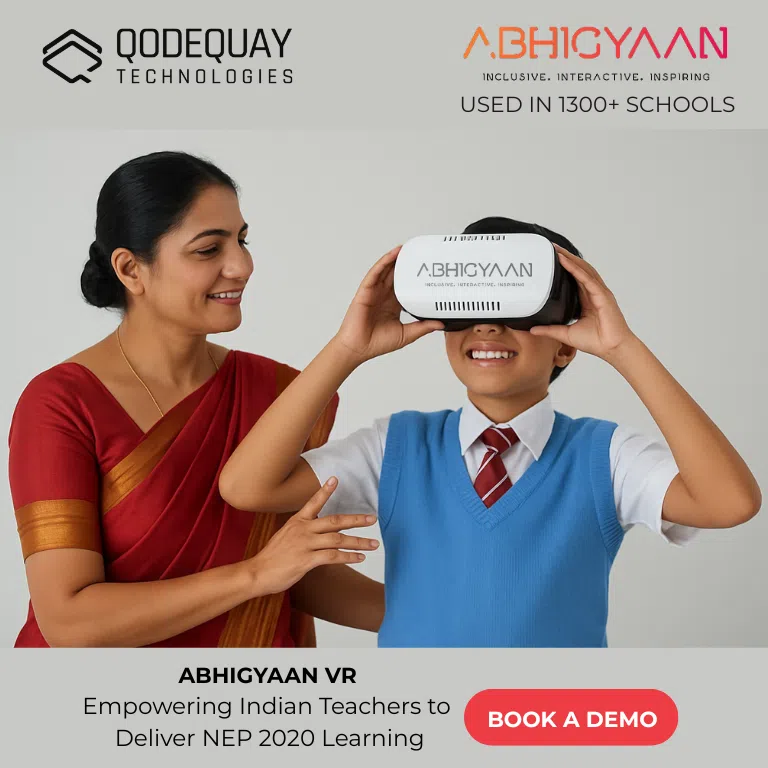
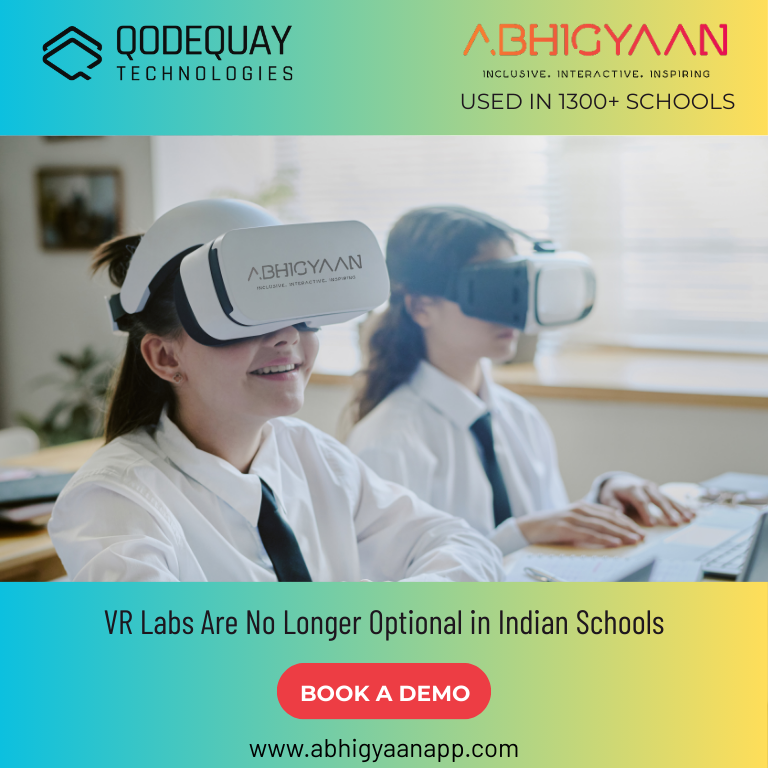
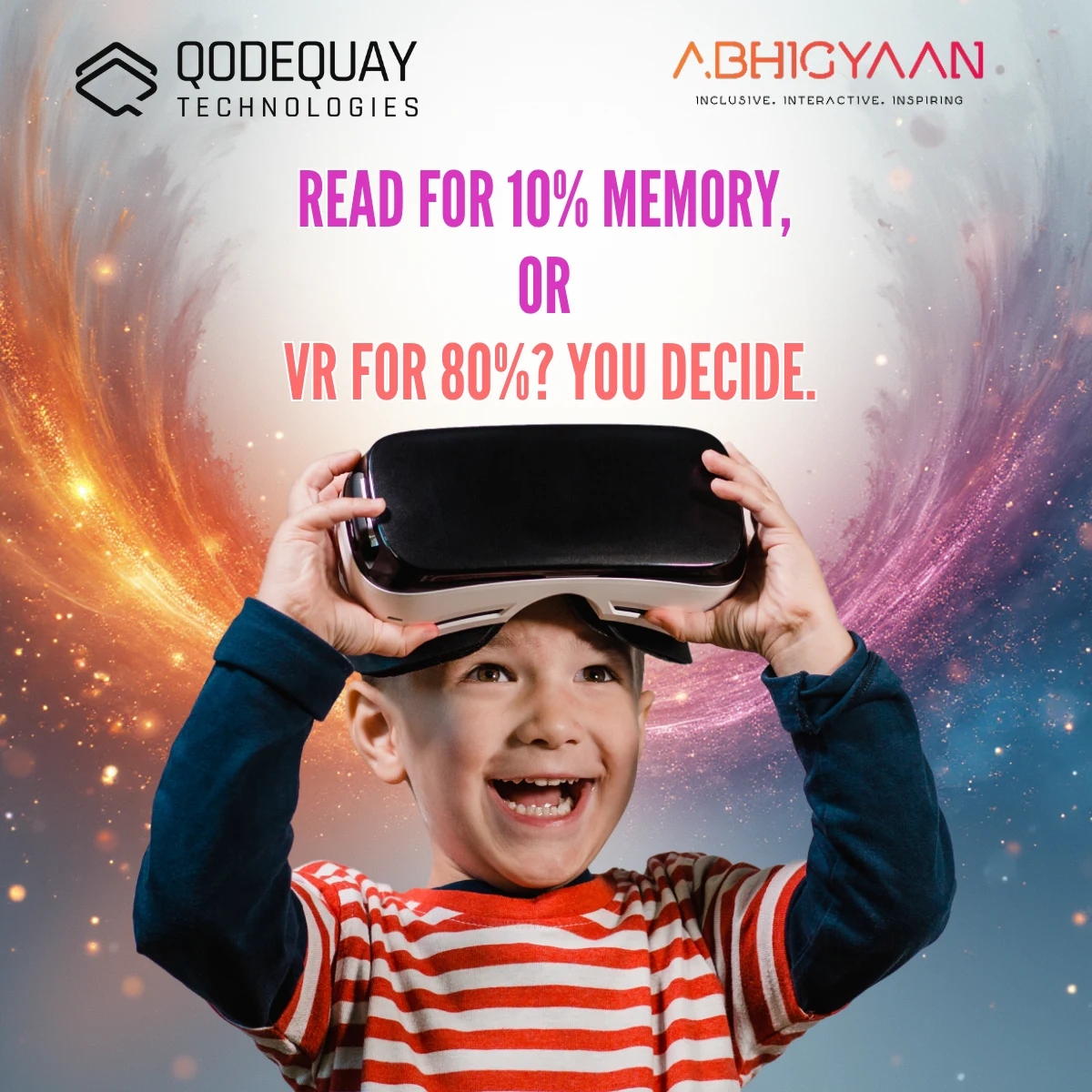
VR in Education is no longer about future possibilities, it is about present accountability. NEP 2020 has clearly shifted expectations for Indian schools. Learning must be experiential. Teachers must focus on competencies, not content overload. Students must understand, not memorize.
The challenge for principals and school leaders is simple: policies demand change, but time, training, and infrastructure are limited. This is where VR steps in, not as a replacement for teachers, but as a tool that finally works at classroom scale.
This article explains how VR empowers teachers, helps schools meet NEP 2020 goals, and why experiencing a live demo matters before making any decision.
VR empowers teachers by reducing explanation effort and increasing student understanding.
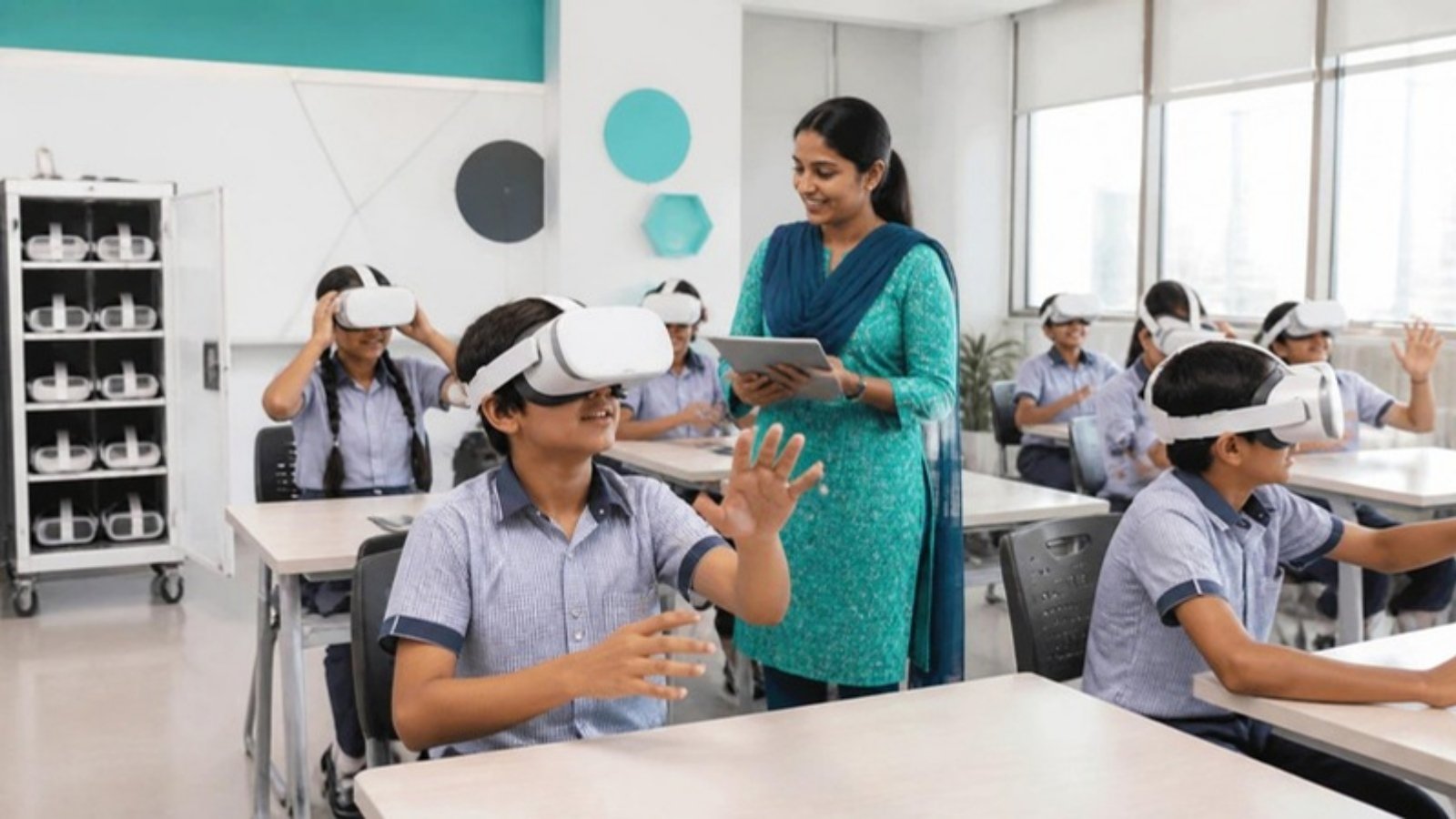
Instead of repeating the same concept multiple times, teachers can let students experience it once in VR. A complex biology process, a physics phenomenon, or a historical event becomes visual and interactive. Teachers move from explaining to guiding, observing, and reinforcing.
This directly supports NEP 2020’s vision of teachers as facilitators of learning rather than content deliverers.
VR supports NEP 2020 by making experiential learning practical, measurable, and scalable.
NEP 2020 calls for competency-based education, multidisciplinary thinking, and reduced rote learning. VR addresses all three:
Students learn by doing, not copying
Concepts are applied in simulated real-world scenarios
Learning outcomes can be observed, not assumed
For school leaders, this means NEP compliance is no longer theoretical. It becomes visible inside classrooms.
VR solves real problems that principals deal with every day.
Indian classrooms often face high student-teacher ratios, limited lab access, safety concerns, and uneven learning levels. VR creates a controlled, immersive environment where:
Every student sees the same concept clearly
Risky or costly experiments become safe simulations
Students can repeat lessons without pressure
Teachers regain time otherwise spent managing chaos
This is not extra work for staff. It is fewer interruptions and better flow.
Technology fails when teachers resist it. VR succeeds because teachers quickly see its value.
VR platforms aligned with Indian curricula are classroom-ready. Teachers do not need to redesign lessons. They integrate VR into existing periods. Once teachers see students engaged, asking better questions, and retaining concepts longer, adoption becomes natural.
For principals, this reduces resistance, training fatigue, and implementation risk.
VR improves attention, retention, and confidence, all outcomes schools are evaluated against.
Immersive learning reduces distractions. Students focus because they are inside the lesson. Research consistently shows higher retention when learners actively experience content.
Students who practice skills virtually show higher confidence when applying them in exams, presentations, or practical assessments. This reflects directly in academic performance and parent satisfaction.
Yes, VR supports inclusive education in ways traditional tools cannot.
Students with physical limitations can participate equally. Learners who need more time can repeat simulations privately. Multilingual VR content supports regional language instruction, aligning with NEP’s mother-tongue emphasis.
Inclusivity becomes built-in, not an afterthought.
School leaders who succeed with VR follow a phased, practical approach.
Best practices include:
Start with a live demo before procurement
Align VR modules with NCERT or state boards
Train teachers as facilitators, not technicians
Integrate VR into regular timetables
Measure engagement and concept clarity, not just novelty
A demo helps principals see these practices in action rather than guessing outcomes.
VR will soon move from innovation to expectation.
As NEP implementation deepens, experiential infrastructure will separate progressive schools from lagging ones. Parents already associate immersive learning with quality education. Early adopters gain reputational advantage and smoother transitions later.
Waiting does not reduce cost or complexity. It only delays readiness.
Before approving budgets or debating feasibility, the smartest step is simple: experience VR in action.
A guided demo shows how VR fits into real classrooms, real periods, and real teacher workflows. It answers concerns faster than documents or presentations ever can.
👉 See how VR empowers your teachers and aligns with NEP 2020: https://abhigyaanapp.com/
One demo can clarify what weeks of discussion cannot.
VR in education empowers teachers, not replaces them
It directly supports NEP 2020 learning goals
Schools overcome infrastructure and safety limits
Learning outcomes improve measurably
A live demo is the fastest way to evaluate fit
VR in Education is a practical reality unfolding in Indian classrooms today. For school leaders, the question is no longer whether VR aligns with NEP 2020. The real question is whether your school has experienced it yet.
Bring a curriculum-aligned Virtual Reality lab into your school and see concepts finally click.
👉 Experience it first-hand: https://abhigyaanapp.com
When learning becomes immersive, outcomes improve naturally.

As the CEO and Founder of Qodequay Technologies, I bring over 20 years of expertise in design thinking, consulting, and digital transformation. Our mission is to merge cutting-edge technologies like AI, Metaverse, AR/VR/MR, and Blockchain with human-centered design, serving global enterprises across the USA, Europe, India, and Australia. I specialize in creating impactful digital solutions, mentoring emerging designers, and leveraging data science to empower underserved communities in rural India. With a credential in Human-Centered Design and extensive experience in guiding product innovation, I’m dedicated to revolutionizing the digital landscape with visionary solutions.
Follow the expert :

October 22, 2026
October 21, 2026
October 20, 2026
October 19, 2026
October 18, 2026
Monthly insights on AI, VR and DPDPA compliance — straight from our team to your inbox.
Free 30-minute consultation with our team — or see our products in action.