Can a VR lab count as experiential learning under NEP 2020 and CBSE?
October 16, 2026
January 16, 2026
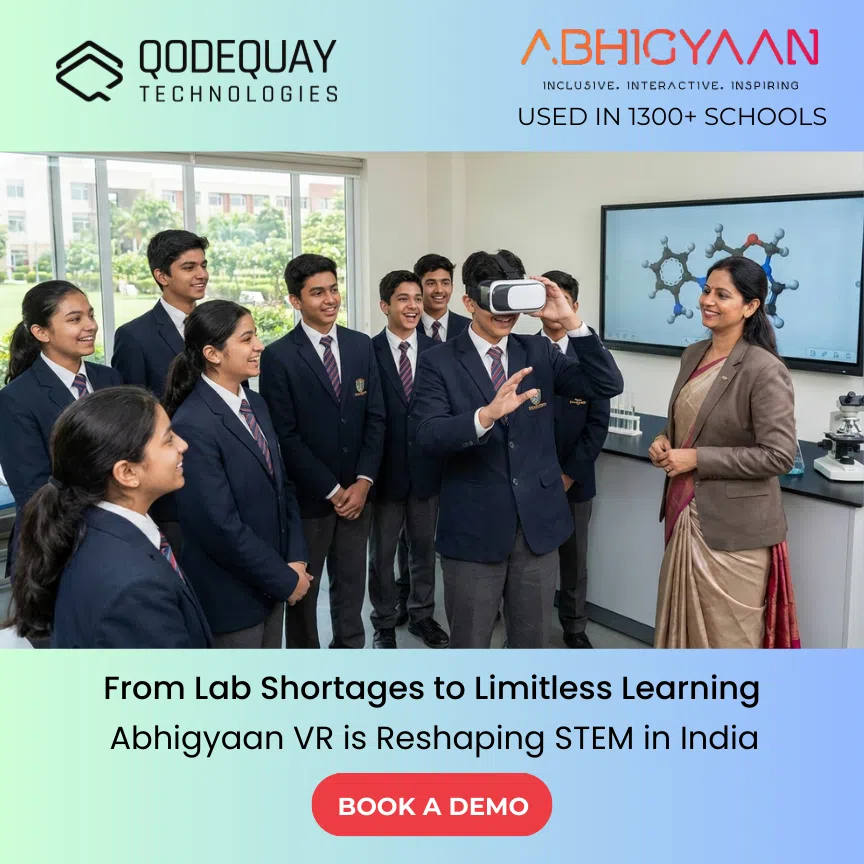
Virtual Reality STEM learning in India is no longer about prestige, it is about survival. In 2026, the idea that VR is a luxury for elite schools has quietly collapsed. What is replacing it is far more disruptive. VR is becoming the most practical way to fix India’s long-standing STEM crisis, especially in underserved regions.
You will learn how VR is solving the lab shortage problem, closing language gaps, and creating a new generation of Indian STEM creators rather than passive learners.
Virtual Reality is becoming essential because physical STEM infrastructure has failed to scale in India.
Building labs, maintaining equipment, and ensuring safety across thousands of schools is expensive, slow, and uneven.
VR bypasses these barriers entirely by delivering standardized, repeatable STEM experiences anywhere electricity exists.
Real-world impact you cannot ignore:
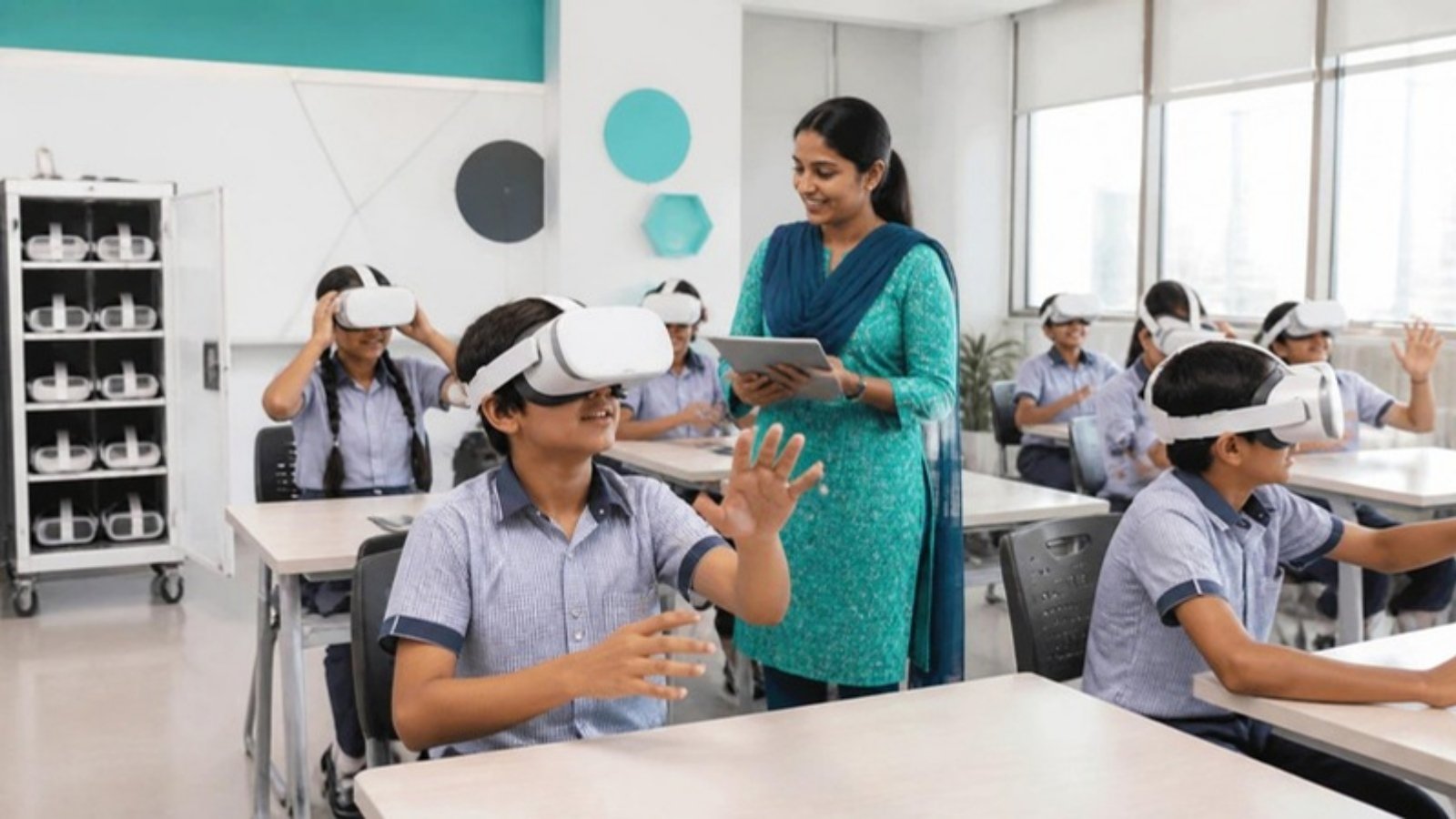
Tier-2 and tier-3 schools gain instant access to advanced labs.
Students practice without fear of damage or injury.
Learning shifts from memorization to experimentation.
This is not enhancement. This is replacement where the old system never worked.
Virtual labs solve scarcity by removing physical limits altogether.
Many Indian schools still rely on broken apparatus or no labs at all. VR introduces a zero-marginal-cost laboratory model.
What makes virtual labs different?
Unlimited practice: A student can repeat a chemistry titration 100 times without spending a rupee on chemicals.
No safety risks: Explosions, spills, and failures become learning moments, not disasters.
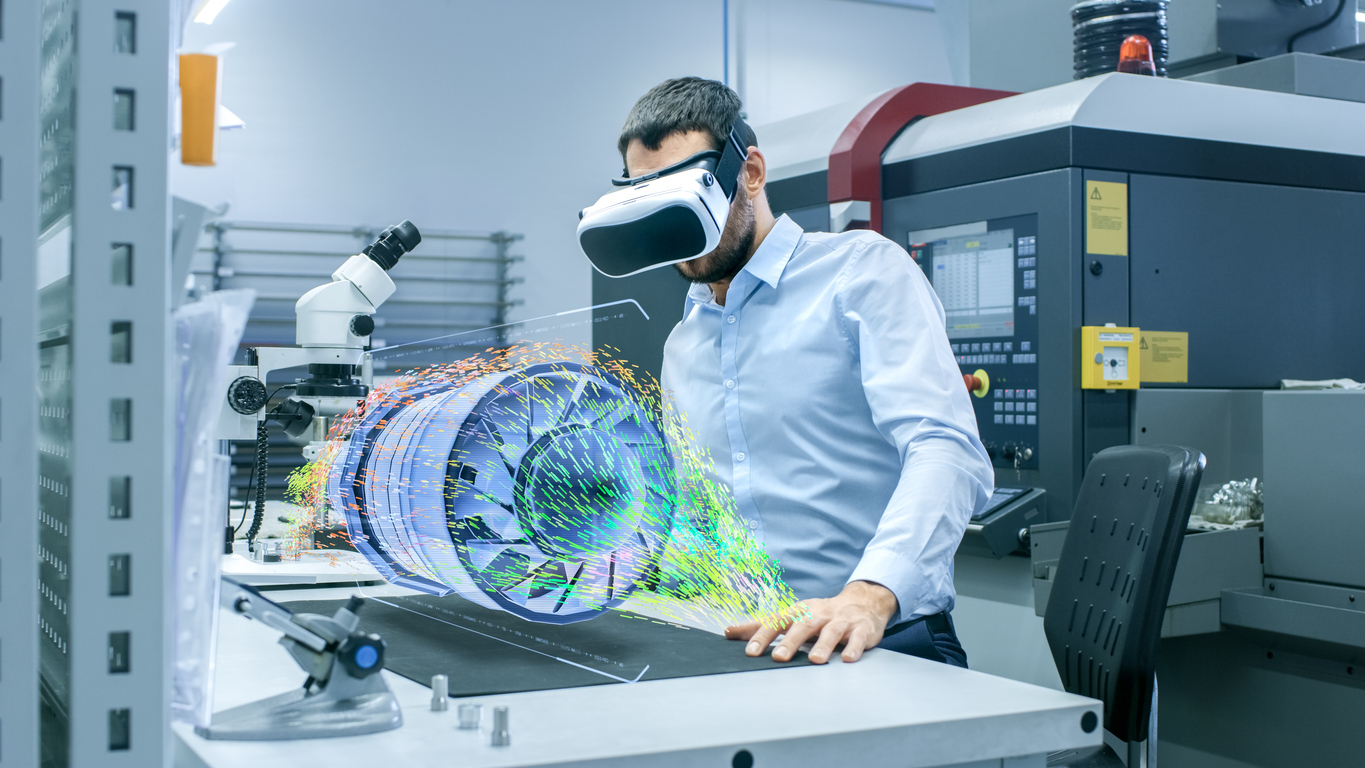
Elite equipment access: Virtual electron microscopes and particle accelerators become normal classroom tools.
In effect, VR gives rural students access to facilities that even top institutes ration carefully.
Yes, VR reduces language dependency by turning abstract theory into visual experience. India’s STEM problem has never been intelligence. It has been language and rote learning.
Instead of decoding dense English textbooks, students learn through movement, interaction, and observation.
Why this works:
Visual literacy replaces jargon: Concepts like centripetal force become felt experiences.
Localized instruction: Platforms like fotonVR now support over 12 Indian languages.
Concept-first learning: Understanding comes before terminology.
When students grasp the idea visually, language stops being a barrier and becomes a tool.
VR is shifting Indian students from consumers of content to creators of solutions. Aligned with NEP 2020, VR is becoming a sandbox for innovation.
Where this shift is visible:
VR startup incubators: Universities in Bengaluru and Hyderabad simulate product demos and investor pitches.
Spatial engineering: Architecture and engineering students walk through their own designs before building them.
Confidence building: Students test ideas safely before facing real markets.
This is how India moves from exporting talent to retaining it.
The biggest obstacle is not technology, it is access readiness. The Digital Divide has evolved, and VR exposes it sharply.
Challenge 1
Challenge 2
Challenge 3
These are solvable problems, not deal-breakers.
The future is equal access to high-quality STEM learning, regardless of geography. The real breakthrough is not virtual moon landings. It is equal opportunity.
A student in rural Bihar can now:
Use the same STEM tools as a student in Silicon Valley.
Practice complex experiments without fear or cost.
Build skills that matter globally.
This is how brain drain turns into brain gain.
Start with curriculum-aligned VR content.
Train teachers alongside deployment.
Use VR as a lab replacement, not a novelty add-on.
Measure outcomes, not excitement.
Scale gradually using rental or service-based models.
Virtual Reality STEM learning in India is becoming essential infrastructure.
VR solves lab shortages, language barriers, and safety issues.
Students learn by doing, not memorizing.
Rural and urban schools finally gain equal access.
The biggest gains come when teachers are trained alongside technology.
Virtual Reality is revolutionizing STEM learning in India because it fixes what decades of policy and funding could not. It removes physical limits, neutralizes language barriers, and gives every student access to world-class learning tools. This is not futuristic education. This is overdue correction.
A demo matters because VR looks impressive on paper but transformative inside a classroom. School leaders need to see how real students respond, how teachers adapt, and how outcomes shift.
See how VR fits into real Indian classrooms: 👉 https://abhigyaanapp.com/
Because when schools stop guessing and start experiencing, decisions finally make sense.

As the CEO and Founder of Qodequay Technologies, I bring over 20 years of expertise in design thinking, consulting, and digital transformation. Our mission is to merge cutting-edge technologies like AI, Metaverse, AR/VR/MR, and Blockchain with human-centered design, serving global enterprises across the USA, Europe, India, and Australia. I specialize in creating impactful digital solutions, mentoring emerging designers, and leveraging data science to empower underserved communities in rural India. With a credential in Human-Centered Design and extensive experience in guiding product innovation, I’m dedicated to revolutionizing the digital landscape with visionary solutions.
Follow the expert :

October 16, 2026
October 15, 2026
October 14, 2026
October 13, 2026
October 7, 2026
Monthly insights on AI, VR and DPDPA compliance — straight from our team to your inbox.
Free 30-minute consultation with our team — or see our products in action.