Can a VR lab count as experiential learning under NEP 2020 and CBSE?
October 16, 2026
January 16, 2026
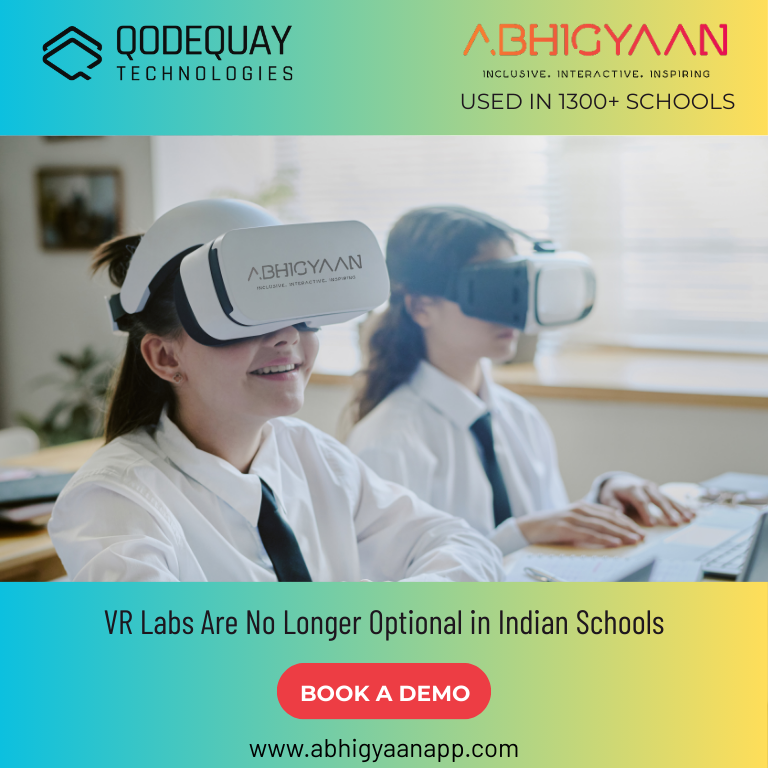
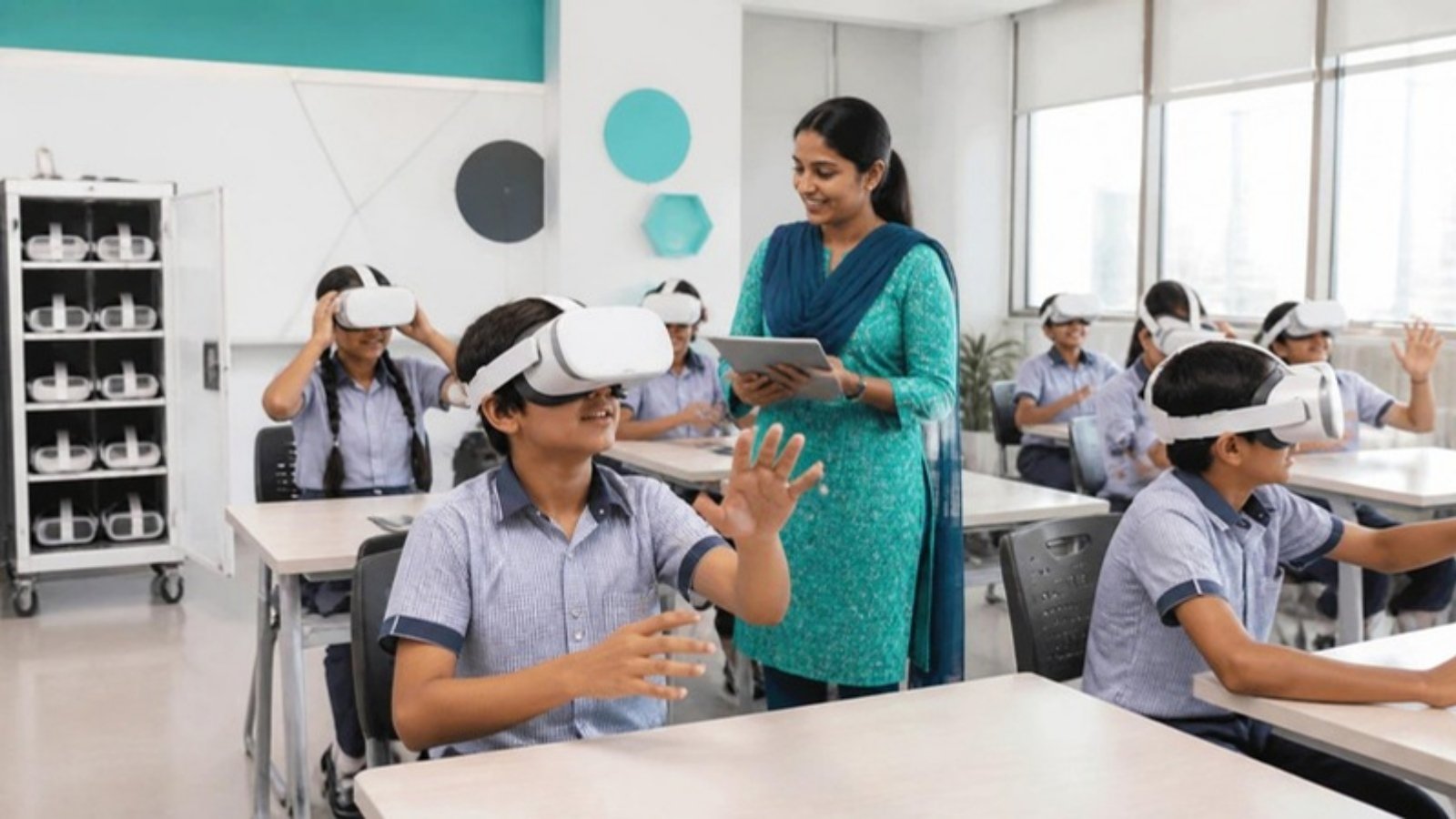
Virtual Reality in Indian schools is no longer a shiny experiment locked in a demo room. In 2026, it is a serious teaching tool used by top institutions to improve understanding, engagement, and outcomes. You are seeing this shift because NEP 2020 pushed schools away from rote learning and toward experience-based education. As a result, VR adoption has grown from 7 percent in 2021 to nearly 38 to 50 percent of Indian high schools today.
This article explains five clear ways Virtual Reality is transforming leading schools across India, with real examples and practical outcomes you can relate to your own campus.
Virtual labs are replacing or strengthening physical labs by making experiments safer, cheaper, and more effective.
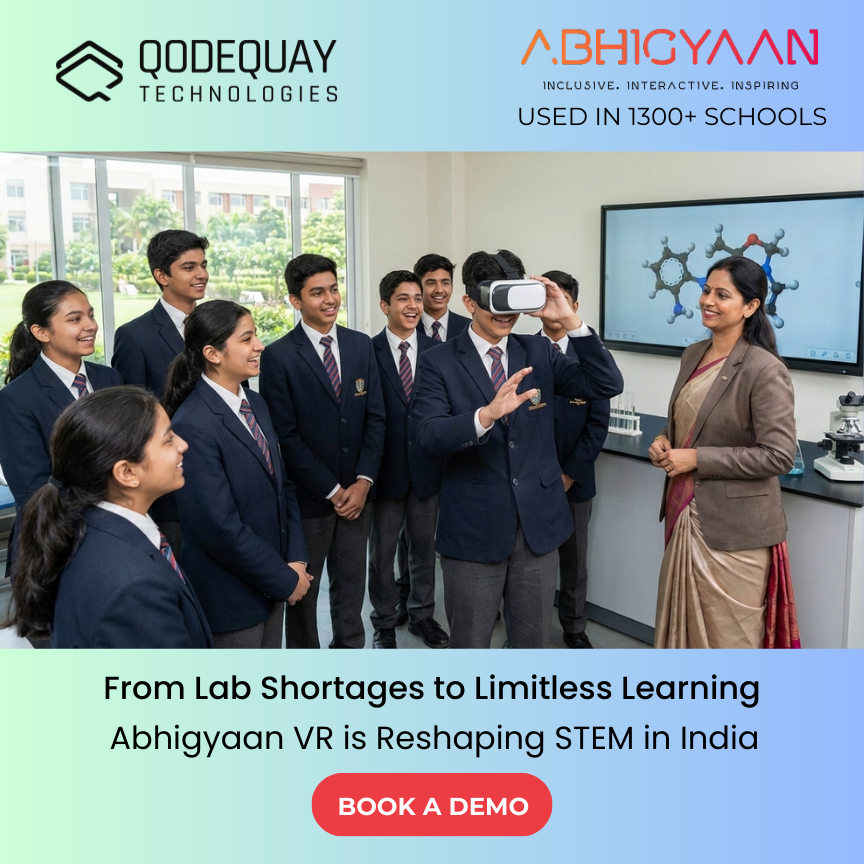
Top institutions such as IIT Delhi and forward-looking private schools like Maratha Mandal English Medium School now use VR labs to overcome space, cost, and safety limits. You no longer need to cancel experiments due to broken equipment or safety concerns.
In VR, students conduct high-risk chemical reactions, explore complex physics setups, and repeat experiments without wasting consumables. They also gain access to microscopic and impossible perspectives. Walking through a human heart or observing atomic bonds turns abstract theory into something you can see and remember.
Best practices schools follow:
Use VR labs to complement physical labs, not replace them entirely
Align simulations directly with CBSE, ICSE, or state board syllabi
Allow students repeat access to reinforce concepts before exams
VR brings history and culture to life by turning reading into lived experience.
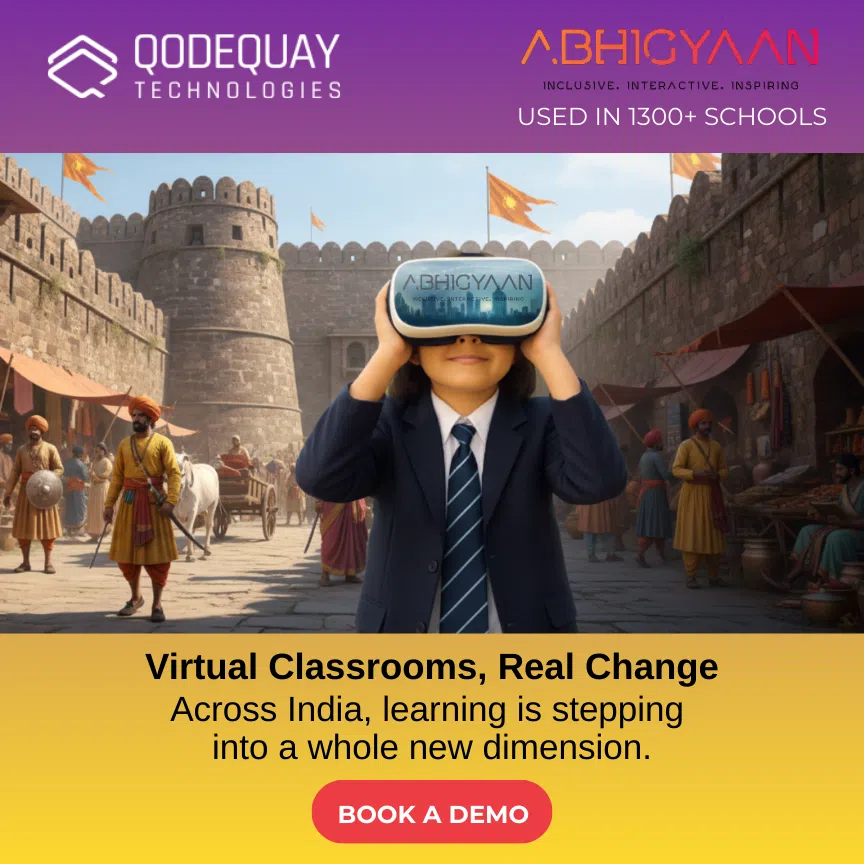
Schools like P N National Public School in Gorakhpur and Glendale International in Hyderabad use VR to let students walk through ancient cities and heritage sites. Instead of memorizing dates, you explore the Mauryan Empire or stand inside the Ajanta Caves.
This approach improves recall and emotional connection. UNESCO-style virtual field trips also solve the logistical problem of taking large groups to distant heritage locations.
Studies in experiential learning show that immersive lessons can improve retention by over 30 percent compared to textbook-only instruction.
Gyandhara is India’s first school-focused educational metaverse, designed for Indian classrooms.
Launched by IIT Guwahati in 2026, Gyandhara starts with PM SHRI schools and addresses two long-standing barriers. Language and collaboration. You can now teach STEM concepts in over 12 Indian languages, removing the silent struggle many students face with English-heavy content.
Students from different states meet in shared virtual classrooms, work on 3D models, and solve problems together in real time. This is NEP 2020’s vision of collaborative and inclusive learning, finally working at scale.
VR creates controlled, adaptable environments that support diverse learning needs.
In leading private schools, VR is used to help students with autism and sensory processing challenges. You can adjust sound, motion, and visual input to reduce stress and improve focus.
VR is also used for empathy training. Neurotypical students experience simulations that reflect physical or cognitive disabilities. This builds emotional intelligence and a more inclusive school culture, something textbooks have never been good at.
VR prepares students for real-world skills long before graduation.
NEP 2020 emphasizes vocational exposure, and VR delivers it without expensive workshops. Students practice car engine repair, solar panel installation, drone piloting, and more in simulated environments.
This builds muscle memory and confidence while reducing training time later. Schools are partnering with platforms like Abhigyaanapp.com to offer curriculum-aligned modules that reflect actual industry needs in 2026.
Over the next three years, you can expect VR to move from labs to daily lesson plans. Prices will continue to drop, content will become more localized, and assessment tools inside VR will provide real-time learning data.
Schools that adopt early will attract parents looking for future-ready education. Those that delay will still be explaining concepts while others let students experience them.
Virtual Reality in Indian schools is now mainstream, not experimental
VR improves safety, clarity, and engagement across subjects
NEP 2020 has accelerated adoption through experiential learning goals
Inclusion, language access, and vocational readiness are major benefits
Early adopters gain academic and reputational advantages
The top schools in India are not using Virtual Reality to impress visitors. They are using it because it works. When learning becomes immersive, students understand faster, remember longer, and participate more willingly. In 2026, VR is no longer about future promises. It is about present results.
Bring a curriculum-aligned Virtual Reality lab into your school and see concepts finally click.
👉 Experience it first-hand: https://abhigyaanapp.com
When learning becomes immersive, outcomes improve naturally.

As the CEO and Founder of Qodequay Technologies, I bring over 20 years of expertise in design thinking, consulting, and digital transformation. Our mission is to merge cutting-edge technologies like AI, Metaverse, AR/VR/MR, and Blockchain with human-centered design, serving global enterprises across the USA, Europe, India, and Australia. I specialize in creating impactful digital solutions, mentoring emerging designers, and leveraging data science to empower underserved communities in rural India. With a credential in Human-Centered Design and extensive experience in guiding product innovation, I’m dedicated to revolutionizing the digital landscape with visionary solutions.
Follow the expert :

October 16, 2026

October 15, 2026
October 14, 2026
October 13, 2026
October 7, 2026
Monthly insights on AI, VR and DPDPA compliance — straight from our team to your inbox.
Free 30-minute consultation with our team — or see our products in action.