Does VR fire-safety training actually work for Indian factories?
October 13, 2026
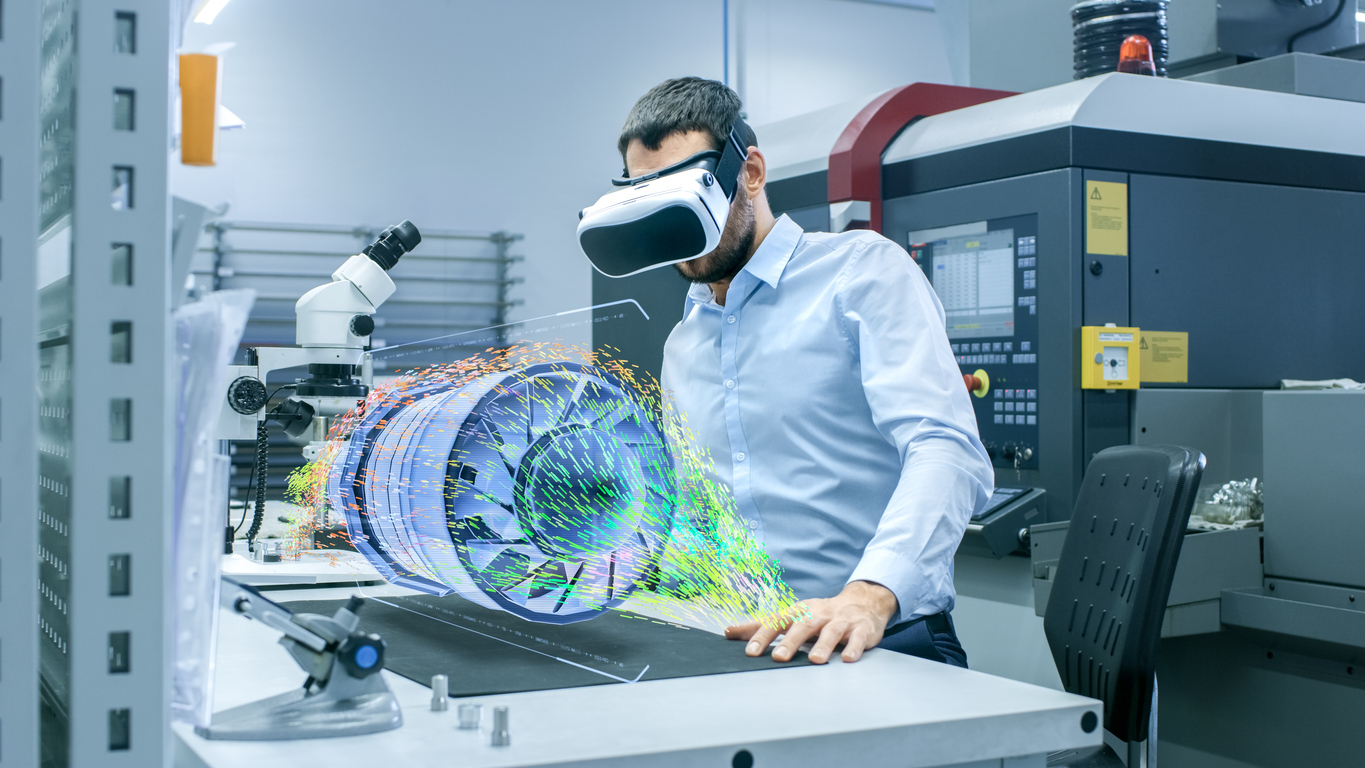
Yes, for the decisions a physical drill cannot safely rehearse. VR lets workers practise extinguisher selection, smoke-filled evacuation and emergency shutdown repeatedly, with every choice logged. It does not replace the drills and safety committees the OSH Code, 2020 expects; it makes them measurable. Most Indian plants run a quarterly VR cycle alongside the physical drills they already hold.
Every Indian factory runs a fire drill. Workers file out to the assembly point, the safety officer notes the time, and the register is signed. What the drill never tests is the first ninety seconds: who notices the smoke, who picks the right extinguisher, who isolates the LPG line, and who decides when to stop fighting and start evacuating. Those decisions are where injuries happen, and they are exactly what a physical drill cannot rehearse without creating a real hazard. That gap is why plant heads and EHS managers across Pune, Chennai and the NCR industrial belts are asking us whether VR fire-safety training is worth the budget.
Two things changed in the last year. First, the Occupational Safety, Health and Working Conditions Code, 2020 came into force on 21 November 2025 (Notification S.O. 5321(E)), consolidating 13 labour laws including the Factories Act, 1948. The Code applies to establishments with 10 or more workers, places general duties on the employer under Section 6, and under Section 22 requires safety committees and safety officers above worker thresholds (500 workers for a factory). The hazardous-process obligations carried over from Chapter IVA of the Factories Act still require workers to be informed and trained on the risks they handle. Inspectors have become "Inspector-cum-Facilitators", and third-party audits under Section 34 mean training records are now something an outside auditor may read.
Second, the calendar. Diwali 2026 falls on 8 November, and the weeks around it bring firecracker stock, festive lighting, overtime shifts and contract workers who may not have attended the last drill. A VR module can be run for a new joiner in 20 minutes on the day they report, which a scheduled drill cannot.
| Skill | Physical drill | VR simulation |
|---|---|---|
| Recognising an early fire (smoke, smell, alarm panel) | Not practised; alarm is announced | Practised with realistic cues; reaction time logged |
| Choosing the right extinguisher (Class A, B, C, electrical) | Demonstrated on an open-ground fire tray, once a year | Repeated on electrical panels, oil, paper and gas scenarios |
| PASS technique (pull, aim, squeeze, sweep) | One attempt per worker if budget allows | Unlimited attempts; wrong aim shown immediately |
| Evacuating through smoke with blocked exits | Cannot be done safely | Core scenario; route choices recorded |
| Emergency shutdown and isolation | Rarely done; production cannot stop | Full sequence on a digital twin of your line |
| Decision to stop fighting and evacuate | Not practised | Scored against time and fire growth |
| Assembly, headcount and roll call | Strong | Supplementary only |
The pattern is clear: the physical drill is good at the end of the incident, VR is good at the beginning. Plants that treat them as complementary get the full sequence. Our earlier piece on learning risk without real-world consequences covers the psychology of why rehearsed decisions transfer to real ones.
The most cited enterprise study is PwC's 2020 research on VR training, which found that VR learners completed training up to four times faster than classroom learners, were 275% more confident in applying what they learned, and were four times more focused than e-learning participants. That study covered soft skills, so treat it as a ceiling rather than a guarantee for fire safety.
For safety specifically, the mechanism matters more than any single statistic. A fire is a high-stress, low-frequency event. People under stress fall back on what they have physically rehearsed, not what they read in an induction booklet. VR is the only format that lets a worker rehearse the stress response itself, at near-zero marginal cost per repetition, and it records every decision so the safety officer can see who needs another run. We explored the broader training case in mixed reality for training.
Budget three lines. Hardware: standalone headsets of the Meta Quest class cost roughly ₹45,000 each in India, and a plant rarely needs more than four to six. Content: custom scenarios built on your layout are the main investment, and they are reused across every shift, every new joiner and every contractor for years. Platform: an annual licence that handles scheduling, scoring, records and headset management.
Justify it against three numbers you already know: the cost of a lost production day, the premium your insurer attaches to your fire-safety record, and the cost of the external trainer who visits once a year with a fire tray. Most plant heads find that a VR programme costs less than one serious near-miss investigation, and the training records it produces are far stronger than a signed attendance register.
Abhigyaan Professional Training is Qodequay's industrial VR platform, built around five capabilities: collaborative rooms, training simulations, design review, remote assistance and remote tracking. Fire-safety and plant-emergency scenarios run on a VR headset and in a browser in the same session, so a supervisor on a laptop can watch and guide a trainee in the headset. Data stays in Indian data centres by default, with an air-gapped option for defence and critical infrastructure sites. The same platform serves manufacturing, automobile, electronics, corporate L&D and medical and defence training, and it is built by an ISO 9001:2015 and ISO 27001:2022 certified team in Pune. The underlying WebXR approach is explained in our guide to immersive experiences without hardware friction.
If you want to see a fire-safety scenario built on a real Indian plant layout before Diwali, book a 30-minute demo with our team. We will bring a headset to your plant or run it over a browser.
No. Physical evacuation drills, safety committees and safety officers remain expectations under the OSH Code, 2020 and state factory rules. VR complements the drill by rehearsing the early decisions a drill cannot safely test, such as extinguisher choice and evacuation through smoke, and by producing time-stamped training records.
About 20 minutes, including a short orientation for first-time headset users. With three or four standalone headsets at a training corner, a 200-worker shift can be covered in roughly a week without stopping production, and repeat sessions for weak scores take ten minutes.
Standalone headsets of the Meta Quest class, which cost roughly ₹45,000 each in India, plus a laptop or browser for the supervisor view. Most plants need four to six headsets. No PC tethering, no dedicated room and no external sensors are required for fire-safety scenarios.
Yes, and that is one of its strengths. Instructions, voice prompts and feedback can be delivered in Marathi, Hindi, Tamil or other Indian languages, and the learning is visual and physical rather than text-based, so it reaches contract and shop-floor workers that printed induction material often misses.
PwC's 2020 study found VR learners trained up to four times faster than classroom learners, were 275% more confident applying skills and four times more focused than e-learners. That research covered soft skills, so for fire safety treat it as an upper bound and measure your own scores.
This article is for general information and is not legal advice. Confirm your obligations against the official text of the OSH Code, 2020, the applicable state rules and your insurer's requirements, and consult qualified counsel for your situation.

I am a founder director at Qodequay Technologies Pvt. Ltd., a leading digital transformation consulting firm that helps clients across industries to innovate, optimize, and grow their businesses. I have over two decades of experience in the digital domain, spanning product development, e-commerce, user experience, design thinking, web and app development, and business leadership. My core competencies include developing and executing digital transformation strategies, building teams globally, roadmaps, and solutions that leverage data, insights, and emerging technologies such as artificial intelligence, augmented reality, blockchain, and immersive experience. I also have expertise in digital commerce, supply chain integration, and product management, having worked with both B2B and B2C brands in various sectors. My mission is to create value for customers and stakeholders by delivering impactful and engaging digital experiences that drive growth and innovation.
October 13, 2026

October 7, 2026
October 6, 2026
October 5, 2026
October 4, 2026
Monthly insights on AI, VR and DPDPA compliance — straight from our team to your inbox.
Free 30-minute consultation with our team — or see our products in action.