DPDPA Penalties Up to ₹250 Crore: The Real Cost of Waiting
July 2, 2026
February 12, 2026
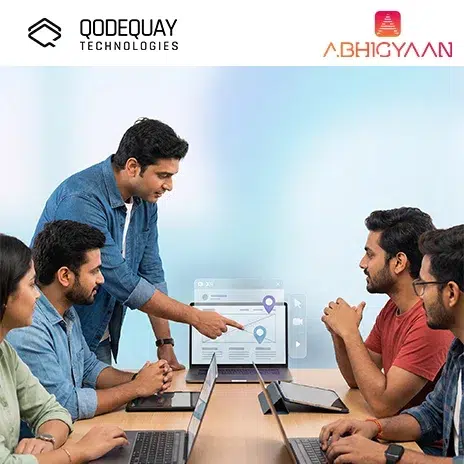
Web-based XR is the fastest way to deliver immersive VR and AR experiences directly through a browser, without forcing people to download an app.
For CTOs, CIOs, Product Managers, Startup Founders, and Digital Leaders, this matters because the biggest challenge in XR is not imagination. It’s adoption. Most XR projects fail to scale because they require hardware dependency, app installs, complex onboarding, or heavy device requirements.
Web-based XR solves a major barrier: you can launch immersive experiences with a link, like a website.
In this article, you’ll learn what web-based XR is, how it works, why it matters for business, key technologies, real-world use cases, best practices, performance considerations, and the future outlook for browser-based XR.
LSI terms included naturally in this guide include: WebXR, browser-based VR, browser-based AR, immersive web, 3D web experiences, AR in the browser, VR in the browser, interactive 3D, real-time rendering, 3D product visualization, spatial computing, and XR accessibility.
Web-based XR is extended reality (XR) delivered through a web browser using technologies like WebXR, WebGL, and JavaScript.
XR is a broad term that includes:
Web-based XR allows you to build immersive experiences that run from a URL, instead of requiring native mobile apps or device-specific software.
That means a customer, employee, or student can access a 3D experience instantly, using:
Web-based XR matters because it reduces friction, increases reach, and speeds up deployment.
In most organizations, the biggest XR bottleneck is not the experience itself. It’s everything around it:
Web-based XR simplifies all of this.
For leaders, that translates into:
Web-based XR works by combining web technologies that render 3D content and enable immersive interactions.
The core technologies include:
WebXR is the browser API that enables VR and AR experiences in supported browsers and devices.
It allows:
WebGL is a browser-based graphics engine that renders 3D scenes using the GPU.
These handle interaction, scene logic, and UI.
Common tools include:
For multi-user, analytics, or content delivery, you may also use:
The biggest benefits of web-based XR are accessibility, speed, and scalability.
Here’s what you gain:
You can launch with a simple link.
Lower friction means more people actually try the experience.
You can support:
You update once on the server. Everyone gets the latest version instantly.
You can track usage like a website, including:
Web-based XR is powerful, but it still has limitations compared to native apps.
The biggest limitations include:
Browser-based rendering is improving, but native apps can still deliver higher performance for very complex scenes.
Not every browser supports WebXR equally.
Some sensors and device-level features may be limited or inconsistent.
Native apps are better when offline use is required.
This means web-based XR is best for experiences where reach and speed matter more than maximum graphical power.
Web-based XR is most valuable where scale, accessibility, and speed are more important than ultra-high realism.
Here are high-impact business use cases:
It improves marketing and sales by allowing interactive 3D product experiences without downloads.
Examples include:
A customer scans a QR code and instantly sees a product in 3D.
This is huge for industries like:
It supports training by delivering interactive simulations through a browser, making training easier to scale.
Instead of shipping VR headsets to every location, you can:
This hybrid approach increases adoption.
Examples:
It enables virtual events by letting attendees join 3D spaces through a link.
Examples:
You can also combine web-based XR with live video and chat for richer engagement.
It helps by enabling interactive 3D walkthroughs and AR previews of spaces.
Examples:
A major advantage is that clients can experience the design without installing heavy software.
You should use a web-based XR tech stack that balances performance, maintainability, and speed.
A common stack includes:
Web-based XR succeeds when you design for performance, simplicity, and real user behavior.
Here are best practices you should follow:
You measure ROI by linking XR engagement to business outcomes.
Key metrics include:
The biggest advantage is that web-based XR is measurable like a website, which is rare in immersive tech.
The future of web-based XR will be shaped by better browsers, lighter 3D assets, and the rise of spatial computing.
Here are key trends:
More devices will support immersive web standards as XR adoption grows.
Just like video became standard, interactive 3D will become a default expectation.
AI will help generate:
You’ll see more operational dashboards with 3D views accessible in browsers.
AR through the browser will grow because it is instantly accessible through mobile.
Web-based XR is one of the most practical ways to scale immersive experiences because it meets people where they already are: the browser.
Instead of building XR projects that stay trapped inside pilot programs, you can deliver interactive 3D, AR, and VR experiences with the same speed and iteration cycle as modern web products. That’s how immersive technology becomes a real business advantage, not just a cool demo.
At Qodequay, web-based XR is built with a design-first approach: you start with human behavior, attention span, and real-world adoption barriers. Then you apply technology as the enabler to create immersive experiences that are fast, accessible, and measurable, solving human problems through smart digital experiences.

As the CEO and Founder of Qodequay Technologies, I bring over 20 years of expertise in design thinking, consulting, and digital transformation. Our mission is to merge cutting-edge technologies like AI, Metaverse, AR/VR/MR, and Blockchain with human-centered design, serving global enterprises across the USA, Europe, India, and Australia. I specialize in creating impactful digital solutions, mentoring emerging designers, and leveraging data science to empower underserved communities in rural India. With a credential in Human-Centered Design and extensive experience in guiding product innovation, I’m dedicated to revolutionizing the digital landscape with visionary solutions.
Follow the expert :


July 2, 2026

July 2, 2026
July 2, 2026
July 2, 2026

July 2, 2026
Monthly insights on AI, VR and DPDPA compliance — straight from our team to your inbox.
Free 30-minute consultation with our team — or see our products in action.