DPDPA vs GDPR: What Indian Companies Serving EU Clients Need to Know
October 7, 2026
February 9, 2026
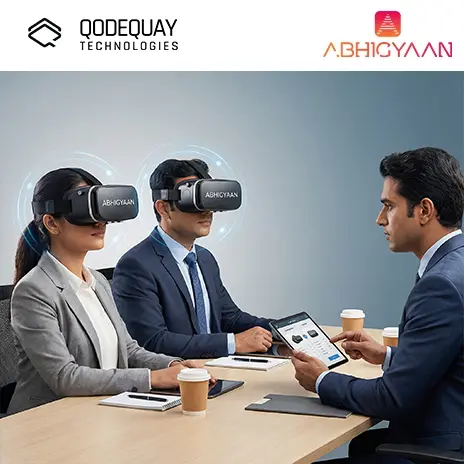
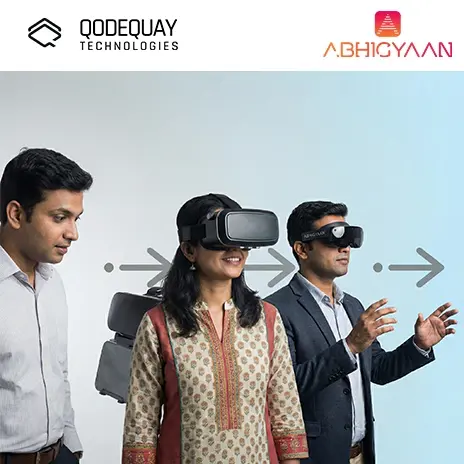
Virtual Reality is no longer just a gaming trend, it’s a serious business tool. Whether you’re a CTO planning immersive training, a CIO exploring digital transformation, a Product Manager building VR experiences, or a Startup Founder pitching an XR product, the headset you choose can decide your success or your failure.
In this guide, you’ll learn what makes a VR headset “top-tier,” which devices are leading the market today, how to evaluate them for enterprise use, and what trends will define the next generation of VR hardware.
The top VR headsets today include Meta Quest 3, Apple Vision Pro, HTC Vive XR Elite, Valve Index, and Pico 4 Enterprise.
These headsets lead because they combine performance, comfort, ecosystem strength, and enterprise readiness.
However, the “best” option depends on what you’re building:
Your choice should match your use case, budget, and deployment scale.
LSI terms used: VR headset comparison, immersive hardware, XR devices, standalone VR, PC VR, enterprise VR, VR training, VR collaboration, spatial computing, mixed reality headset, VR controllers, hand tracking
Choosing the right VR headset matters because it directly impacts adoption, comfort, security, and ROI.
A headset that looks great on paper can fail in real-world deployment if:
For leaders, the headset is not just hardware, it’s a platform decision.
Meta Quest 3 is the best all-around VR headset for most teams because it balances price, performance, and ecosystem.
Meta Quest 3 is widely used in:
This makes it a practical choice for pilots and enterprise rollouts.
Apple Vision Pro is best for premium enterprise experiences where quality, visuals, and spatial computing matter most.
Apple Vision Pro is not a traditional VR headset, it’s closer to a mixed reality computer.
It shines in:
The price and ecosystem maturity make it less suitable for large-scale training deployments today. But for innovation teams, it can be a strategic investment.
Valve Index is one of the best VR headsets for PC-based high performance and precision tracking.
If your VR experience requires:
Then PC VR headsets like Valve Index still lead.
PC VR is harder to scale because it requires:
This is ideal for labs, not for large distributed teams.
Pico 4 Enterprise is a strong option for enterprise deployments because it focuses on business controls and fleet management.
Enterprise buyers care about:
Pico is often considered when organizations want a more business-first ecosystem.
HTC Vive XR Elite is best when you want flexibility between VR and AR-style passthrough.
This headset is positioned for:
HTC has long been present in enterprise VR, and many simulation-based organizations still rely on Vive systems.
You should evaluate comfort, tracking, ecosystem, content support, and enterprise readiness before buying.
A VR headset is only “top” if people actually want to wear it.
Each top VR headset wins in a different scenario.
The biggest hidden costs are content creation, support, accessories, and device lifecycle management.
Hardware is only the entry point. You also need:
For CIOs, VR is both a technology project and an operational project.
The future of VR headsets will be lighter, more AI-powered, and more mixed reality-focused.
Here are the trends shaping the next 3–5 years:
Most headsets will support VR and passthrough MR modes.
Weight reduction will be a major competitive advantage.
Headsets will render high detail only where you look, improving performance.
Device management and policy controls will mature rapidly.
AI will enable smarter training simulations, virtual coaches, and adaptive learning inside VR.
Top VR headsets are no longer niche gadgets, they are becoming strategic tools for training, design, collaboration, and digital innovation. The right headset can improve onboarding speed, reduce operational errors, and unlock immersive experiences that make your product or service stand out.
At Qodequay (https://www.qodequay.com), you take a design-first approach to immersive technology, ensuring every VR experience solves a real human problem, with technology acting as the enabler. That’s how you move from experimentation to scalable business impact.

As the CEO and Founder of Qodequay Technologies, I bring over 20 years of expertise in design thinking, consulting, and digital transformation. Our mission is to merge cutting-edge technologies like AI, Metaverse, AR/VR/MR, and Blockchain with human-centered design, serving global enterprises across the USA, Europe, India, and Australia. I specialize in creating impactful digital solutions, mentoring emerging designers, and leveraging data science to empower underserved communities in rural India. With a credential in Human-Centered Design and extensive experience in guiding product innovation, I’m dedicated to revolutionizing the digital landscape with visionary solutions.
Follow the expert :


October 7, 2026
October 6, 2026
October 5, 2026

October 4, 2026

October 3, 2026
Monthly insights on AI, VR and DPDPA compliance — straight from our team to your inbox.
Free 30-minute consultation with our team — or see our products in action.