DPDPA Penalties Up to ₹250 Crore: The Real Cost of Waiting
July 2, 2026
February 9, 2026
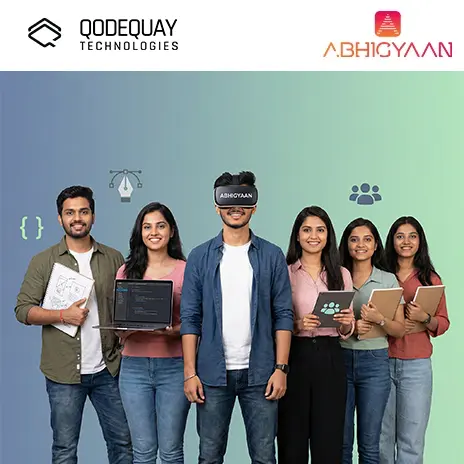
VR is no longer a “cool tech demo.” It is becoming a real platform for training, product design, customer experience, and remote collaboration. And like every platform shift before it (web, mobile, cloud, AI), the biggest winners will not be the people who buy the most hardware. The winners will be the people who build the right skills.
If you’re a CTO, CIO, Product Manager, Startup Founder, or Digital Leader, future VR skills matter because the next generation of enterprise experiences will be spatial, immersive, and interactive. That affects your hiring strategy, your product roadmap, your learning and development programs, and your innovation investments.
This article breaks down the most important VR skills you need to focus on now, why they matter, how they connect to real business value, and what trends will shape the future of immersive work.
Future VR skills are the technical, design, and strategic capabilities needed to build, deploy, and scale immersive VR experiences.
VR is not one skill. It is a stack.
A successful VR team combines:
That’s why VR is becoming a serious career and business capability. It touches everything from human psychology to GPU performance.
LSI terms used: VR development, Unity skills, Unreal Engine, 3D modeling, VR UX design, spatial computing, mixed reality, digital twins, enterprise VR, immersive training, XR strategy, real-time rendering
You should invest in VR skills now because immersive technology is shifting from experimental pilots to scalable enterprise systems.
A few years ago, VR was mostly:
Today, VR is being used for:
That shift changes what organizations need. Instead of “VR enthusiasts,” you need professionals who can deliver:
VR skills are becoming operational skills.
The most valuable VR skills will be spatial UX design, real-time development, 3D production, and enterprise deployment.
Let’s go skill by skill.
VR UX and spatial design will be one of the most important future VR skills because comfort and usability determine adoption.
In VR, design is not decoration. It is survival.
Bad UX in VR causes:
Spatial design includes:
This is why companies increasingly look for VR designers who understand:
Unity and Unreal Engine expertise will remain critical because most professional VR experiences are built using real-time engines.
Even with low-code tools emerging, the best VR simulations and enterprise experiences still rely on:
Future VR developers must understand:
This is not optional if you want high-quality immersive products.
3D modeling will remain highly valuable because every VR experience depends on optimized 3D assets.
VR is built from 3D objects:
The future of VR will demand 3D creators who understand:
Many VR projects fail because teams underestimate how much 3D work is required.
Performance optimization is a future-proof VR skill because VR requires stable frame rates to prevent discomfort.
A normal web app can lag. VR cannot.
VR performance issues cause:
Future VR specialists must understand:
This is one of the most underrated VR skills, and one of the most valuable.
AI will become a major VR skill because it will accelerate content creation and enable smarter simulations.
AI will impact VR in two big ways:
AI tools will help generate:
This reduces production cost and makes VR more accessible.
AI will power:
That means future VR teams will need skills in:
Storytelling and instructional design are VR skills because training and learning outcomes depend on structure, not graphics.
Many enterprise VR experiences are training products.
That means you need:
A VR training simulation is not successful because it looks real. It is successful because it changes behavior.
This is why instructional designers are becoming essential in VR teams.
Enterprise deployment is a critical future VR skill because scaling VR requires governance, security, and operational planning.
Many VR pilots fail when they try to scale.
Why? Because scaling requires:
This is where CTOs and CIOs pay attention. VR is not just content. It is infrastructure.
The most important soft skills will be cross-functional communication, product thinking, and ethical responsibility.
VR teams are naturally cross-functional. You need people who can collaborate across:
The best VR professionals will be able to:
VR is a technology skill, but it is also a leadership skill.
You should build skills in VR roadmap planning, ROI measurement, vendor evaluation, and governance.
You do not need to become a Unity developer to lead VR initiatives. But you do need to understand:
Key leadership skills include:
This is the difference between “we tried VR” and “we built a VR program.”
The VR job market will shift from game-focused roles to enterprise-focused roles in training, simulation, and spatial computing.
The biggest growth areas will likely include:
This shift will make VR more stable as a career path because enterprise adoption is tied to operational value, not entertainment trends.
The future outlook is that VR skills will merge with mixed reality, AI, and spatial computing as a new mainstream platform.
Here are the strongest predictions for the next decade:
The future is not “VR vs AR.” The future is spatial computing. Teams will build experiences that move across:
This will accelerate adoption because VR will become cheaper to build and update.
Industries like manufacturing, aviation, healthcare, and logistics will increasingly treat VR as normal training infrastructure.
The best VR products will win because they are usable by everyone, not because they look the most impressive.
As biometric tracking grows, ethical design and privacy governance will become core skills.
Future VR skills are not about chasing hype. They are about preparing for the next major shift in how people learn, collaborate, design, and experience digital products. VR is moving into the enterprise world quickly, and the organizations that build skills early will be the ones that scale confidently later.
At Qodequay (https://www.qodequay.com), you approach immersive technology with a design-first mindset, solving human problems first and using technology as the enabler. That is how you build VR solutions that are not only technically impressive, but also usable, ethical, scalable, and ready for the future.

As the CEO and Founder of Qodequay Technologies, I bring over 20 years of expertise in design thinking, consulting, and digital transformation. Our mission is to merge cutting-edge technologies like AI, Metaverse, AR/VR/MR, and Blockchain with human-centered design, serving global enterprises across the USA, Europe, India, and Australia. I specialize in creating impactful digital solutions, mentoring emerging designers, and leveraging data science to empower underserved communities in rural India. With a credential in Human-Centered Design and extensive experience in guiding product innovation, I’m dedicated to revolutionizing the digital landscape with visionary solutions.
Follow the expert :


July 2, 2026
July 2, 2026
July 2, 2026
July 2, 2026

July 2, 2026
Monthly insights on AI, VR and DPDPA compliance — straight from our team to your inbox.
Free 30-minute consultation with our team — or see our products in action.