DPDPA Penalties Up to ₹250 Crore: The Real Cost of Waiting
July 2, 2026
February 9, 2026
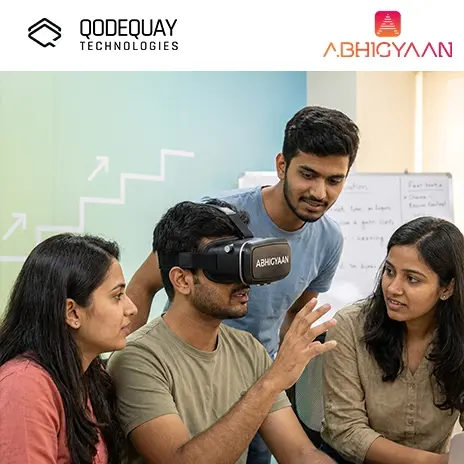
Virtual Reality is one of those technologies that feels futuristic, until you realize it’s already delivering measurable business value today. From workforce training and safety simulations to remote collaboration and immersive customer experiences, VR has moved beyond “nice-to-have” demos and into practical digital transformation.
If you’re a CTO, CIO, Product Manager, Startup Founder, or Digital Leader, getting started with VR matters because it can help you reduce training costs, speed up onboarding, improve decision-making, and create new ways to engage customers. The challenge is that VR can feel complex at first. Hardware options, development costs, content strategy, and adoption risks can make the whole space look messy.
This guide simplifies everything. You’ll learn what VR is, how it works, where to start, what to avoid, and how to build a VR roadmap that delivers ROI.
Getting started with VR means selecting a business use case, choosing the right headset and platform, and launching a small pilot that proves measurable value.
Many teams get stuck thinking VR requires a massive budget or a “metaverse strategy.” In reality, the smartest approach is much simpler:
VR becomes easy when you treat it like a product, not like a science experiment.
LSI terms used: virtual reality basics, VR headset, immersive technology, enterprise VR, VR training, VR collaboration, VR pilot project, XR strategy, VR content development, simulation learning, spatial computing
You should care about VR now because it delivers measurable outcomes in training, productivity, and customer experience.
Digital leaders are constantly pressured to:
VR supports these goals because it enables realistic simulation and engagement at scale.
Also, VR hardware has reached a point where:
This is a strong moment to start, because early adopters are already building competitive advantage.
The best beginner VR use cases are training, onboarding, product demos, and virtual walkthroughs.
These are ideal because they:
You can train employees on:
You can help new hires:
You can allow customers to:
VR is excellent for:
These use cases are popular because they feel natural and show quick ROI.
For most businesses, the best headset to start with is a standalone VR headset like Meta Quest 3.
Standalone headsets are beginner-friendly because:
The best headset is the one your team will actually use consistently.
You should buy VR software when your needs are common, and build VR experiences when your workflows are unique.
A hybrid approach is often best: buy a platform, then customize content over time.
Getting started with VR can cost anywhere from a few thousand to several lakhs depending on scale, content, and complexity.
The cost typically includes:
Hardware is rarely the biggest cost. The biggest cost is usually:
This is why starting with a pilot is so important.
A simple VR pilot roadmap includes use case selection, prototype development, testing, measurement, and scaling.
Here’s a practical approach:
This reduces risk and increases buy-in.
The biggest mistakes are starting without KPIs, building a “wow demo,” and ignoring adoption.
Common mistakes include:
VR succeeds when it is designed for real people, in real workflows.
The best practices are to start small, design for comfort, measure results, and scale gradually.
A successful VR program behaves like a product rollout, not a one-time project.
You ensure VR adoption by making the experience easy, valuable, and integrated into existing workflows.
Adoption grows when:
You should also create internal champions, people who enjoy VR and can support others.
The future outlook is strong because VR is becoming cheaper, easier, and more enterprise-ready every year.
Over the next 3–5 years, you can expect:
This means the barrier to entry will keep dropping. Starting now gives you an advantage in building internal capability before VR becomes mainstream.
Getting started with VR does not require a massive investment or a futuristic strategy deck. It requires clarity. When you focus on a real business problem, build a simple pilot, and measure results, VR becomes one of the most practical tools in your digital transformation toolkit.
At Qodequay (https://www.qodequay.com), you take a design-first approach to VR, solving real human problems first and using technology as the enabler. That’s how you move from experimentation to scalable impact, and create immersive experiences that deliver measurable value.

As the CEO and Founder of Qodequay Technologies, I bring over 20 years of expertise in design thinking, consulting, and digital transformation. Our mission is to merge cutting-edge technologies like AI, Metaverse, AR/VR/MR, and Blockchain with human-centered design, serving global enterprises across the USA, Europe, India, and Australia. I specialize in creating impactful digital solutions, mentoring emerging designers, and leveraging data science to empower underserved communities in rural India. With a credential in Human-Centered Design and extensive experience in guiding product innovation, I’m dedicated to revolutionizing the digital landscape with visionary solutions.
Follow the expert :


July 2, 2026
July 2, 2026
July 2, 2026
July 2, 2026

July 2, 2026
Monthly insights on AI, VR and DPDPA compliance — straight from our team to your inbox.
Free 30-minute consultation with our team — or see our products in action.