DPDPA Penalties Up to ₹250 Crore: The Real Cost of Waiting
July 2, 2026
February 9, 2026
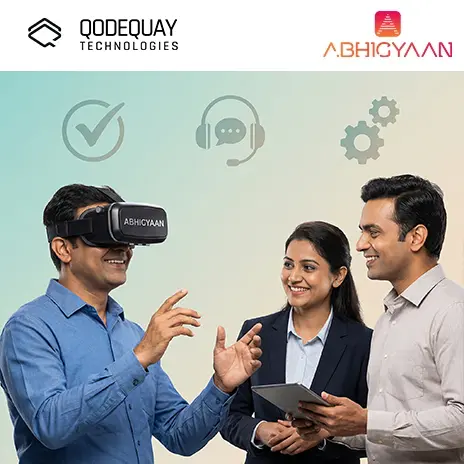
Customer experience has entered a new era. People no longer compare your brand only to your direct competitors. They compare you to the best digital experiences they’ve ever had. That’s why VR customer experience is becoming a powerful advantage for modern businesses, especially in industries where trust, product understanding, and emotional connection influence buying decisions.
As a CTO, CIO, Product Manager, Startup Founder, or Digital Leader, this matters because customer experience is not just design, it’s revenue. Virtual Reality allows you to replace passive browsing with immersive interaction. Instead of reading about a product, you can experience it. Instead of imagining a service, you can step into it.
In this article, you’ll explore what VR customer experience means, where it delivers real value, how it impacts ROI, real-world examples, best practices, risks, and future trends.
VR customer experience is the use of virtual reality to help customers explore, understand, and engage with a product or service through immersive interaction.
Instead of watching videos or scrolling through images, you enter a virtual environment where you can:
This creates a deeper sense of presence, which improves trust and decision confidence.
LSI terms used: immersive customer experience, virtual product demo, 3D product visualization, interactive brand experience, virtual showroom, virtual reality marketing, experiential commerce, customer engagement, product storytelling, VR retail, digital experience design
VR customer experience matters because it improves product understanding, reduces uncertainty, and increases engagement.
Customers hesitate when:
VR reduces hesitation by letting customers experience what they’re buying. That directly supports:
For leadership teams, VR becomes a tool to increase revenue while differentiating the brand.
VR improves engagement because it turns customers from observers into participants.
Traditional web experiences are flat. VR is spatial. That shift changes behavior.
In VR, customers can:
This is especially important in crowded markets where attention is the scarcest resource.
Industries with high-consideration purchases and strong emotional value benefit most from VR customer experience.
VR enables:
This helps buyers decide faster and reduces wasted site visits.
VR supports:
Customers can test options without needing physical inventory.
VR helps brands deliver:
Luxury buyers often value experience as much as product.
VR allows customers to:
VR can be used for:
The more emotional the decision, the more VR helps.
The most effective VR use cases include virtual showrooms, immersive storytelling, product demos, and customer education.
VR showrooms allow customers to explore products in a branded environment without physical constraints.
VR makes complex products easier to understand, especially when you can:
VR campaigns create memorable moments that boost:
VR can guide customers through:
This reduces support tickets and increases satisfaction.
VR can improve conversion by increasing confidence and reducing decision friction.
The main reason customers don’t buy is uncertainty. VR reduces uncertainty through:
For high-ticket products, this can shorten the sales cycle. For retail, it can increase engagement and brand loyalty.
You measure VR customer experience ROI through conversion uplift, reduced returns, engagement time, and brand impact metrics.
Here are practical metrics:
VR becomes a business asset when it ties directly to measurable outcomes.
The biggest challenges are accessibility, content cost, and ensuring the experience supports real customer needs.
Not every customer owns a headset. That’s why many brands use VR:
High-quality VR experiences require:
A flashy VR experience can fail if:
Design matters more than technology.
The best VR customer experiences are simple, guided, and focused on customer decision-making.
The best VR experience feels effortless, not experimental.
VR works best when integrated into an omnichannel customer journey.
VR should not exist in isolation. It should connect with:
For example:
That’s where VR becomes a scalable business tool.
The future of VR customer experience will be more accessible, more personalized, and powered by AI.
Here are the biggest trends:
Customers will blend physical environments with digital overlays.
AI will adapt VR experiences based on:
Customers will shop together in VR with friends or consultants.
Headsets will become lighter and more affordable, expanding reach.
Products and spaces will be represented as real-time 3D assets connected to data.
The future is immersive commerce, where experience becomes part of the product.
VR customer experience is not about replacing websites or stores. It is about creating deeper interaction where customers need clarity, confidence, and emotional connection. When designed well, VR transforms customer engagement into something memorable, meaningful, and measurable.
At Qodequay (https://www.qodequay.com), you build VR customer experiences with a design-first approach, solving human problems first and using technology as the enabler. That’s how immersive experiences become business outcomes, not just innovation experiments.

As the CEO and Founder of Qodequay Technologies, I bring over 20 years of expertise in design thinking, consulting, and digital transformation. Our mission is to merge cutting-edge technologies like AI, Metaverse, AR/VR/MR, and Blockchain with human-centered design, serving global enterprises across the USA, Europe, India, and Australia. I specialize in creating impactful digital solutions, mentoring emerging designers, and leveraging data science to empower underserved communities in rural India. With a credential in Human-Centered Design and extensive experience in guiding product innovation, I’m dedicated to revolutionizing the digital landscape with visionary solutions.
Follow the expert :


July 2, 2026

July 2, 2026
July 2, 2026
July 2, 2026

July 2, 2026
Monthly insights on AI, VR and DPDPA compliance — straight from our team to your inbox.
Free 30-minute consultation with our team — or see our products in action.