DPDPA Penalties Up to ₹250 Crore: The Real Cost of Waiting
July 2, 2026
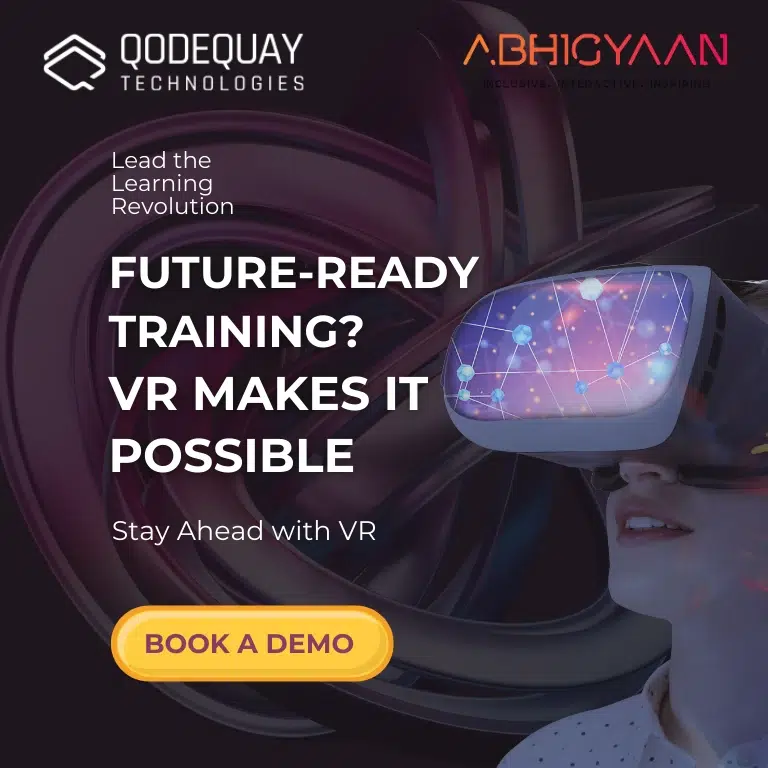
Virtual Reality is no longer a futuristic idea reserved for gaming or science fiction, it is steadily becoming a practical educational tool in Indian schools. As classrooms struggle with limited resources, large student-teacher ratios, and abstract curriculum concepts, VR offers a way to bridge the gap between theory and experience. For schools in India, VR is not about replacing teachers or textbooks, it is about enhancing learning by making it more engaging, visual, and meaningful.
This article explores the key benefits of virtual reality in schools in India, focusing on how it improves engagement, understanding, retention, safety, and skill development.
Virtual Reality increases student engagement by transforming passive lessons into immersive experiences that capture attention and curiosity.
Traditional classroom teaching often relies on lectures, textbooks, and static visuals, which can struggle to hold students’ attention. VR places students inside the lesson, whether they are walking through the solar system, exploring a historical monument, or observing a chemical reaction up close. When students feel present in the learning environment, their motivation and focus naturally increase.
In Indian classrooms, where attention spans are challenged by rote learning and exam pressure, VR helps reignite curiosity and excitement for learning.
VR improves conceptual understanding by making abstract and complex ideas visual and experiential.
Subjects like science, geography, and biology often involve concepts that are difficult to imagine, such as atomic structures, ecosystems, or geological processes. Virtual Reality allows students to see, interact with, and explore these concepts in three dimensions. Instead of memorizing definitions, students can observe how systems work and how elements interact with each other.
This experiential approach is particularly valuable in the Indian education system, where conceptual clarity is essential for long-term academic success.
Virtual Reality improves learning retention by combining active participation with emotional and experiential learning.
Research consistently shows that students remember more when they actively participate in the learning process. VR engages multiple senses and encourages exploration, which helps information stick longer in memory. When learning becomes an experience rather than a task, students are more likely to recall concepts during exams and real-world applications.
For Indian schools focused on outcomes and performance, improved retention translates into better academic results without increasing study pressure.
VR enables safe practice by allowing students to perform complex or risky activities without real-world consequences.
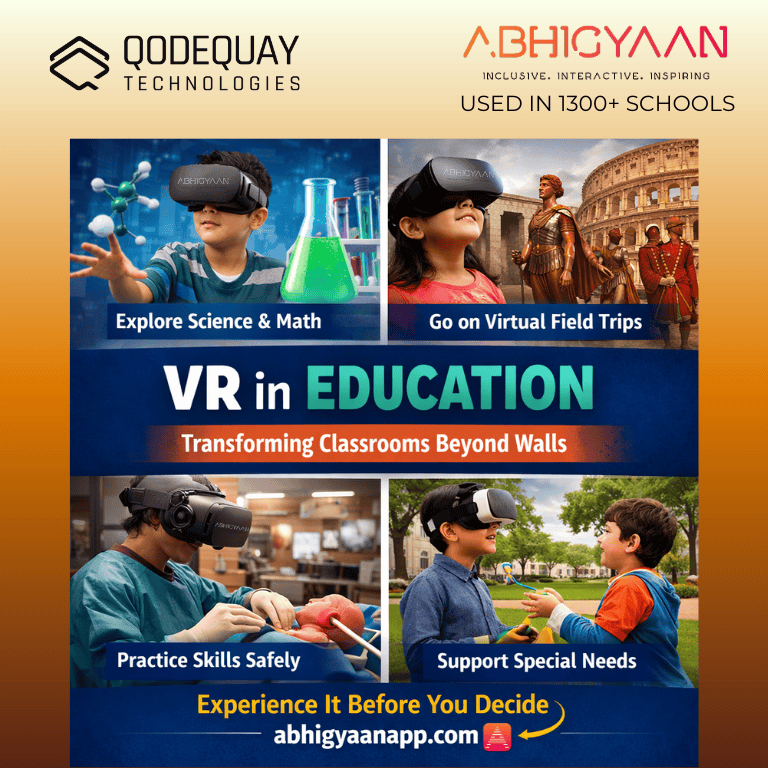
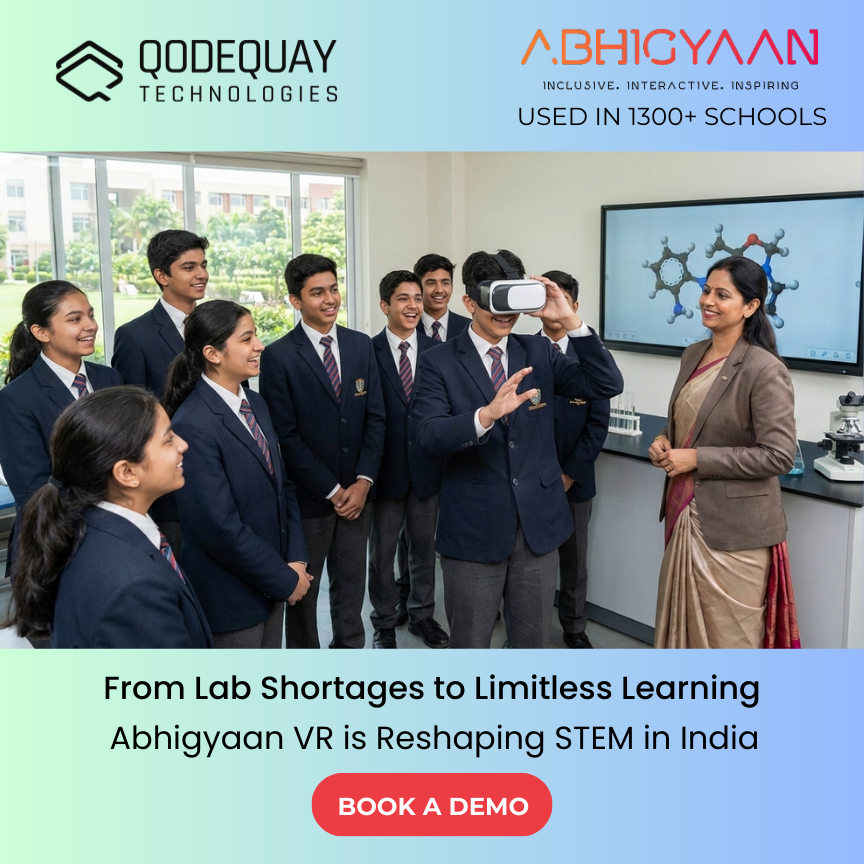
Many schools in India face limitations when it comes to laboratory infrastructure, safety equipment, or vocational training resources. Virtual Reality offers a solution by simulating lab experiments, technical procedures, and real-life scenarios in a controlled digital environment. Students can make mistakes, repeat tasks, and learn through trial and error without the risk of injury or damage.
This is especially beneficial for science labs, vocational education, and skill-based learning where safety and cost are major concerns.
Virtual Reality supports skill development by fostering critical thinking, problem-solving, empathy, and digital literacy.
Beyond academic knowledge, students need skills that prepare them for future careers and real-world challenges. VR-based learning scenarios encourage students to analyze situations, make decisions, and solve problems interactively. Role-based simulations can also help develop empathy and social awareness by placing students in different perspectives and environments.
In a rapidly digitizing India, VR also builds digital literacy, helping students become comfortable with emerging technologies from an early age.
VR helps bridge educational gaps by providing equal access to quality learning experiences.
Not all schools in India have access to museums, laboratories, industrial visits, or expert instructors. Virtual Reality can bring these experiences into classrooms regardless of location. Rural and underserved schools can offer the same immersive lessons as urban institutions, helping reduce disparities in educational quality.
By standardizing high-quality content, VR supports more inclusive and equitable education across the country.
Virtual Reality is not a replacement for teachers or traditional teaching methods, it is a powerful enhancement. In Indian schools, where challenges like engagement, infrastructure, and conceptual clarity persist, VR offers a practical and scalable solution. By increasing engagement, deepening understanding, improving retention, enabling safe practice, and supporting essential skill development, VR is steadily reshaping how students learn.
Used thoughtfully, Virtual Reality can help schools in India move beyond memorization and toward meaningful, experience-driven education. That is not hype, that is progress.

As the CEO and Founder of Qodequay Technologies, I bring over 20 years of expertise in design thinking, consulting, and digital transformation. Our mission is to merge cutting-edge technologies like AI, Metaverse, AR/VR/MR, and Blockchain with human-centered design, serving global enterprises across the USA, Europe, India, and Australia. I specialize in creating impactful digital solutions, mentoring emerging designers, and leveraging data science to empower underserved communities in rural India. With a credential in Human-Centered Design and extensive experience in guiding product innovation, I’m dedicated to revolutionizing the digital landscape with visionary solutions.
Follow the expert :


July 2, 2026
July 2, 2026
July 2, 2026
July 2, 2026
July 2, 2026
Monthly insights on AI, VR and DPDPA compliance — straight from our team to your inbox.
Free 30-minute consultation with our team — or see our products in action.