DPDPA Penalties Up to ₹250 Crore: The Real Cost of Waiting
July 2, 2026
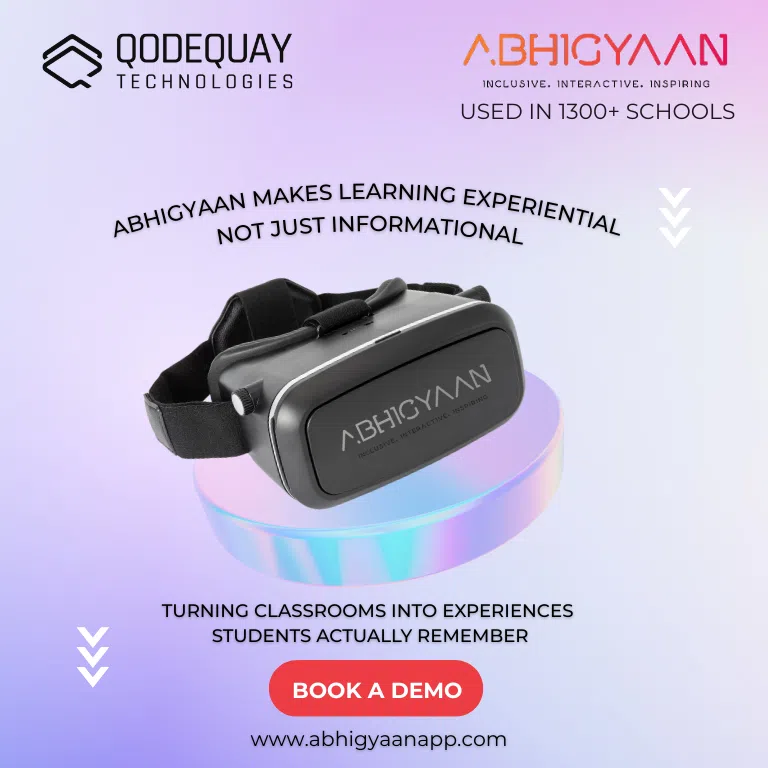
Classrooms are full of information. Students are not absorbing it.
You can explain a concept perfectly and still watch attention disappear within minutes. This is not because students lack ability, it is because learning that stays passive rarely stays memorable.
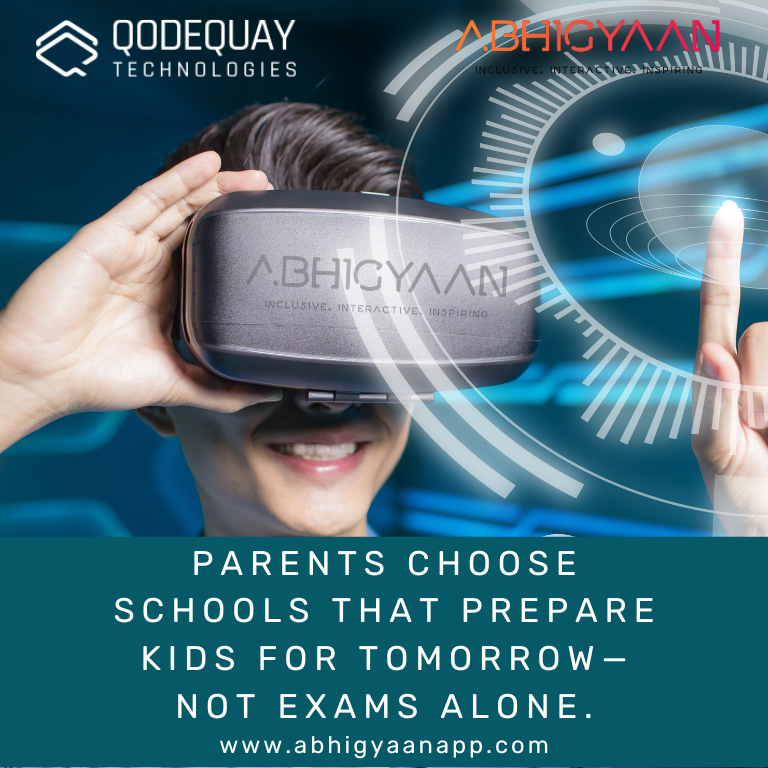
Experiential learning with VR changes this by turning lessons into experiences. Abhigyaan does not just deliver content, it places students inside the learning process. When learners see, interact, and explore, understanding becomes natural instead of forced.
This article explains why experiential learning matters, how Abhigyaan delivers it through Virtual Reality, and why schools cannot afford to delay this shift.
Experiential learning means students learn by doing, observing, and interacting, not just listening.
Instead of memorizing definitions or diagrams, learners engage directly with concepts. They explore environments, manipulate objects, and witness cause-and-effect relationships in real time.
With experiential learning using VR, education moves from information delivery to understanding creation.
Informational learning alone fails because it relies too heavily on memory instead of comprehension.
Textbooks and lectures present concepts in static form. Students are expected to imagine scale, movement, and interaction on their own. Many cannot, especially when concepts are abstract or complex.
This gap leads to:
Low engagement
Shallow understanding
Poor long-term retention
Repeated revision without clarity
Experiential learning solves this by making learning tangible.
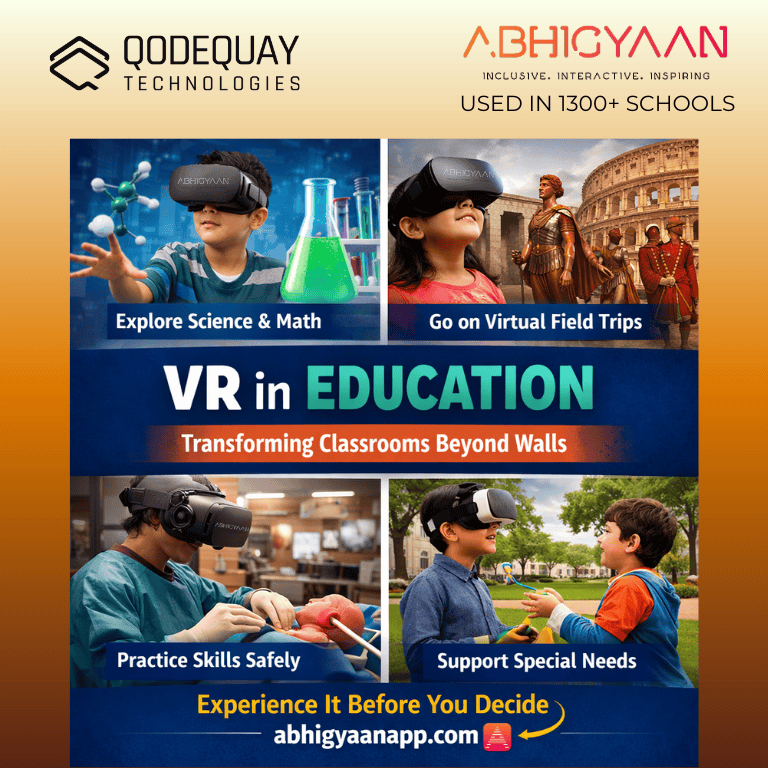
Abhigyaan makes learning experiential by using curriculum-aligned Virtual Reality to place students inside the lesson.
Instead of observing from the outside, learners become participants. They explore 3D environments, interact with objects, and experience concepts as they unfold.
Abhigyaan is designed specifically for schools, which means:
Content follows academic curriculum
Experiences are age-appropriate
Teachers remain central to instruction
Learning goals stay clear and measurable
This is not entertainment pretending to be education. It is structured experiential learning.
Experiential learning improves understanding by removing abstraction.
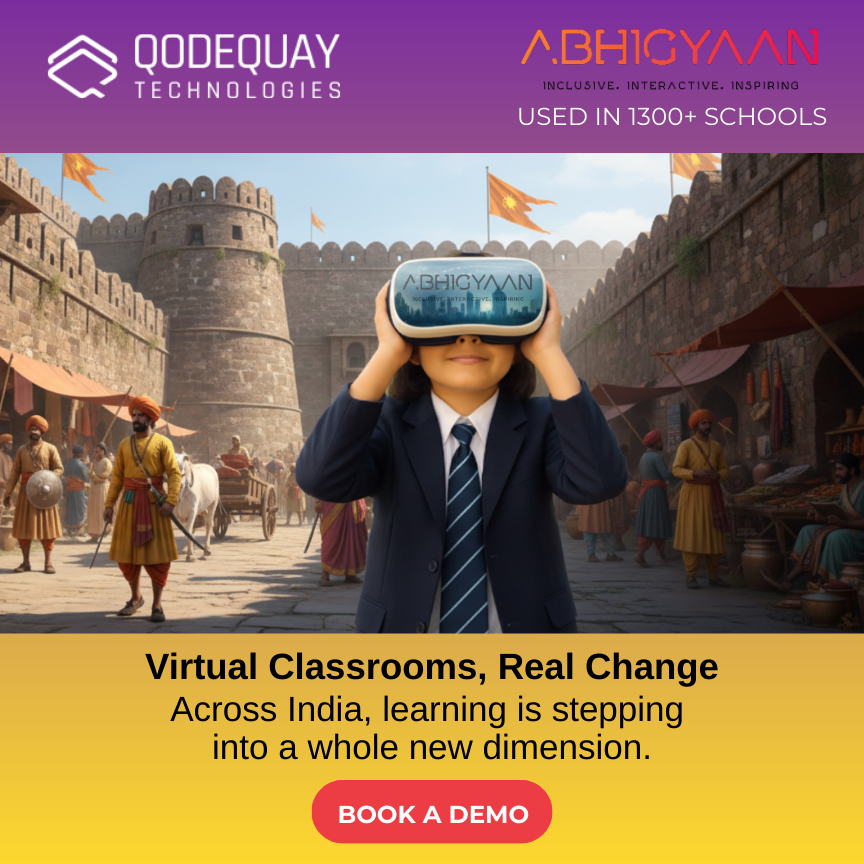
When students can see how a system works, rather than imagining it, confusion drops sharply. Concepts like molecular structures, ecosystems, physics laws, or historical settings become clear because students experience them spatially and visually.
This leads to stronger conceptual foundations and fewer learning gaps over time.
Experiential learning improves retention because the brain remembers experiences better than explanations.
VR-based learning activates multiple senses and emotional responses. This creates stronger memory pathways, making recall easier during exams and practical application.
Students do not just remember facts, they remember the experience of learning them.
Abhigyaan supports teachers by enhancing instruction, not competing with it.
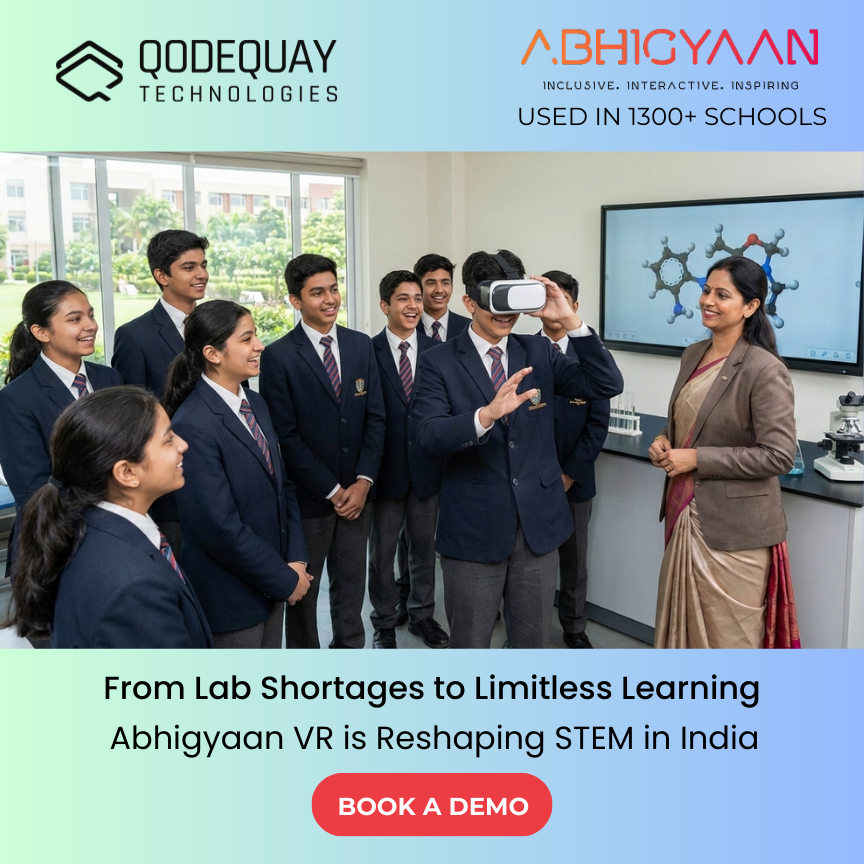
Teachers use VR as a teaching aid to:
Introduce complex topics
Reinforce difficult concepts
Spark discussion and curiosity
Improve classroom participation
The teacher remains the guide. VR becomes the tool that amplifies impact.
Experiential VR works best when used intentionally.
Best practices include:
Use VR for complex or abstract topics
Combine VR sessions with explanation and discussion
Keep experiences focused and time-bound
Train teachers for confident usage
Align VR activities with learning outcomes
When used correctly, VR becomes a powerful extension of teaching.
The future of education is experiential, interactive, and student-centered.
As expectations from parents and students rise, schools that rely only on informational teaching will struggle to keep up. Experiential learning with VR will move from being innovative to being expected.
Schools that adopt early gain confidence, capability, and credibility.
Information alone no longer ensures understanding
Experiential learning helps students learn by doing
VR makes complex concepts clear and memorable
Abhigyaan delivers curriculum-aligned VR for schools
Early adoption strengthens academic outcomes
Learning that students remember is learning they experience. Abhigyaan makes learning experiential, not just informational, by placing students inside the lesson instead of in front of it.
This shift does not require waiting, overhauling systems, or risking outcomes.
Abhigyaan brings experiential VR learning into your classrooms today, not someday and not after another academic year is lost.
See it in action.
👉 Book your VR demo now: https://abhigyaanapp.com/
Because the future of learning will not wait, and neither will your students.

As the CEO and Founder of Qodequay Technologies, I bring over 20 years of expertise in design thinking, consulting, and digital transformation. Our mission is to merge cutting-edge technologies like AI, Metaverse, AR/VR/MR, and Blockchain with human-centered design, serving global enterprises across the USA, Europe, India, and Australia. I specialize in creating impactful digital solutions, mentoring emerging designers, and leveraging data science to empower underserved communities in rural India. With a credential in Human-Centered Design and extensive experience in guiding product innovation, I’m dedicated to revolutionizing the digital landscape with visionary solutions.
Follow the expert :


July 2, 2026

July 2, 2026
July 2, 2026
July 2, 2026

July 2, 2026
Monthly insights on AI, VR and DPDPA compliance — straight from our team to your inbox.
Free 30-minute consultation with our team — or see our products in action.