DPDPA Penalties Up to ₹250 Crore: The Real Cost of Waiting
July 2, 2026
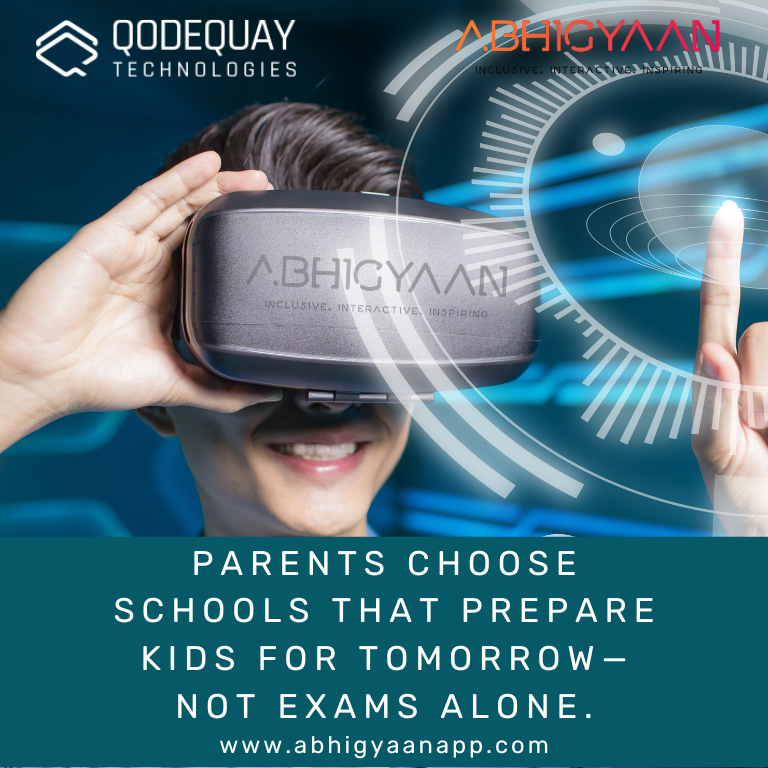
Attention spans are shrinking. Expectations are not. You see this daily in classrooms, students struggle to stay focused, teachers compete with screens, and complex topics feel harder to explain every year.
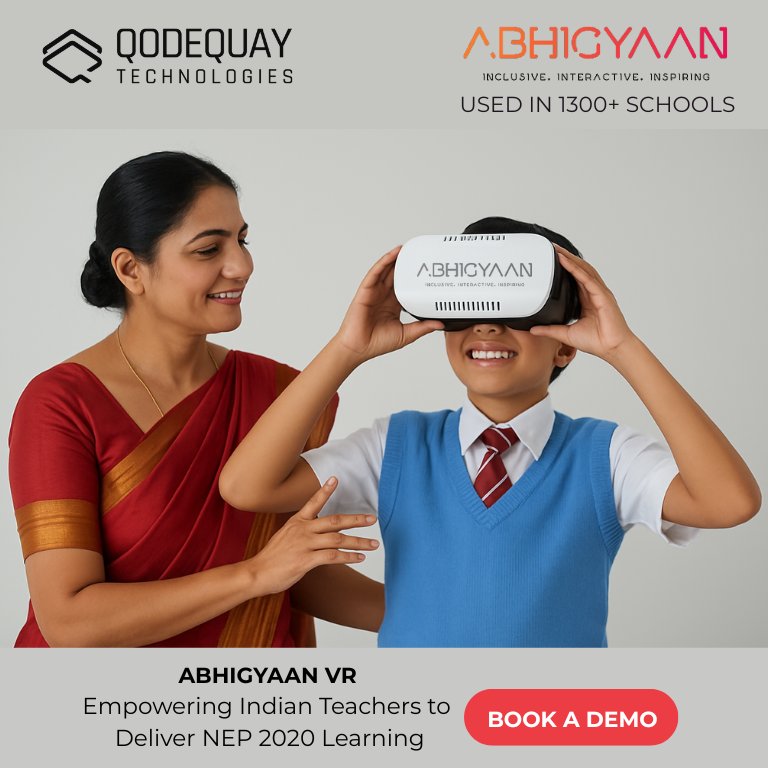
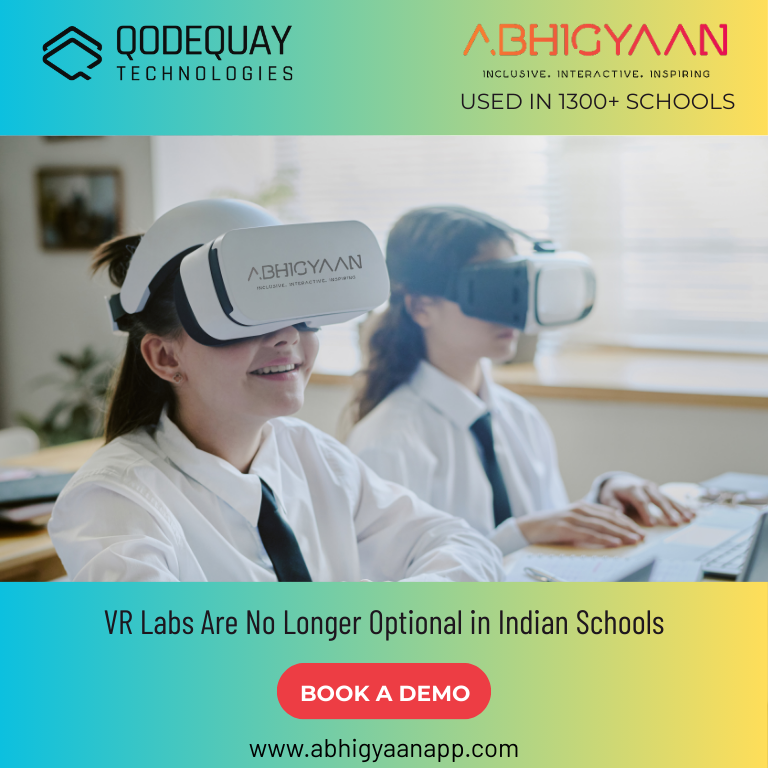
Virtual Reality in education addresses this gap by placing students inside the lesson, not in front of it. Instead of passively listening, learners interact with concepts in immersive 3D environments. When students can see, explore, and experience a topic, learning becomes active, memorable, and meaningful.
This article explains how VR is transforming classrooms, why it matters now, and how Abhigyaan helps schools adopt it without delay.
Virtual Reality in education is a teaching approach that uses immersive 3D environments to help students actively experience lessons.
Rather than relying only on textbooks or slides, VR allows learners to step into simulations, explore concepts spatially, and interact with content. This approach supports visual, experiential, and inquiry-based learning, which is critical for today’s students.
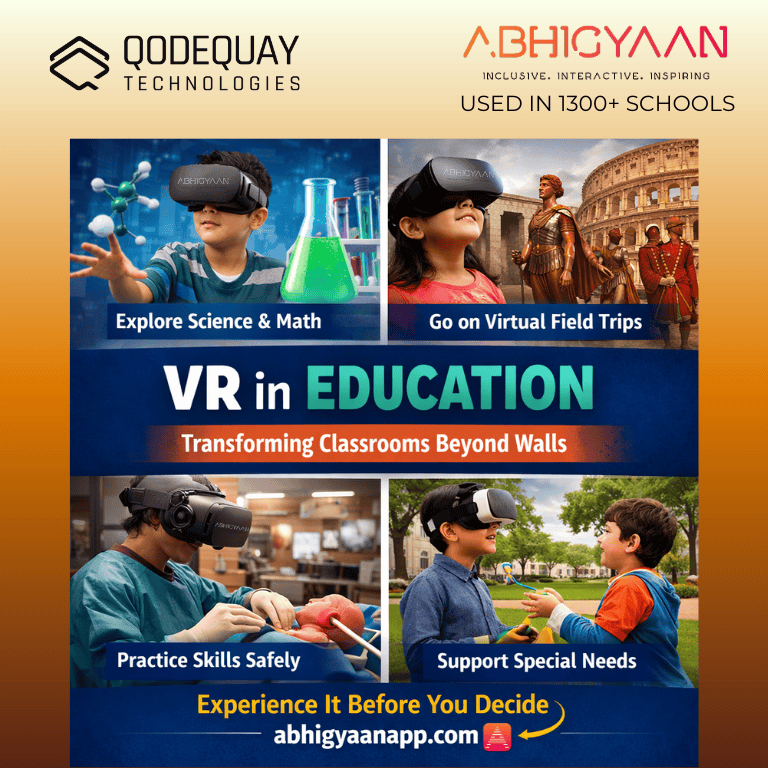
In practice, this means students can:
Explore the human body from the inside
Observe chemical reactions safely
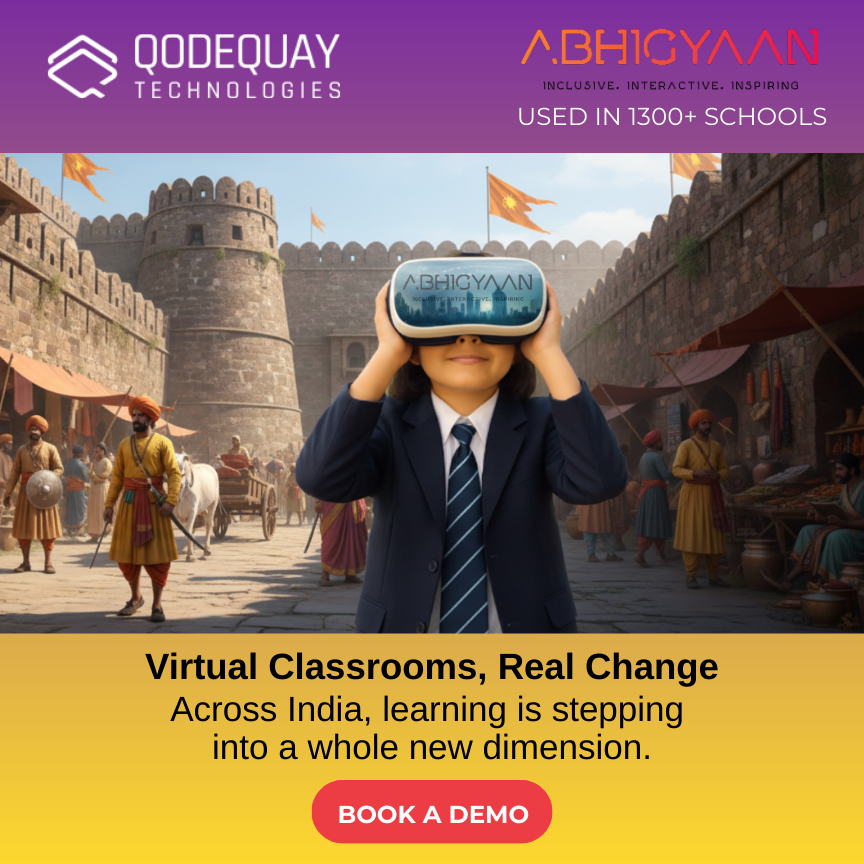
Travel through historical events
Understand ecosystems by navigating them
VR turns passive learning into active learning by making students participants rather than observers.
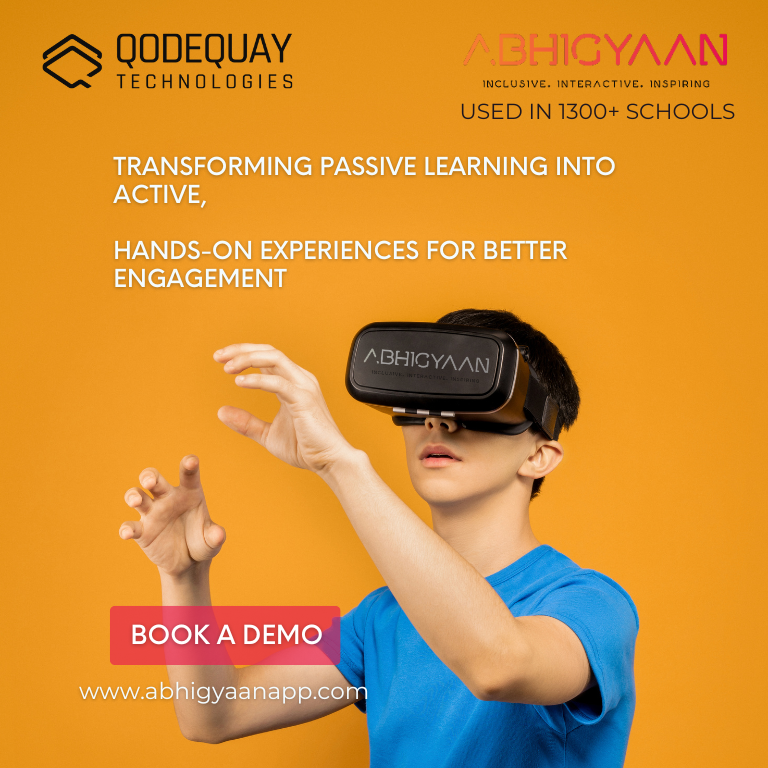
In traditional classrooms, students often listen, copy, and memorize. Virtual Reality requires them to look around, make choices, and interact with objects. This physical and cognitive engagement increases focus and reduces distraction.
Studies show that experiential learning improves engagement and motivation, especially for students who struggle with lecture-based instruction. In Indian classrooms with large class sizes, this shift is especially valuable.
Virtual Reality improves understanding by making abstract concepts visible and experiential.
Topics like molecular structures, physics principles, or geographic processes are difficult to imagine in two dimensions. VR presents these ideas in 3D space, allowing learners to observe relationships, scale, and movement clearly.
When students can explore rather than imagine, confusion decreases and conceptual clarity improves. This leads to stronger foundations and better academic outcomes.
VR improves retention by combining active learning with emotional engagement.
When learning involves exploration and discovery, the brain forms stronger memory connections. Students remember experiences longer than lectures. Virtual Reality creates those experiences inside the classroom.
This is particularly important in exam-focused systems, where long-term recall matters more than short-term memorization.
Now is the right time because delaying innovation costs learning outcomes.
Each academic year that relies only on passive methods is a missed opportunity. Students compare learning experiences. Parents expect modern classrooms. Skills required for future careers continue to evolve.
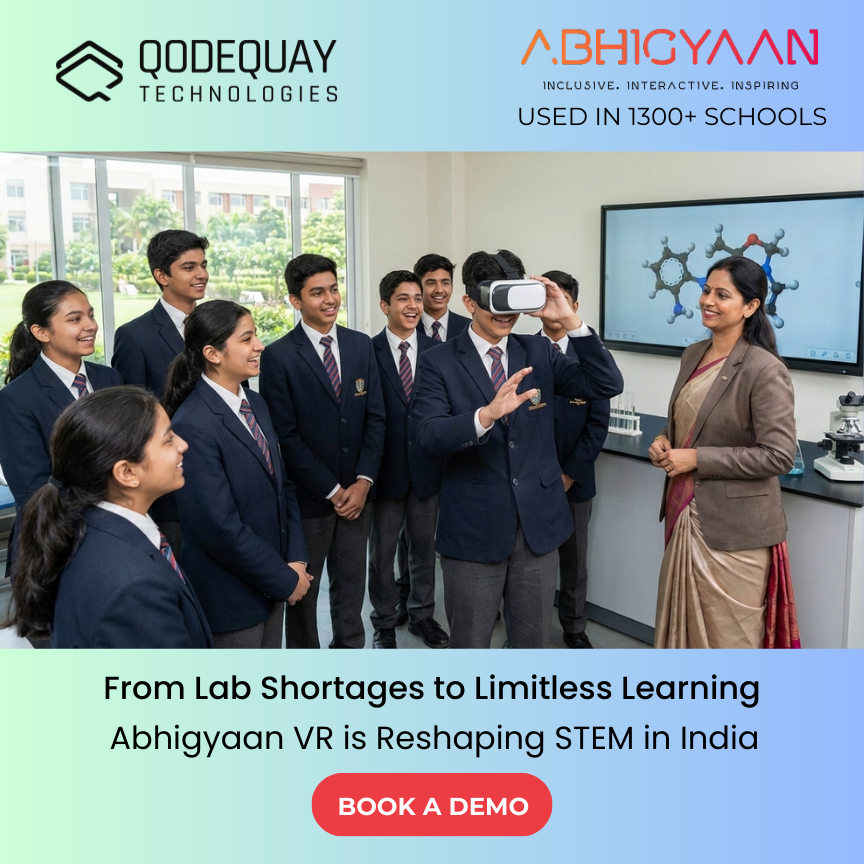
Abhigyaan brings curriculum-aligned VR into classrooms today, not someday and not after another year is lost to outdated methods. Schools can integrate VR without disrupting existing teaching structures.
Abhigyaan supports schools by offering structured, curriculum-aligned VR experiences designed for real classrooms.
Key benefits include:
Alignment with academic syllabus
Easy classroom integration
Teacher-friendly implementation
Engaging student experiences
Safe, scalable learning environments
Teachers experience a clear shift in classroom energy. Students remember what they learn, not just what they hear.
Effective VR implementation works best when used strategically.
Best practices include:
Use VR to explain complex or abstract topics
Combine VR sessions with guided discussion
Keep sessions short and focused
Train teachers before large-scale rollout
Integrate VR as a learning aid, not a replacement
The future of VR in education points toward deeper personalization and wider access.
In the coming years, VR will integrate with adaptive learning, analytics, and AI-driven feedback. Schools that adopt early will gain experience, confidence, and credibility with parents and students.
Virtual Reality will shift from being innovative to being expected.
Virtual Reality in education increases attention and engagement
Immersive learning improves understanding of complex topics
Experiential learning leads to better retention
VR supports safe, scalable classroom experiences
Early adoption helps schools stay competitive and relevant
Attention spans are shrinking, but expectations continue to rise. Virtual Reality in education meets this challenge by transforming how students learn, understand, and remember. When learners are placed inside the lesson, education becomes active instead of passive.
Abhigyaan brings this shift into your classrooms today. See it in action. Let your teachers experience the change. Let your students remember what they learn.
👉 Book your VR demo now: https://abhigyaanapp.com/
Because the future of learning will not wait, and neither will your students.

As the CEO and Founder of Qodequay Technologies, I bring over 20 years of expertise in design thinking, consulting, and digital transformation. Our mission is to merge cutting-edge technologies like AI, Metaverse, AR/VR/MR, and Blockchain with human-centered design, serving global enterprises across the USA, Europe, India, and Australia. I specialize in creating impactful digital solutions, mentoring emerging designers, and leveraging data science to empower underserved communities in rural India. With a credential in Human-Centered Design and extensive experience in guiding product innovation, I’m dedicated to revolutionizing the digital landscape with visionary solutions.
Follow the expert :


July 2, 2026

July 2, 2026
July 2, 2026
July 2, 2026

July 2, 2026
Monthly insights on AI, VR and DPDPA compliance — straight from our team to your inbox.
Free 30-minute consultation with our team — or see our products in action.