What is the difference between CBSE’s DIKSHA virtual labs and a school VR lab?
November 13, 2026
November 13, 2026
They are different tools that work best together. CBSE's 845+ DIKSHA virtual labs (Circular TRG-16/2026, 13 August 2026) are free, screen-based simulations, animations and self-check quizzes built by CIET-NCERT and mapped to NCERT chapters. A school VR lab is an on-campus set of headsets running immersive 3D experiences for groups. DIKSHA covers pre-lab study and home revision; VR delivers hands-on experiential learning; neither replaces board-exam practicals.
On 13 August 2026 CBSE's Training Unit issued Circular TRG-16/2026 asking every affiliated school to disseminate the 845+ curriculum-aligned virtual labs and digital resources hosted on DIKSHA. Since then, principals and lab coordinators have been asking us the same question: if the government is giving us virtual labs for free, do we still need a VR lab? It is a fair question, and the honest answer is that the two serve different jobs in the same science programme. This post sets out what each one is, where they overlap, and how a CBSE or state-board school should timetable them together.
The repository was developed by the Ministry of Education and MeitY through CIET-NCERT and first went live on DIKSHA on 29 July 2022, following the recommendation in paragraph 24.4 of NEP 2020 that existing platforms such as DIKSHA be used to create virtual labs. Each lab is mapped to NCERT curricula, learning outcomes, classes, subjects and chapters, and the content leans heavily towards Science and Mathematics from the upper-primary classes onwards.
A "virtual lab" here is a screen-based resource: an interactive simulation in which a student changes a variable and watches the result, an animation or short video of a procedure, and a self-assessment at the end. Students reach them five ways, all of which the circular lists: the DIKSHA portal and mobile app, the QR codes printed at the start of NCERT textbook chapters, grade-wise QR codes, the AI-powered Ask DIKSHA search, and DIKSHA's Personalised Adaptive Learning courses. There is no fee and no separate licence; a DIKSHA account is enough. CIET-NCERT also ran a five-day online orientation for teachers from 24 August to 1 September 2026, with the certificate course open on DIKSHA until 31 March 2027.
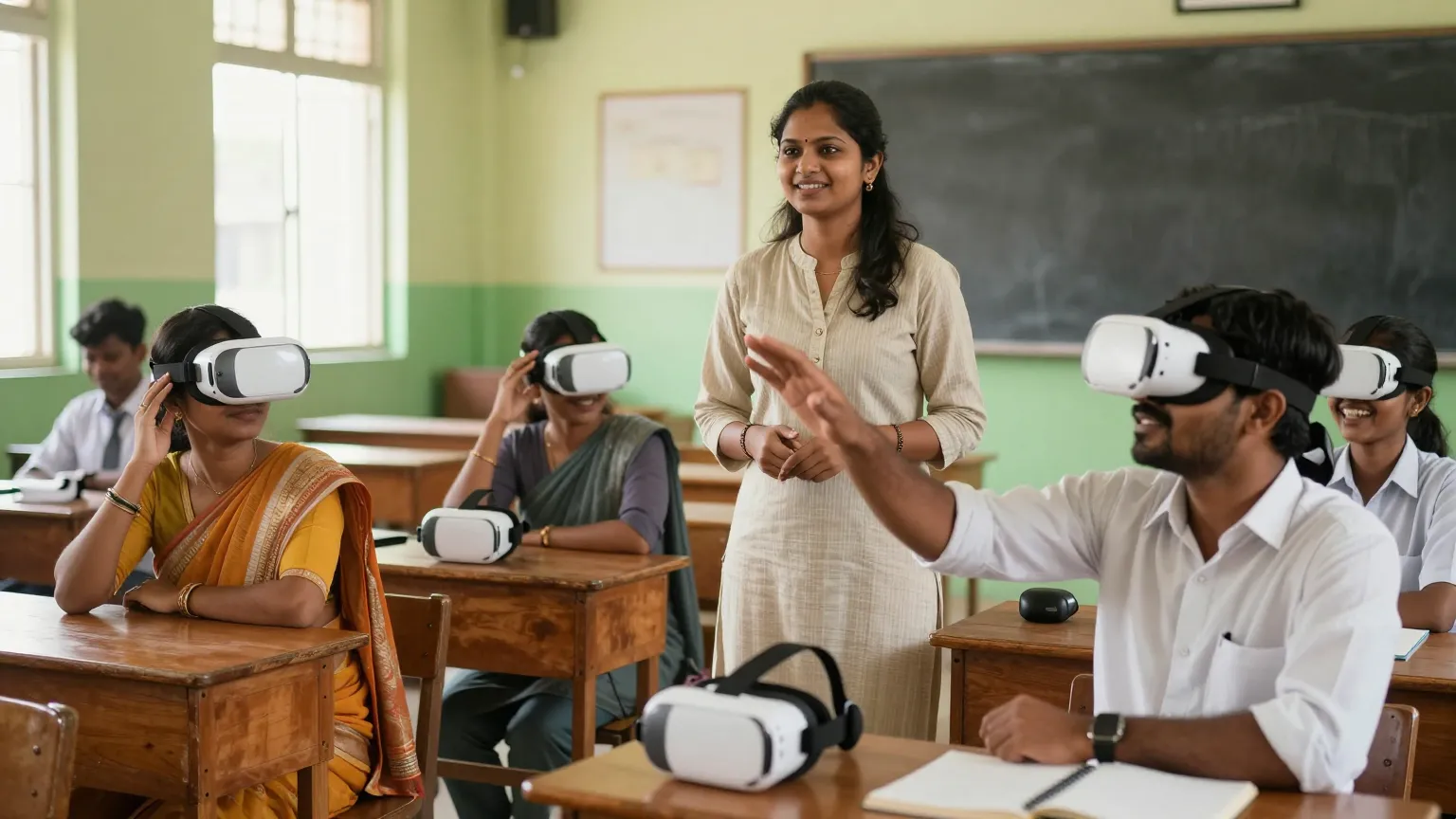
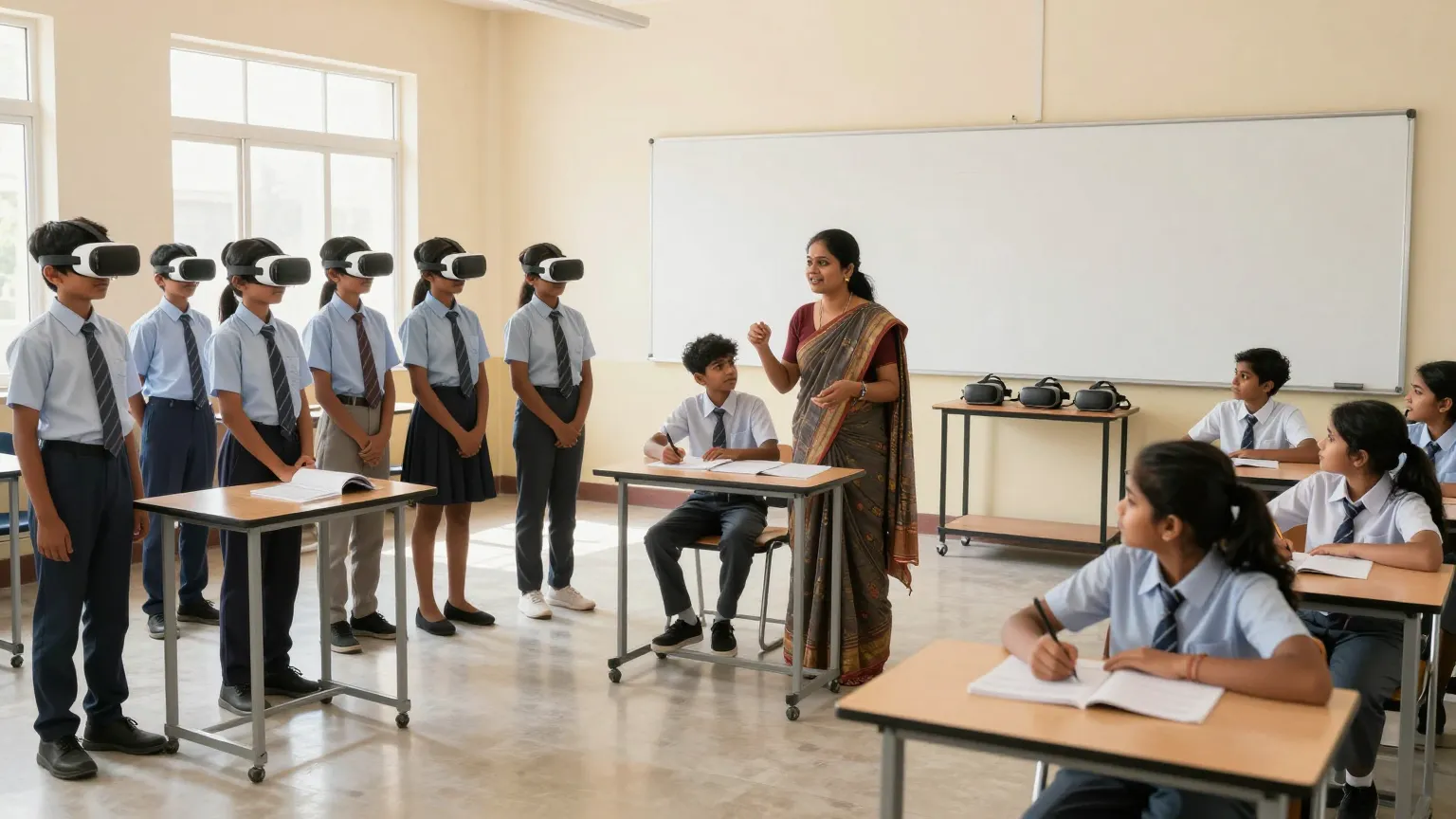
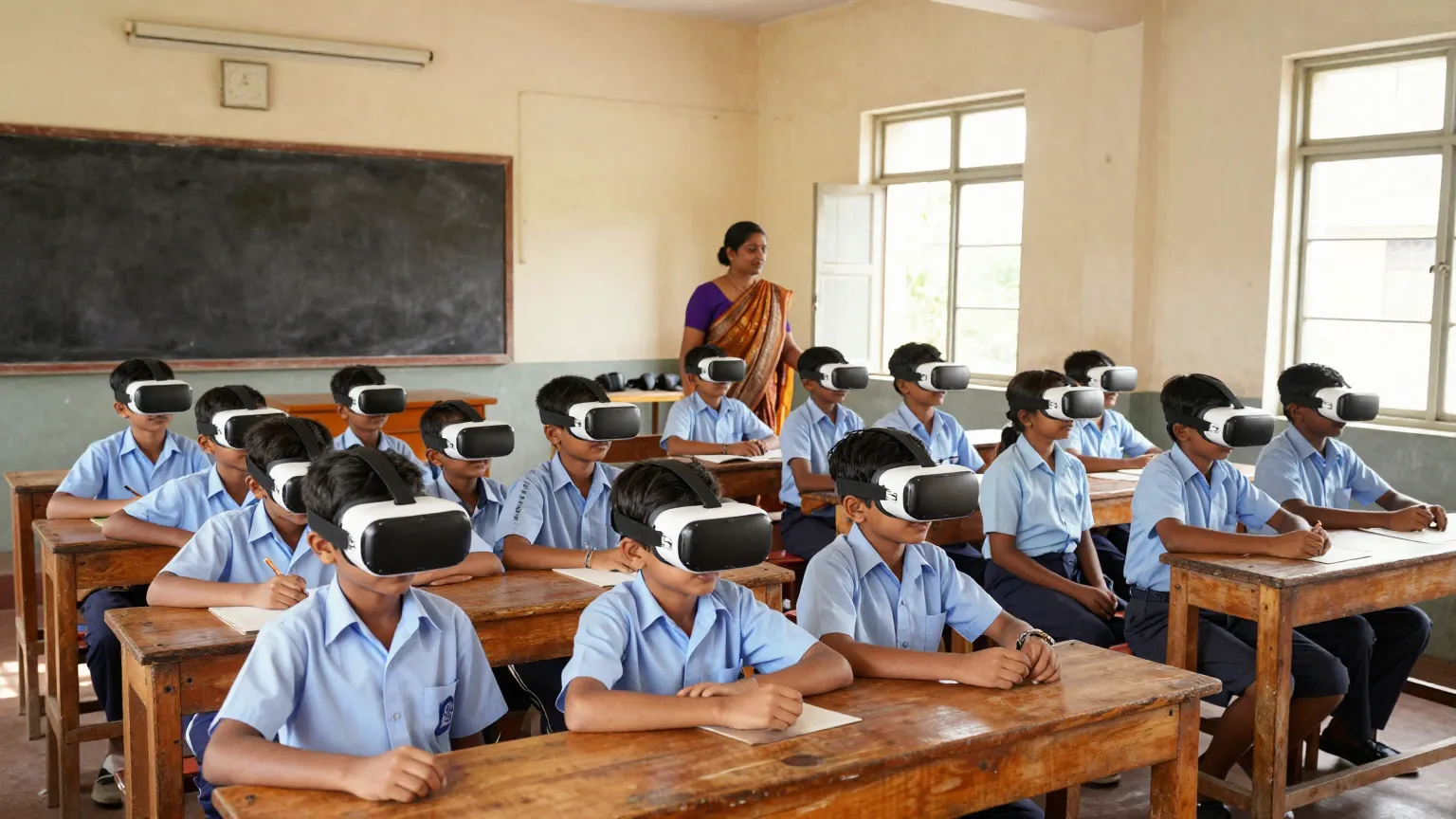
A VR lab puts the student inside the phenomenon rather than in front of it. The learner stands in the solar system, walks through a plant cell, looks up at a Harappan granary, or handles a chemical reaction that a school would never run live. Three things follow from that which a 2D simulation on a phone cannot reproduce.
The trade-off is equally clear. A VR lab costs money, occupies a room, needs charged headsets and Wi-Fi, and works only if teachers are trained to run a rotation. DIKSHA costs nothing and runs on the devices families already own, within the limits of their data and screen size.
| Dimension | DIKSHA virtual labs (CIET-NCERT) | School VR lab |
|---|---|---|
| What it is | 845+ screen-based simulations, animations, videos and quizzes | Immersive 3D experiences on 8 to 14 headsets in a dedicated room |
| Who built it | Ministry of Education and MeitY through CIET-NCERT; disseminated by CBSE (TRG-16/2026) | Platform vendor; content mapped to CBSE or state-board chapters with the school |
| Cost to the school | Free; DIKSHA account only | Capital cost for headsets, content licence and training; see our VR lab budget guide |
| Where it is used | Anywhere: phone, tablet, computer lab, home | On campus, in a timetabled period |
| Who uses it | One student at a time, self-paced | A whole section in a rotation, teacher-led |
| Best for | Pre-lab preparation, revision, homework, concept checks | Scale, danger, invisibility and distance: topics a textbook or screen flattens |
| Teacher training | CIET-NCERT online orientation and DIKSHA certificate course | Vendor onboarding, typically 12 to 16 hours per teacher in term one |
| Board practicals | Supplements; does not replace | Supplements; does not replace |
| Internet | Needs data on each student's device | School Wi-Fi; many platforms cache content on the headset |
No, and schools should not plan as if they could. CBSE's Class 12 Physics, Chemistry and Biology papers carry 70 marks of theory and 30 marks of practical, and Class 10 Science carries 80 marks of theory with 20 marks of internal assessment, with the practical component assessed in the school laboratory. CIET-NCERT itself describes the virtual labs as a way to give every student access to practical, experiment-based learning, and the CBSE circular asks schools to encourage use of the resources; neither document suggests that a simulation substitutes for a bench experiment in the assessment scheme.
The useful framing is a three-layer practical stack. DIKSHA simulations come first, so that students arrive at the bench knowing what the apparatus does and what result to expect. The VR lab comes next for the topics where a physical lab cannot go, and for the whole-class experiential periods the timetable needs. The physical laboratory remains the place where board-assessed skills are learned and marked. The practical benefit of using all three is fewer wasted bench periods, because the familiarisation has already happened on a screen.
A workable pattern for Classes 6 to 10 looks like this for each chapter that is mapped to VR:
Six to eight VR-mapped chapters per subject per term is enough; the rest of the syllabus uses DIKSHA and the physical lab alone. For government and aided schools weighing the capital cost, our guide on how a government school pays for a VR lab covers Samagra Shiksha, CSR and PM SHRI routes.
The two tracks are already running side by side in public institutions. On 31 July 2026 the New Delhi Municipal Council opened a "Viksit Bharat Anubhavshala" at Navyug School, Sarojini Nagar, with eight VR headsets and content covering more than 70 CBSE curricular and co-curricular topics for Classes 6 to 10, from virtual science experiments to tours of monuments and the solar system. Two weeks later CBSE's circular pushed every affiliated school towards the free DIKSHA repository. In Maharashtra, Abhigyaan, Qodequay's VR/XR immersive learning platform, is deployed in 1,350 Zilla Parishad schools reaching 1.5M+ students, with CBSE and state-board chapter mapping, a multilingual AI voice tutor inside each experience, and teacher dashboards that record which sections have completed which modules. None of these schools has stopped using the physical lab, and all of them point students to DIKSHA for revision.
If you are deciding whether a VR lab belongs in your school's science programme, or how to fit it around the DIKSHA resources you already have, book a 30-minute call with our education team and we will map the chapters, the timetable and the budget for your board and class sizes.
Yes. The 845+ virtual labs are hosted on the government's DIKSHA platform and need only a DIKSHA account. Students and teachers reach them through the DIKSHA portal or app, the QR codes printed in NCERT textbooks, grade-wise QR codes, Ask DIKSHA and PAL courses. CBSE Circular TRG-16/2026 of 13 August 2026 asks schools to promote their use.
No. CBSE's practical and internal-assessment marks, such as 30 of 100 in Class 12 science subjects, are assessed in the school laboratory. Virtual labs and VR prepare students for the bench and add experiences a physical lab cannot offer, but CIET-NCERT and CBSE present them as supplements to hands-on experiment-based learning, not substitutes.
The repository is organised grade-wise, subject-wise and chapter-wise, and is mostly Science and Mathematics from the upper-primary classes upward, with smaller coverage in other subjects. There is no single published catalogue, so teachers should search the DIKSHA portal or scan the chapter QR code in the NCERT textbook to see what exists for a given chapter.
A VR lab needs school Wi-Fi for updates, dashboards and multi-user sessions, although most school VR platforms cache experiences on the headset so a period does not fail when the connection drops. DIKSHA, by contrast, needs data on each student's own device, which is why many schools run its simulations in the computer lab as well as at home.
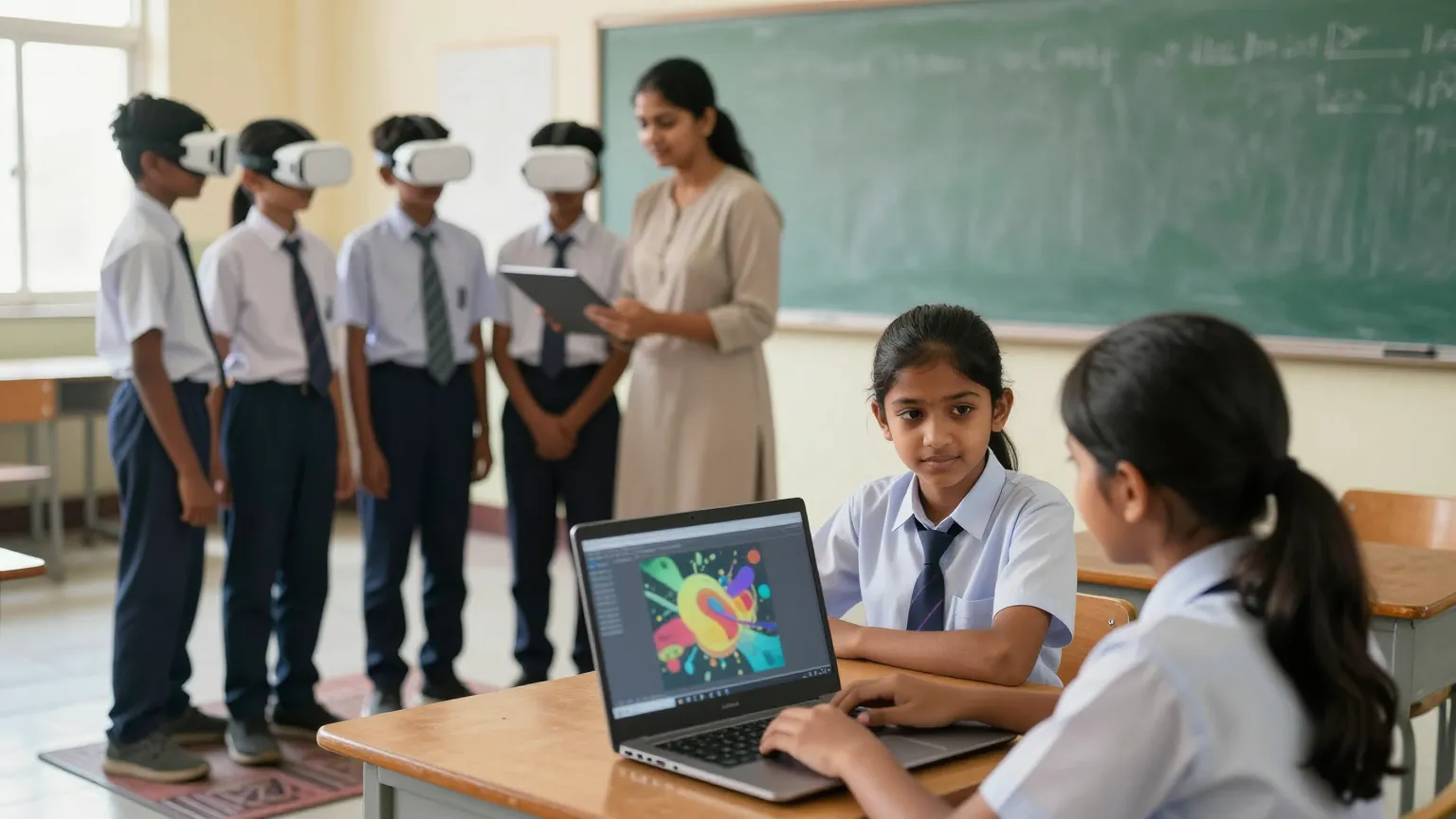
For a 40-student section, 12 to 14 headsets run a three-station rotation in a single 40-minute period, with one third of the class in VR while the others work on a DIKSHA simulation or a worksheet. Smaller schools start with eight headsets and run two rotations. Our headset-count guide explains the arithmetic for different class sizes.

I am a founder director at Qodequay Technologies Pvt. Ltd., a leading digital transformation consulting firm that helps clients across industries to innovate, optimize, and grow their businesses. I have over two decades of experience in the digital domain, spanning product development, e-commerce, user experience, design thinking, web and app development, and business leadership. My core competencies include developing and executing digital transformation strategies, building teams globally, roadmaps, and solutions that leverage data, insights, and emerging technologies such as artificial intelligence, augmented reality, blockchain, and immersive experience. I also have expertise in digital commerce, supply chain integration, and product management, having worked with both B2B and B2C brands in various sectors. My mission is to create value for customers and stakeholders by delivering impactful and engaging digital experiences that drive growth and innovation.
November 13, 2026
November 12, 2026
November 11, 2026
November 10, 2026
November 9, 2026
Monthly insights on AI, VR and DPDPA compliance — straight from our team to your inbox.
Free 30-minute consultation with our team — or see our products in action.