DPDPA Penalties Up to ₹250 Crore: The Real Cost of Waiting
July 2, 2026
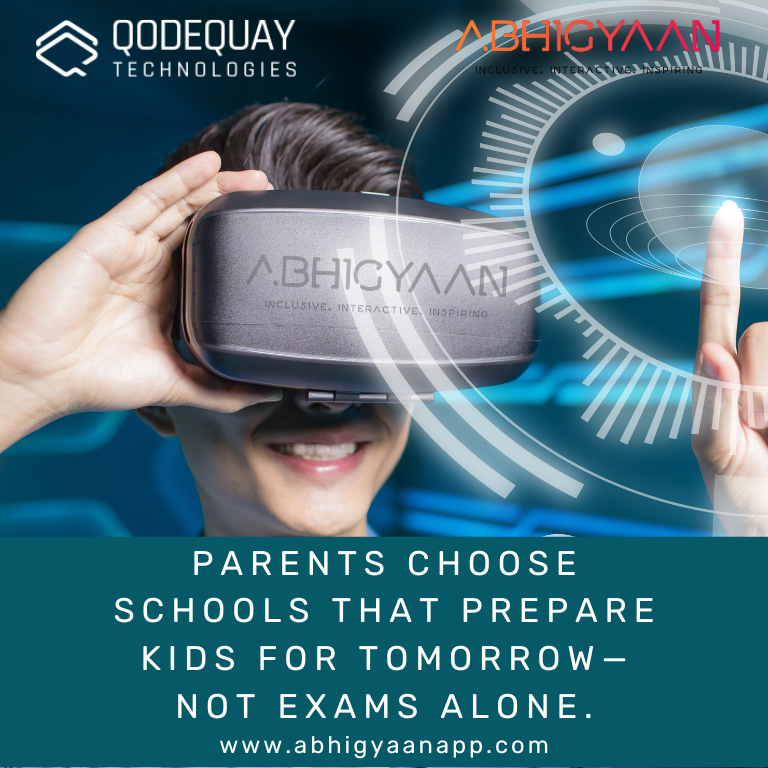
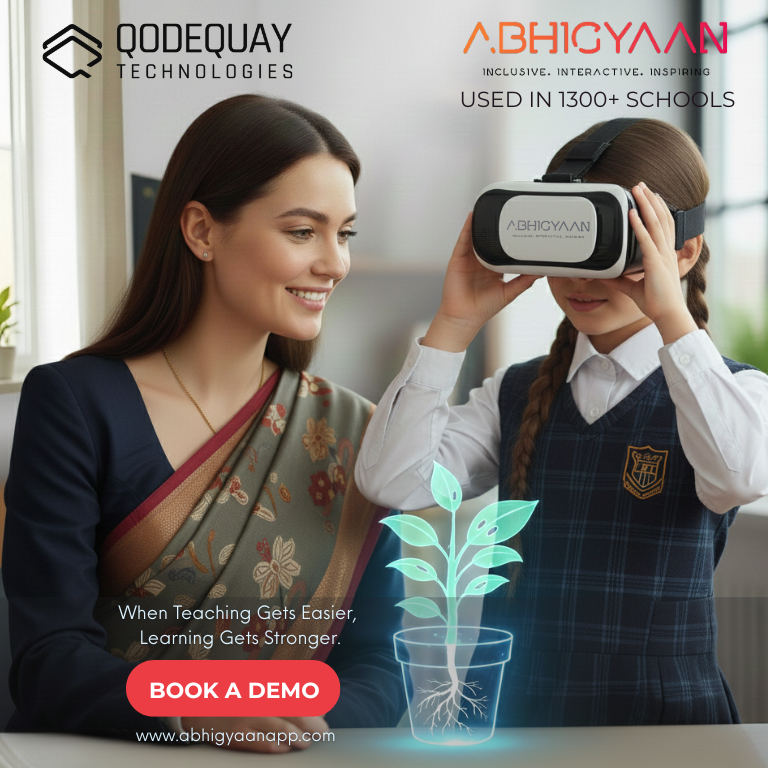
Across India’s major cities, schools are competing in a crowded market where parents have more choices than ever. Smart boards and high‑speed Wi‑Fi are now baseline. What truly sets a school apart is how students experience learning and not just the infrastructure around them.
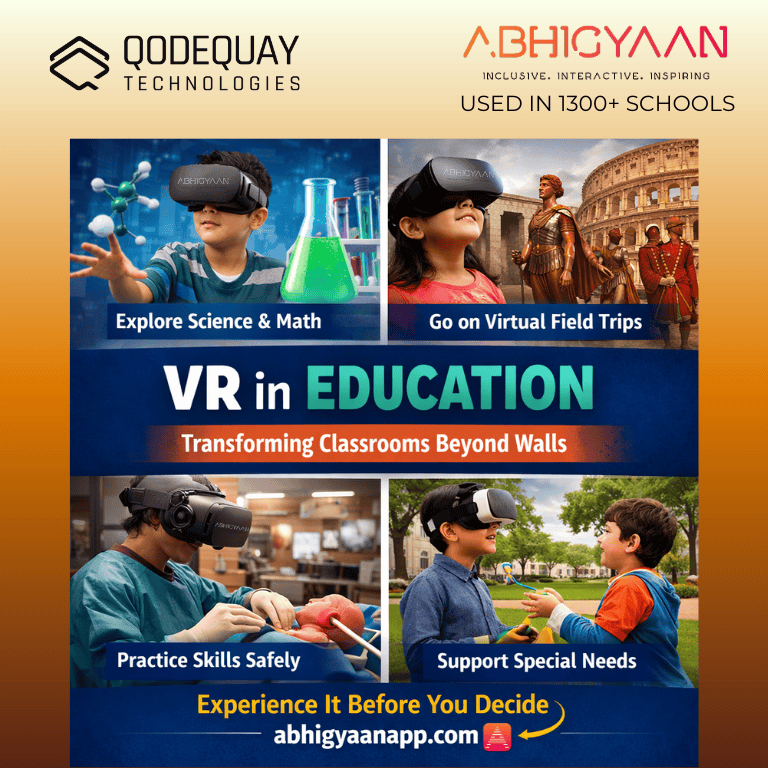
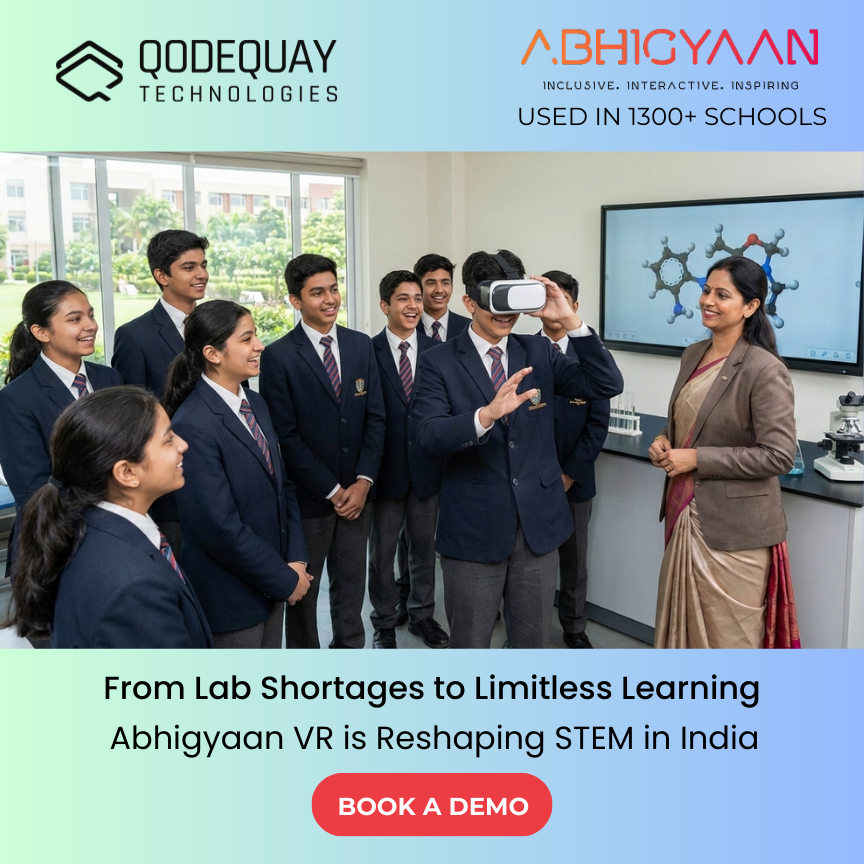
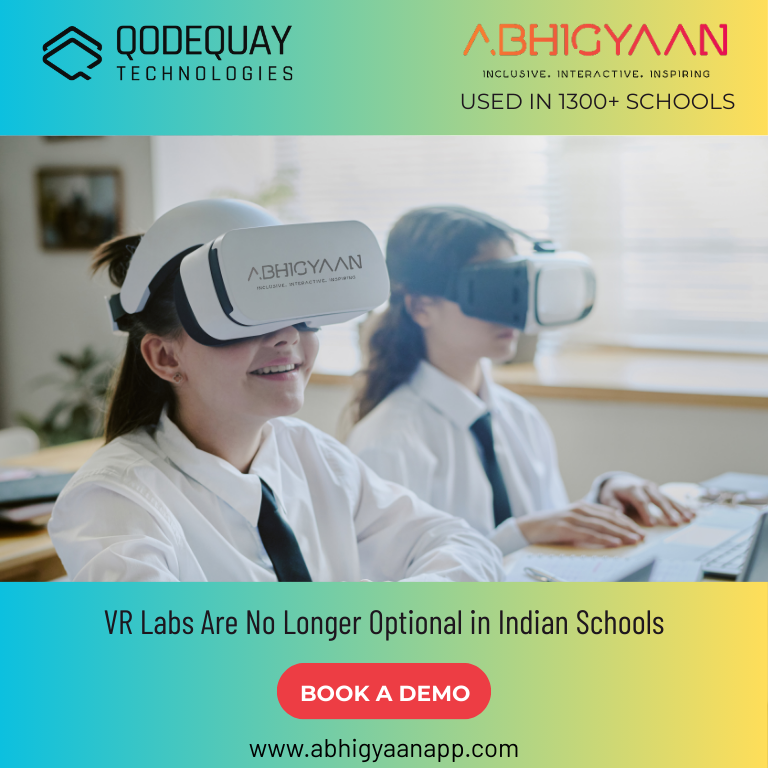
Immersive Virtual Reality (VR) brings concepts to life: a student can walk through the human heart, explore the solar system in 3D, or step into a historical moment turning learning from passive reading into active experience. This aligns with India’s NEP 2020 emphasis on experiential, multidisciplinary learning and gives schools a real, visible edge during admissions season.
Bottom line: VR isn’t a trend; it’s a strategic differentiator that improves learning, delights parents, and strengthens your school’s brand.
VR (Virtual Reality) uses headsets and interactive 3D environments to place students inside a learning scenario. Unlike a video, VR is fully immersive and interactive, students can look around, manipulate objects, and experience scale, depth, and context.
How it works in class:
Why it matters: The brain retains experienced information better than information merely read or heard. VR transforms abstract topics into tangible experiences, lifting attention, curiosity, and retention.
Even the most dedicated teachers encounter these realities:
Rote learning fatigue: Students memorise for exams but struggle to apply concepts.
Visualization gaps: Complex ideas (e.g., molecular structures, planetary motion) are hard to picture from a 2D textbook.
Engagement dips: Competing stimuli (screens, short attention spans) demand richer classroom experiences.
VR doesn’t replace teachers, it amplifies them. It gives teachers a powerful visual and experiential toolkit that accelerates understanding and makes lessons memorable.
For Students
For Teachers
For School Management
1) Strategic Fit with NEP 2020 India’s NEP 2020 encourages experiential learning, conceptual clarity, and multidisciplinary thinking. VR operationalizes these goals in the classroom, the “how” that brings policy into practice. It supports competency‑based education, helps bridge learning gaps, and enriches STEM and humanities alike.
2) Admissions & Positioning Parents touring schools are asking a new question: “How is learning different here?” A live VR showcase becomes a memorable proof point, something families talk about after the visit. In competitive localities, this can be the deciding factor between two otherwise similar schools.
3) Practicality & Rollout
4) Safety, Governance, and Usage Norms
5) ROI & Measurement
VR is not a one‑off gadget. It’s an academic and brand strategy that integrates with your school’s vision, marketing, and results.
1) Learning Kids Can Feel Children don’t just see a diagram of the heart, they step inside it. They don’t just read dates from history, they walk through ancient civilizations. This type of learning sticks.
2) Better Attention, Better Understanding VR grabs attention naturally and helps kids grasp tough topics faster. When students truly understand, confidence rises and exam results follow.
3) Safe, Guided, Teacher‑Led VR sessions are short, planned, and supervised by trained teachers. Content is age appropriate, aligned to the curriculum, and used to enhance, not replace, teaching.
4) Future‑Ready Skills Immersive learning moves education beyond memorizing facts for exams and into "learning by doing," which naturally builds the curiosity, problem-solving skills, and tech confidence kids need to thrive today. Parents are increasingly looking for schools that focus on these real-world capabilities, ensuring their children are actually prepared for the future rather than just being good at taking tests.
“Is VR safe for children?” Yes, when used with age‑appropriate content, short sessions, and hygiene protocols. Responsible schools follow clear guidelines on session length and teacher supervision.
“Will teachers find it hard to use?” Modern VR classroom tools are built for teachers. After a short orientation, most teachers find lesson prep faster and explanations easier.
“Is this a distraction?” Used correctly, VR is the opposite of a distraction, it’s a focus tool. It helps students visualize, participate, and remember.
“Is it too expensive?” Most schools don’t jump in all at once; they usually start small with just one lab or a single cart of equipment to see how it works. As they see students getting excited and learning better, they gradually add more. While these tools cost money, the investment pays off because the school becomes more modern and attractive to parents, and the students get a much better education.
A powerful demo should let your academic leaders and teachers:
You don’t fully “get” VR until you experience it. That’s why schools that book demos make faster, more confident decisions and implement more smoothly.
Families want learning that excites children and builds real understanding. Teachers want better tools to explain complex ideas. Principals want visible differentiation and measurable impact.
VR‑powered immersive learning satisfies all three, and places your school among the few that don’t just promise “quality education,” but deliver unforgettable learning experiences.
Seeing a VR lesson live will answer every stakeholder’s real questions in minutes:
Don’t evaluate VR on a brochure, experience it.
Book a live demo for your school today and let your leadership team see the difference firsthand.
Click the website link or visit 🔗 www.abhigyaanapp.com Give your students learning they will remember, and your school the edge it deserves.

As the CEO and Founder of Qodequay Technologies, I bring over 20 years of expertise in design thinking, consulting, and digital transformation. Our mission is to merge cutting-edge technologies like AI, Metaverse, AR/VR/MR, and Blockchain with human-centered design, serving global enterprises across the USA, Europe, India, and Australia. I specialize in creating impactful digital solutions, mentoring emerging designers, and leveraging data science to empower underserved communities in rural India. With a credential in Human-Centered Design and extensive experience in guiding product innovation, I’m dedicated to revolutionizing the digital landscape with visionary solutions.
Follow the expert :


July 2, 2026
July 2, 2026
July 2, 2026
July 2, 2026

July 2, 2026
Monthly insights on AI, VR and DPDPA compliance — straight from our team to your inbox.
Free 30-minute consultation with our team — or see our products in action.