DPDPA Penalties Up to ₹250 Crore: The Real Cost of Waiting
July 2, 2026
January 21, 2026
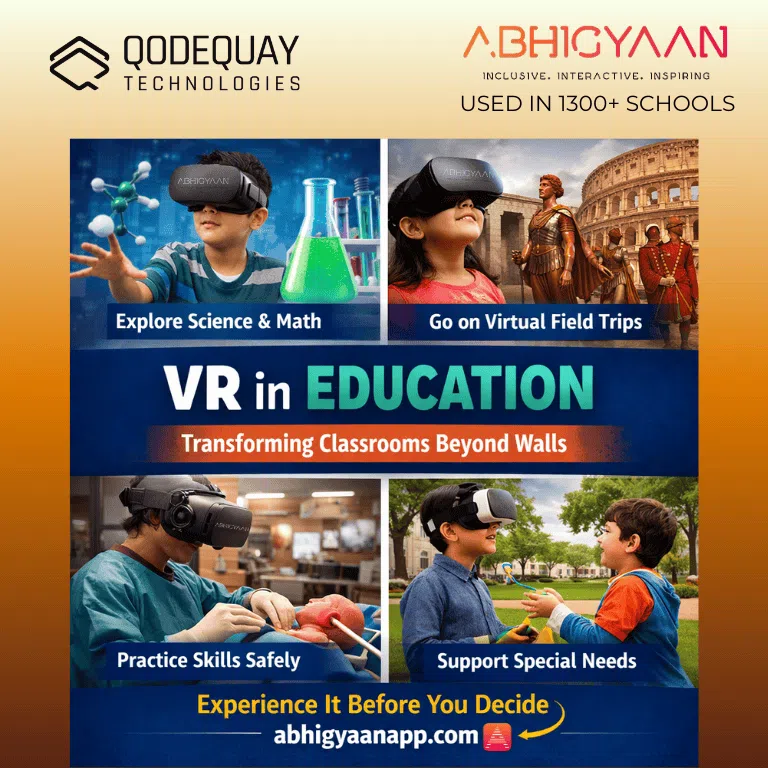
VR in education is transforming how you teach and how students learn by turning lessons into experiences.
Instead of memorizing information from textbooks or slides, students step inside concepts, environments, and scenarios. Learning becomes active, visual, and memorable.
This article explains how VR in education works, where it delivers the most value, and why schools worldwide are adopting immersive learning to improve engagement, retention, and access.
VR in education uses immersive simulations to help you learn by doing rather than listening. Students wear a VR headset and enter a digital environment designed around a lesson, activity, or skill.
Unlike videos or animations, VR places students inside the experience. They explore, interact, make decisions, and learn from outcomes. Research shows experiential learning improves retention by up to 75 percent compared to passive methods.
This shift matters because traditional classrooms struggle with attention, abstract topics, and unequal access to quality resources.
VR improves engagement by making learning interactive and emotionally memorable. When students move through ancient cities or perform virtual experiments, curiosity replaces boredom.
Key reasons VR boosts learning outcomes:
Multisensory experiences strengthen memory
Interactive tasks demand active participation
Visual and spatial learning improves understanding
Emotional connection increases recall
A Stanford study found that immersive learning leads to deeper comprehension and longer retention than traditional instruction.
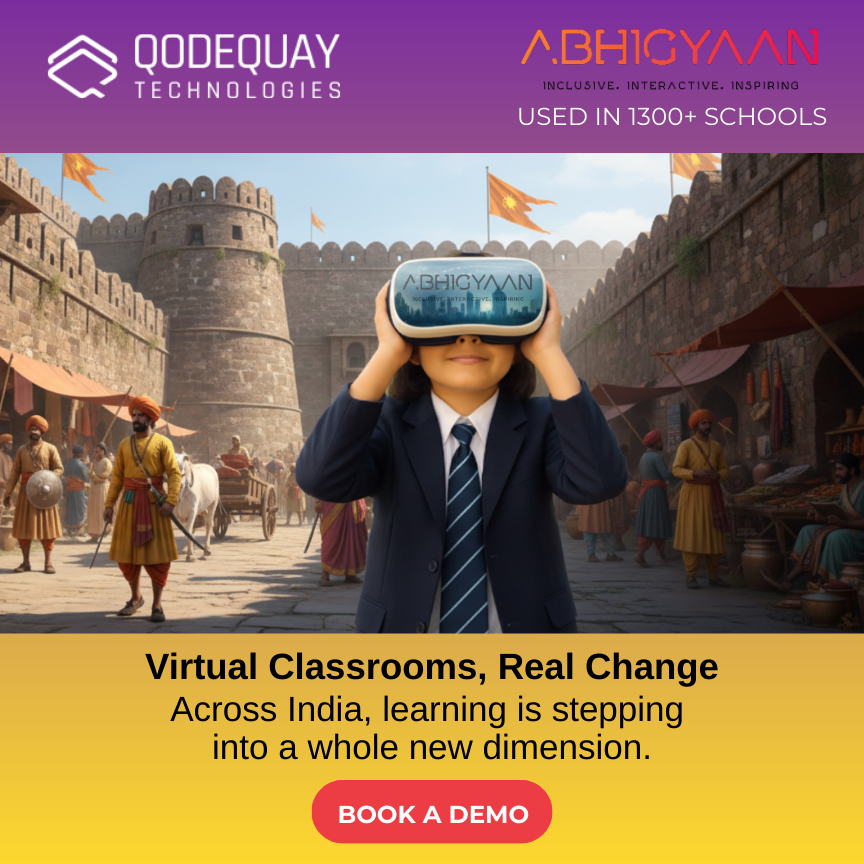
Virtual field trips allow students to explore places that are otherwise inaccessible. You can walk through Ancient Rome, visit global museums, or travel to Mars without leaving school.
Benefits of Virtual Field Trips
No travel cost or safety concerns
Equal access for urban and rural schools
Cultural and geographical immersion
Stronger global awareness
For schools with limited budgets, VR removes logistical barriers while expanding exposure.
VR in education makes abstract STEM concepts tangible and safe to explore. Students learn science and math by interacting with 3D models instead of static diagrams.
STEM Applications of VR
Conduct chemistry experiments without risk
Explore human anatomy layer by layer
Visualize physics concepts like forces and motion
Perform virtual dissections ethically
According to PwC research, learners trained in VR complete tasks up to four times faster than classroom learners.
VR enables realistic skill training without real-world consequences. Students practice complex or high-risk skills in controlled environments.
Skill-Based Learning Through VR
Medical and surgical training
Machinery and vocational skills
Public speaking and communication
Emergency response simulations
Immediate feedback allows learners to correct mistakes early, building confidence before real-world application.
VR brings history to life by placing students inside real moments and cultures. Instead of reading about events, students experience them.
Benefits include:
Better historical understanding
Stronger empathy development
Improved cultural awareness
Deeper contextual learning
Studies show experiential history learning increases recall and critical thinking compared to textbook-based methods.
VR connects remote learners in shared virtual classrooms. Students collaborate, discuss, and learn together regardless of location.
This is especially valuable for:
Remote and underserved regions
International collaboration
Hybrid learning environments
VR restores presence, which traditional online learning often lacks.
VR in education allows personalized learning for diverse needs, including autism. Students practice real-life skills like road safety or social interaction in calm, repeatable environments.
Inclusive Benefits of VR
Controlled sensory stimulation
Self-paced learning
Improved real-world skill transfer
Reduced anxiety during practice
Educators report improved engagement and confidence among special-needs learners using VR-based instruction.
To succeed with VR, schools should:
Align VR content with curriculum goals
Train teachers alongside students
Start with high-impact subjects
Measure learning outcomes consistently
Focus on pedagogy, not novelty
VR works best as a teaching tool, not a distraction.
VR in education will move from experimentation to standard infrastructure. By 2030, immersive learning is expected to be part of mainstream curricula worldwide.
Emerging trends include:
AI-driven personalized VR lessons
Mixed reality classrooms
Industry-linked skill simulations
Assessment inside immersive environments
Education is shifting from information delivery to experience design.
VR in education turns passive learning into active experience
Students retain more when they learn by doing
Virtual field trips remove cost and location barriers
STEM, skills, and history benefit most from immersion
VR supports inclusion, remote learning, and career readiness
VR in education works because it matches how the human brain learns best: through experience.
When students explore, practice, and engage instead of memorize, understanding becomes natural.
Classrooms no longer need to be limited by walls, budgets, or imagination.
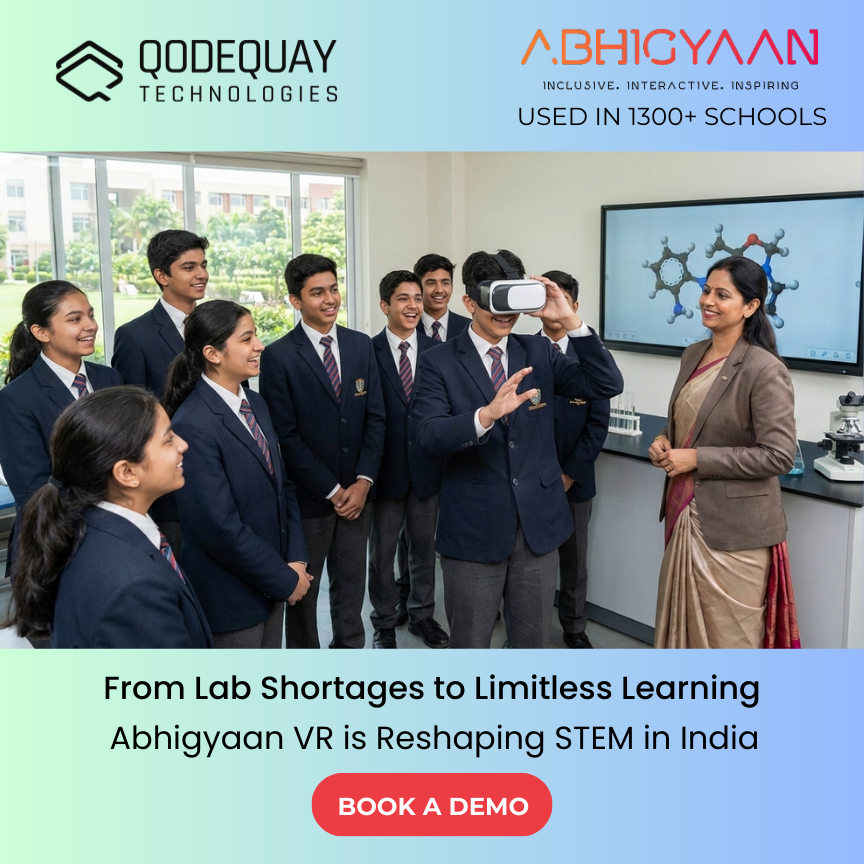
VR sounds impressive in theory, but its real impact is felt inside a classroom. School leaders and educators need to see how students respond, how teachers adapt, and how outcomes change.
See how VR fits into real Indian classrooms: 👉 https://abhigyaanapp.com/
Because when learning becomes immersive, clarity replaces confusion, and results follow naturally.

As the CEO and Founder of Qodequay Technologies, I bring over 20 years of expertise in design thinking, consulting, and digital transformation. Our mission is to merge cutting-edge technologies like AI, Metaverse, AR/VR/MR, and Blockchain with human-centered design, serving global enterprises across the USA, Europe, India, and Australia. I specialize in creating impactful digital solutions, mentoring emerging designers, and leveraging data science to empower underserved communities in rural India. With a credential in Human-Centered Design and extensive experience in guiding product innovation, I’m dedicated to revolutionizing the digital landscape with visionary solutions.
Follow the expert :


July 2, 2026
July 2, 2026
July 2, 2026
July 2, 2026

July 2, 2026
Monthly insights on AI, VR and DPDPA compliance — straight from our team to your inbox.
Free 30-minute consultation with our team — or see our products in action.