DPDPA Penalties Up to ₹250 Crore: The Real Cost of Waiting
July 2, 2026
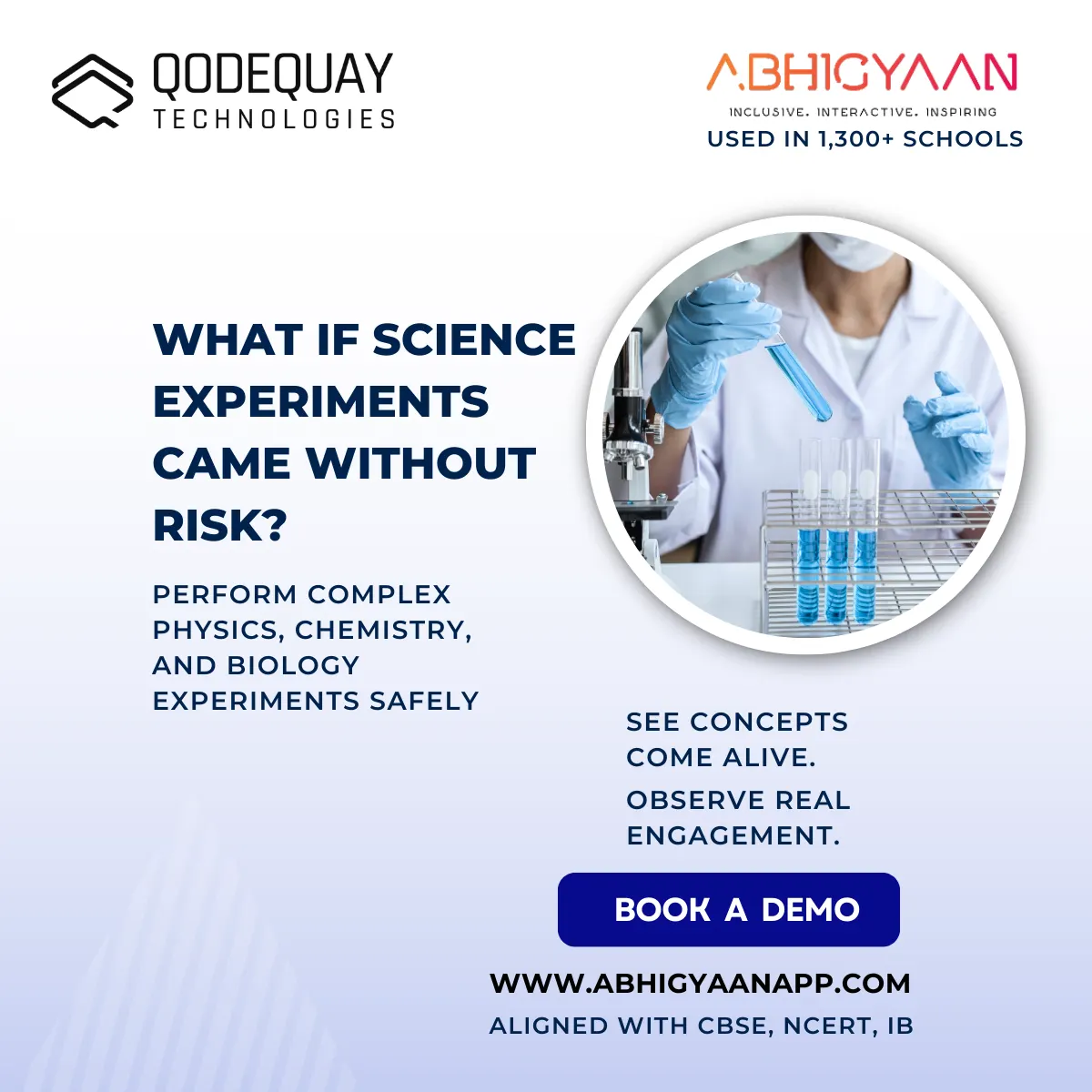
What if students could perform complex Physics, Chemistry, and Biology experiments without chemicals, without breakage, and without risk? Virtual labs make it possible to move from explanation to hands-on learning while keeping safety, control, and consistency at the center of science education.
Every school believes in practical learning. Every principal values hands-on science.
Yet quietly, across schools of all boards, many experiments are no longer performed. Not because teachers lack intent, but because risk has slowly taken over the lab.
Chemicals are dangerous. Equipment breaks. Supervision is stressful. One mistake can become a serious issue.
Over time, practical learning turns into explanation, diagrams, and imagination.
That is not a teaching failure. It is a safety reality.
Schools avoid experiments because physical labs carry unavoidable risks.
Even well-equipped schools face daily challenges:
Hazardous chemicals that require strict storage and handling
Fragile glassware and expensive equipment
Fire, electrical, and exposure risks
Limited access due to safety guidelines
High recurring costs for consumables and replacements
As a result, many experiments are demonstrated instead of performed. Some are skipped entirely.
Students learn the theory, but never experience the science.
When experiments are avoided, learning becomes fragile.
Students may memorize reactions, laws, and processes, but struggle to visualize or apply them. Concepts remain abstract. Confidence drops during exams. Curiosity fades.
Science becomes something to remember, not something to explore.
Ironically, in trying to keep students safe, schools often compromise the very experience that makes science meaningful.
Virtual labs remove danger without removing depth.
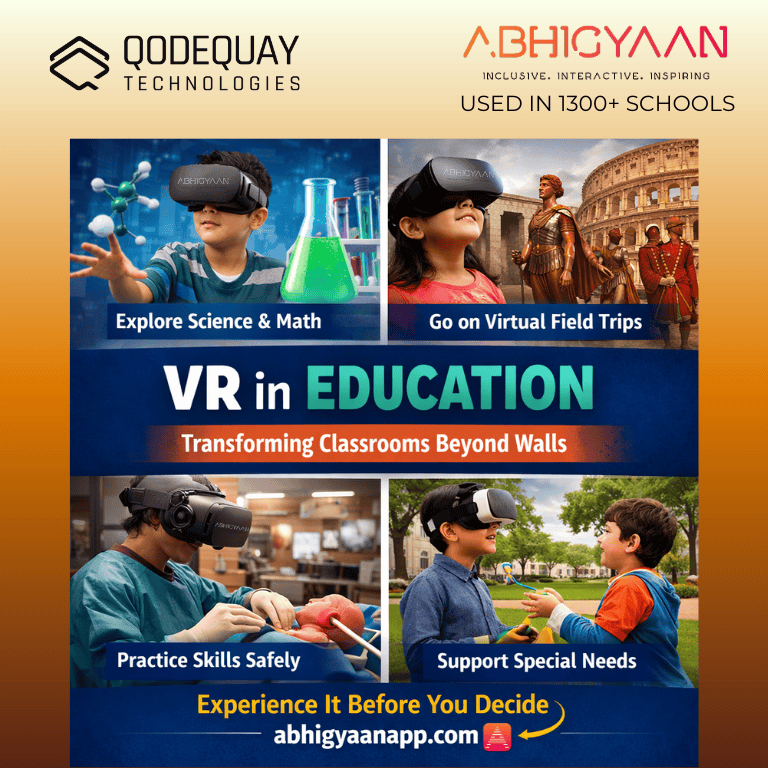
Abhigyaan introduces Limitless Labs, immersive virtual environments where students perform Physics, Chemistry, and Biology experiments safely.
No chemicals. No breakage. No hazards.
Students interact with experiments as if they were real, but without the risks that physical labs bring.
They mix chemicals without exposure. They build circuits without shock. They explore human anatomy without ethical or logistical barriers.
Learning remains hands-on, but safety becomes absolute.
Abhigyaan is built for schools, not tech demonstrations.
Key aspects principals appreciate:
Curriculum-aligned experiments for CBSE, NCERT, IB, and international boards
Teacher-led sessions that fit into existing lesson plans
Works on VR headsets, laptops, and smart boards
No complex setup or infrastructure changes
Integrated LMS for tracking usage and progress
This is not replacing teachers or physical labs. It is extending what schools can safely offer.
Yes, because experience drives retention.
When students perform experiments virtually:
Engagement increases naturally
Focus improves due to immersive environments
Abstract concepts become visual and interactive
Learning shifts from memorization to understanding
Schools using immersive learning consistently observe higher participation and better conceptual clarity, especially in complex topics.
Because safety, cost, and access matter as much as outcomes.
Virtual labs help schools:
Reduce liability and accident risk
Eliminate recurring consumable costs
Offer consistent lab access across classes
Scale practical learning without infrastructure limits
This is especially valuable for experiments that are too dangerous, expensive, or impractical to conduct regularly.
Abhigyaan is already deployed at scale.
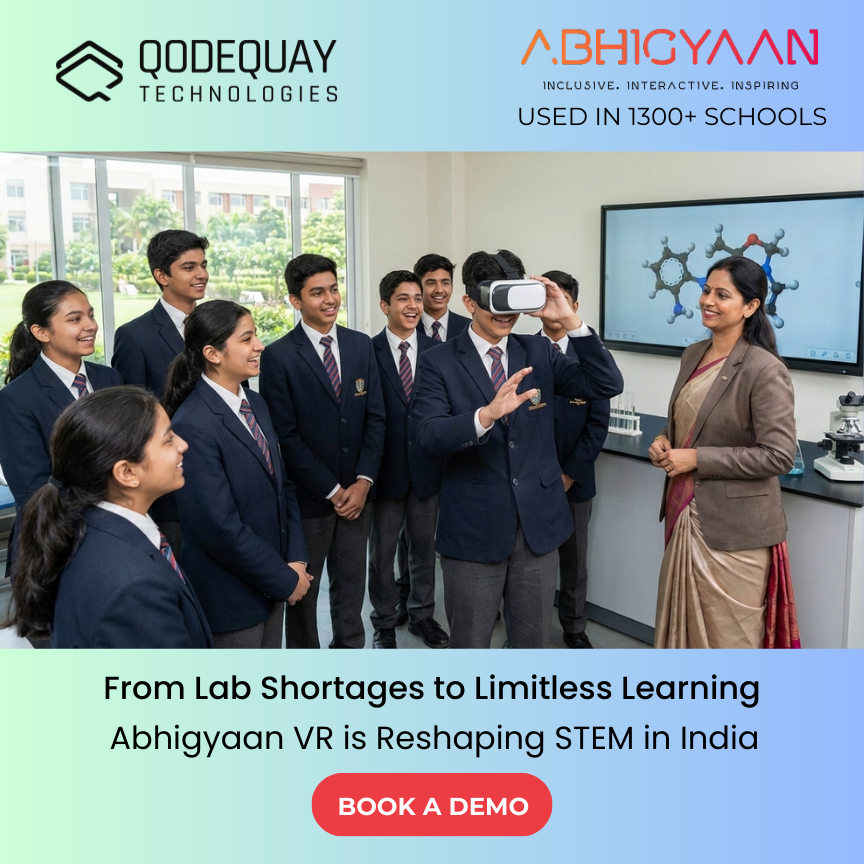
It is currently implemented in 1,300+ government schools in Maharashtra, including rural and low-infrastructure environments.
That matters.
It proves the platform works not just in ideal conditions, but in real classrooms with real constraints.
The demo is simple, focused, and risk-free.
One class
One experiment
Around 30 minutes
Teachers observe
Students experience
No timetable disruption. No obligation. No sales pressure.
The goal is not persuasion. The goal is visibility.
Virtual labs cannot be evaluated on slides.
Once a principal watches students perform a complex experiment safely, calmly, and with genuine curiosity, the conversation changes.
Questions shift from “Will this work?” to “How can we use this better?”
That clarity only comes from experience.
Give us 30 minutes with one class. If students are not visibly more engaged, we will not follow up.
Because the safest way to evaluate the future of science education is to experience it, not imagine it.

As the CEO and Founder of Qodequay Technologies, I bring over 20 years of expertise in design thinking, consulting, and digital transformation. Our mission is to merge cutting-edge technologies like AI, Metaverse, AR/VR/MR, and Blockchain with human-centered design, serving global enterprises across the USA, Europe, India, and Australia. I specialize in creating impactful digital solutions, mentoring emerging designers, and leveraging data science to empower underserved communities in rural India. With a credential in Human-Centered Design and extensive experience in guiding product innovation, I’m dedicated to revolutionizing the digital landscape with visionary solutions.
Follow the expert :


July 2, 2026
July 2, 2026
July 2, 2026
July 2, 2026

July 2, 2026
Monthly insights on AI, VR and DPDPA compliance — straight from our team to your inbox.
Free 30-minute consultation with our team — or see our products in action.