Can VR safety training meet OSH Code requirements for Indian factories?
October 23, 2026
October 23, 2026
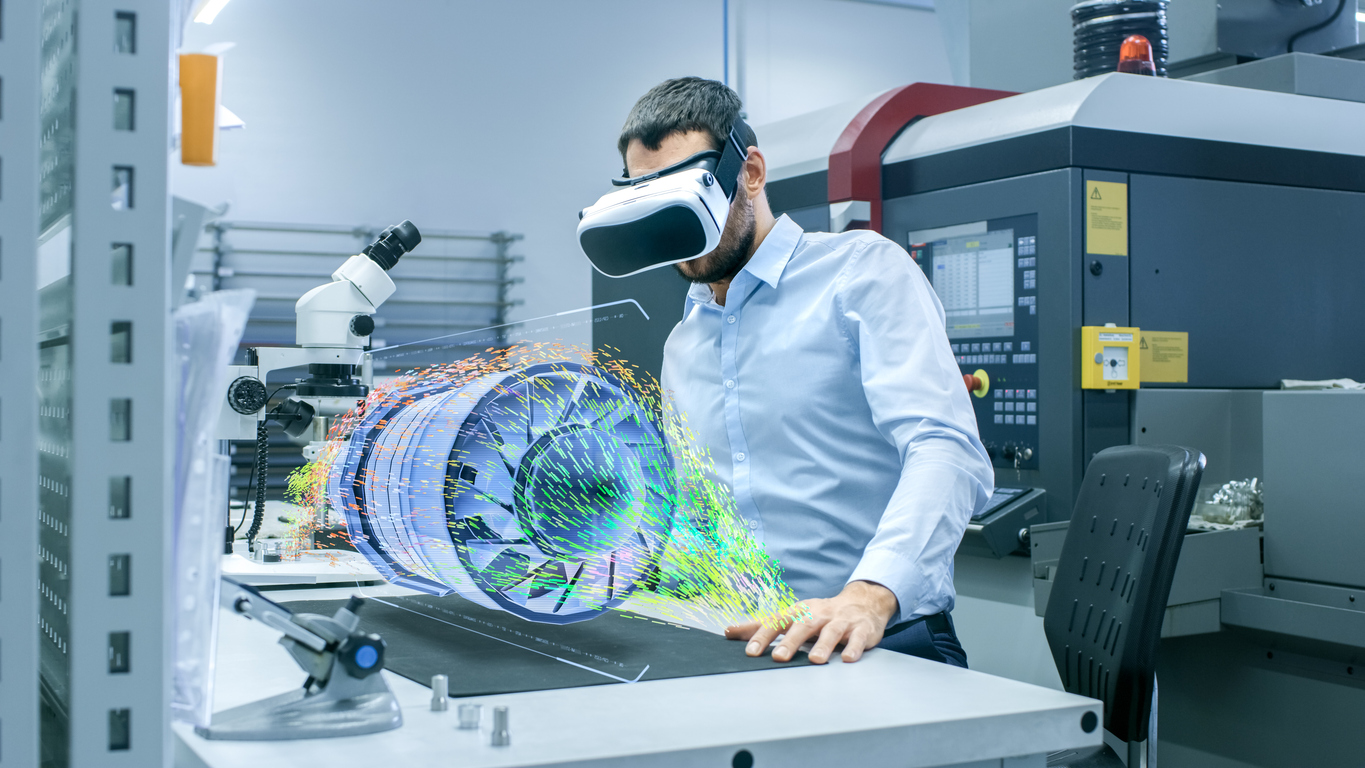
Partly. The OSH Code, 2020 and the OSH (Central) Rules, 2026, in force since 8 May 2026, require employers to train workers, run mock drills every quarter, report dangerous occurrences within 12 hours and keep records online. They do not prescribe a training medium, so VR can deliver and evidence the training duty, but it cannot replace physical drills, inspections or medical examinations.
India's four Labour Codes took effect on 21 November 2025, and on 8 May 2026 the Ministry of Labour and Employment notified the Occupational Safety, Health and Working Conditions (Central) Rules, 2026 (G.S.R. 345(E)), replacing eight legacy rule sets with one framework. Since then a question has started reaching us from plant heads and EHS managers: if we move safety training into VR, does it count? The short answer is that the law cares about whether workers are trained and whether you can prove it, not about the headset. This post maps the obligations to what VR can and cannot do.
Section 6 of the OSH Code places a general duty on every employer to provide the information, instruction, training and supervision necessary to ensure the health and safety of employees at work. The Code does not specify hours, syllabus or medium. It is an outcome duty: workers must be able to work safely, and the employer must be able to show how that was achieved.
Around that general duty sit specific structures. As we read the Code and the 2026 Rules, Safety Committees are required in establishments with 250 or more workers, and Safety Officers must be appointed in factories with 500 or more workers, or 250 or more where a hazardous process is carried on. The Rules add a quarterly mock drill to the list of common obligations every employer must meet, alongside potable water, first aid and welfare facilities.
The Rules also tighten what happens after something goes wrong. A fatal accident must be reported immediately to the Inspector-cum-Facilitator, the District Magistrate and the police. An injury that keeps a worker off duty for 48 hours or more must be reported within 12 hours after that period. A dangerous occurrence, even one with no injury, must be reported within 12 hours. And every employee now has an express duty to report unsafe conditions.
| Obligation | What the law says | What VR can do | What VR cannot do |
|---|---|---|---|
| General duty to train (s.6) | Provide information, instruction, training and supervision | Deliver scenario-based training with logged decisions and scores | Replace supervision on the shop floor |
| Quarterly mock drills | Conduct mock drills every quarter | Rehearse evacuation routes and roles before the drill; retrain those who failed | Count as the physical drill that tests alarms, wardens and assembly points |
| Dangerous-occurrence response | Report explosions, fires, gas leaks, spills, crane failures, falls within 12 hours | Let workers practise the first five minutes of each scenario safely and repeatedly | File the statutory report or investigate the cause |
| Safety Committee and Safety Officer | Constituted at 250+ workers; officer at 500+ or 250+ hazardous | Give the committee behavioural data on where workers hesitate or err | Substitute for the committee, the officer or their inspections |
| Records and e-inspection | Electronic filing on the Shram Suvidha Portal; risk-based inspection | Produce time-stamped, per-worker training evidence | Replace registers, licences or medical examinations |
The pattern is consistent. VR is strongest on the training duty and on evidence. It is not a substitute for anything physical, statutory or medical.
The Rules list the events that count as dangerous occurrences: explosion, fire or gas leak; collapse of a building, scaffold or structure; crane or lifting-equipment failure; machinery breakdown; chemical spillage or hazardous leakage; fall from height or falling objects; transport accidents inside the workplace; and electrical flash or burn incidents. Read that list as a training syllabus and the problem is obvious. None of these can be staged on a live floor without creating the very hazard you are training against.
That is the gap VR closes. A worker can face a smoke-filled bay, choose the wrong extinguisher, pick a blocked exit and feel the consequence, then run it again until the right sequence is automatic. We wrote about the evidence for this in does VR fire-safety training actually work for Indian factories, and about the wider skills case in mixed reality for training. The same logic drives simulator adoption in India's armed forces: rehearse the repetition virtually, qualify in the real thing.
No, and we advise clients not to present it that way. A mock drill exists to test the physical system: does the alarm reach every bay, do wardens take their positions, is the assembly point reachable in the time assumed, does the gate open. VR tests the human decisions inside that system. The two are complementary, and the most defensible programme we have seen runs them as one quarterly cycle:
This gives a factory four physical drills a year as the Rules require, plus a documented record that each worker rehearsed the response personally, which a drill log alone does not show.
The 2026 Rules move registration, returns and much reporting onto the Shram Suvidha Portal, and the direction of travel is towards risk-based, electronic inspection. Digital training records fit that model better than attendance sheets. At a minimum, we recommend keeping, per worker and per session: the scenario and version used, the date and duration, the decisions taken and the score, the pass or retrain outcome, and the name of the supervising Safety Officer or trainer. Export this into whatever system your EHS team already uses rather than leaving it inside the headset.
Two cautions. Keep the physical drill register separate and complete; VR data supplements it. And remember that headsets can collect more personal data than a sign-in sheet (gaze, movement, voice). Collect only what the training purpose needs, tell workers what is collected, and set a retention period. We cover the privacy side in our DPDPA series.
The case is strongest where the Rules already demand the most structure. A factory with 500 or more workers has a Safety Officer who needs behavioural data, not just completion rates. A hazardous-process unit at 250 or more workers has both a committee and an officer, and a dangerous-occurrence list that reads like its own risk register. High-turnover sites with contract labour need a repeatable induction that does not depend on which supervisor is on shift. And multi-site groups benefit most from the 2026 Rules' single framework: one scenario library, one evidence format, every plant. Our earlier piece on how VR improves risk awareness and decision-making explains why repeated, logged practice changes what workers do in the moment.
Abhigyaan Pro is Qodequay's industrial and defence training platform, with fire-and-safety, plant-induction and emergency-response modules that run on a VR headset or in a browser in the same session, log every decision per worker, and host data in Indian data centres by default with an air-gapped option. Qodequay is ISO 9001:2015 and ISO 27001:2022 certified. Book a 30-minute call to map your plant's dangerous-occurrence list to a scenario library and an evidence format your Safety Officer can file.
No. Section 6 of the Code requires employers to provide the information, instruction, training and supervision necessary for health and safety, but it does not prescribe hours, syllabus or medium. VR is one way to deliver and document that training; classroom, on-the-job and drill-based methods remain valid.
The 2026 Rules list a quarterly mock drill among the common obligations every covered employer must meet, alongside first aid, drinking water and welfare facilities. VR rehearsal can precede and follow the drill, but the physical drill itself must still be conducted and recorded each quarter.
The Rules give examples: explosion, fire or gas leak; collapse of a building, scaffold or structure; crane or lifting-equipment failure; machinery breakdown; chemical spillage or hazardous leakage; fall from height or falling objects; workplace transport accidents; and electrical flash or burn incidents. Reporting applies even when nobody is injured.
As we read the Code and the 2026 Rules, a Safety Committee is required at 250 or more workers, and a Safety Officer must be appointed in factories with 500 or more workers, or 250 or more where a hazardous process is carried on. Confirm thresholds against the official text and any State rules.
Per worker and per session: the scenario and version, date and duration, decisions taken and score, pass or retrain outcome, and the supervising officer or trainer. Keep the physical drill register separately, export VR records into your EHS system, and collect only the personal data the training purpose needs.
This article is for general information and is not legal advice. Confirm obligations against the official texts of the Occupational Safety, Health and Working Conditions Code, 2020, the OSH (Central) Rules, 2026 and any applicable State rules, and consult qualified counsel for your situation.

I am a founder director at Qodequay Technologies Pvt. Ltd., a leading digital transformation consulting firm that helps clients across industries to innovate, optimize, and grow their businesses. I have over two decades of experience in the digital domain, spanning product development, e-commerce, user experience, design thinking, web and app development, and business leadership. My core competencies include developing and executing digital transformation strategies, building teams globally, roadmaps, and solutions that leverage data, insights, and emerging technologies such as artificial intelligence, augmented reality, blockchain, and immersive experience. I also have expertise in digital commerce, supply chain integration, and product management, having worked with both B2B and B2C brands in various sectors. My mission is to create value for customers and stakeholders by delivering impactful and engaging digital experiences that drive growth and innovation.
October 23, 2026

October 22, 2026

October 21, 2026

October 20, 2026

October 19, 2026
Monthly insights on AI, VR and DPDPA compliance — straight from our team to your inbox.
Free 30-minute consultation with our team — or see our products in action.