DPDPA Penalties Up to ₹250 Crore: The Real Cost of Waiting
July 2, 2026
Education is undergoing a transformation so big that calling it “digital learning” feels too small. You are moving from static, passive teaching methods into something far more powerful, immersive education. This is where learning becomes interactive, experiential, and deeply engaging, using technologies like VR, AR, AI, gamification, and simulation-based learning.
If you are a CTO, CIO, Product Manager, Startup Founder, or Digital Leader, this shift matters because education is no longer limited to schools and universities. It is now a massive ecosystem that includes corporate training, workforce development, upskilling, healthcare learning, and product education. The organizations that design immersive and interactive learning experiences today will define how people learn tomorrow.
In this article, you will explore what immersive education really means, why it works, how it is being used in the real world, what technologies power it, the risks and ethical challenges, best practices, and what the next 3 to 5 years will look like.
It means you learn by doing inside realistic digital environments instead of only reading, listening, or watching.
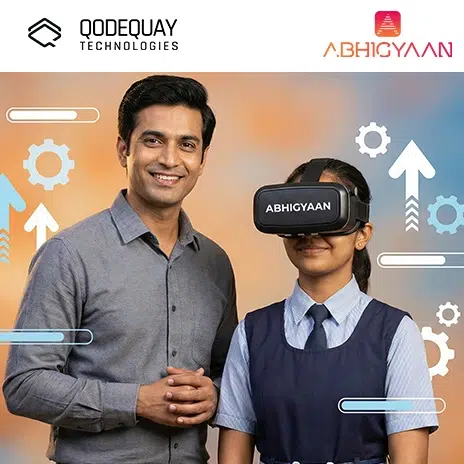
Immersive education puts you inside the learning environment using VR (Virtual Reality), AR (Augmented Reality), MR (Mixed Reality), 3D simulations, interactive labs, and gamified experiences. Interactive education ensures you are not just consuming content, you are participating through decisions, actions, and feedback.
This approach changes the learning model from:
In short, immersive learning is not about “cool tech.” It is about making learning feel real.
Because traditional education models are failing to match modern learner expectations and real-world skill demands.
You are living in a world where:
A video lecture is not enough anymore. A PDF is not enough. Even a well-made LMS course often feels like a chore.
Immersive education works because it meets people where they are: in a world of interaction, simulation, and instant feedback.
It improves outcomes by increasing retention, engagement, and skill transfer into real performance.
Traditional learning often fails at one key stage: applying knowledge in the real world. Immersive education reduces this “transfer gap” by letting you practice inside safe, repeatable environments.
Here is what immersive learning improves:
This is especially powerful in STEM, healthcare, safety training, engineering, and language learning.
The future is powered by VR, AR, AI, gamification, spatial computing, and simulation platforms.
Immersive education is not one technology. It is a stack of technologies working together.
VR places you inside a fully digital environment. It is best for high-focus learning and scenario training.
Examples:
AR overlays digital information onto the real world. It is ideal for guided learning and hands-on support.
Examples:
MR blends real and digital objects so you can interact with both. It is powerful for advanced training and collaborative learning.
AI enables personalization, adaptive learning paths, and intelligent tutoring.
Examples:
Gamification improves motivation using progress, rewards, challenges, and mastery loops.
Simulations model real-world systems, while digital twins replicate physical systems in real time.
Examples:
Immersive education is already delivering measurable value in schools, universities, and enterprises.
Here are examples of how immersive education is being applied today:
Medical students can practice procedures in VR before working with real patients. This reduces risk and increases confidence.
Example use cases:
Virtual labs allow students to run experiments safely and repeatedly, even when schools lack physical lab equipment.
Companies use VR training for safety, onboarding, and operational tasks. It helps reduce errors and training time.
Immersive environments create realistic conversation contexts. This helps you learn faster than memorizing vocabulary lists.
Instead of reading about ancient civilizations, you explore them. This makes learning emotional and memorable.
Because immersive education is becoming a major technology investment area with measurable ROI.
If you lead technology strategy, immersive learning impacts:
Immersive learning is also a talent strategy. If you can upskill faster, onboard faster, and train safer, you gain a competitive advantage.
It supports personalization by adapting content, pace, and difficulty based on your behavior and performance.
Personalization is not just “choose your topic.” Real personalization means:
AI makes this scalable. VR and simulations make it meaningful. Together, they create learning that feels designed for you.
The biggest challenges are cost, accessibility, content quality, and ethical concerns.
Immersive education is powerful, but it is not magic. It comes with real challenges:
VR headsets and AR devices still require investment. Many schools cannot afford large deployments.
Building good immersive content requires:
Not all learners can use VR comfortably. Motion sickness, disabilities, and sensory overload must be considered.
Immersive systems can track detailed behavioral data. This raises serious privacy questions, especially in education.
Immersive learning fails if educators are not trained to integrate it effectively.
You succeed by focusing on learning outcomes first, then selecting technology.
Here are proven best practices:
It will become more affordable, more AI-driven, and more integrated into daily learning.
Here are the biggest trends shaping the future:
As devices improve, immersive learning will feel more natural, lighter, and less “headset heavy.”
You will increasingly learn with AI coaching, real-time feedback, and adaptive practice.
No-code and low-code immersive content tools will reduce development costs.
You will combine classroom teaching, online learning, and immersive labs.
Immersive learning enables performance testing, not just multiple-choice exams.
Students will learn together in shared virtual spaces, not only through video calls.
It means you will graduate with practical skills, not just theoretical knowledge.
Employers increasingly demand skills like:
Immersive learning supports these because it places you in situations where you must act, decide, and reflect.
This creates job-ready talent faster, which is a major advantage for nations, companies, and individuals.
You start by piloting one high-impact use case and proving ROI before scaling.
Here is a practical approach:
Choose one learning area where practice matters
Identify measurable success metrics
Build a small immersive module
Run a pilot program
Gather feedback and refine
Scale with governance and standards
This approach reduces risk and ensures immersive learning is a strategic investment, not an experiment.
The future of education is immersive and interactive because the world no longer rewards memorization. It rewards capability. When you design learning as an experience, you help people build real skills, faster and with greater confidence.
This is where design-first thinking becomes essential. At Qodequay (https://www.qodequay.com), immersive education is approached with empathy, clarity, and human-centered design. Technology is the enabler, but the real mission is solving human problems, improving learning outcomes, and shaping a future where education feels alive, practical, and meaningful.

As the CEO and Founder of Qodequay Technologies, I bring over 20 years of expertise in design thinking, consulting, and digital transformation. Our mission is to merge cutting-edge technologies like AI, Metaverse, AR/VR/MR, and Blockchain with human-centered design, serving global enterprises across the USA, Europe, India, and Australia. I specialize in creating impactful digital solutions, mentoring emerging designers, and leveraging data science to empower underserved communities in rural India. With a credential in Human-Centered Design and extensive experience in guiding product innovation, I’m dedicated to revolutionizing the digital landscape with visionary solutions.
Follow the expert :


July 2, 2026
July 2, 2026
July 2, 2026
July 2, 2026

July 2, 2026
Monthly insights on AI, VR and DPDPA compliance — straight from our team to your inbox.
Free 30-minute consultation with our team — or see our products in action.