DPDPA Penalties Up to ₹250 Crore: The Real Cost of Waiting
July 2, 2026
Meta Title (<60 chars): Meta Description (150–160 chars): URL Slug (3–4 words): Primary Keyword:
Immersive technology in schools matters because it turns passive learning into active experiences, helping you improve engagement, understanding, and long-term retention.
Education is under pressure from every direction. You need to teach more complex topics. You need to support different learning styles. You need to prepare students for a digital future. And you need to do it without exploding budgets or burning out teachers.
Immersive technology, including VR (Virtual Reality), AR (Augmented Reality), and MR (Mixed Reality), is no longer a futuristic experiment. It is becoming a practical learning tool that helps you deliver better outcomes.
In this complete guide, you’ll learn what immersive technology really is, how it works in schools, where it creates the most value, what risks to watch for, and how to implement it successfully.
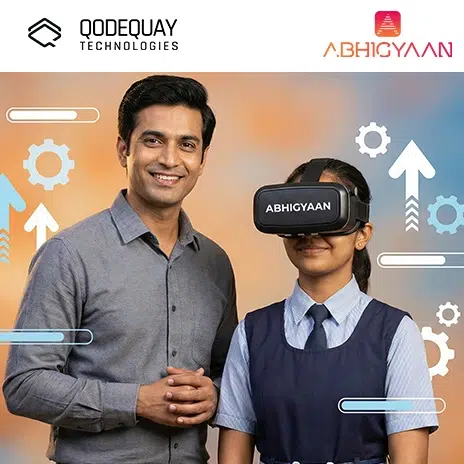
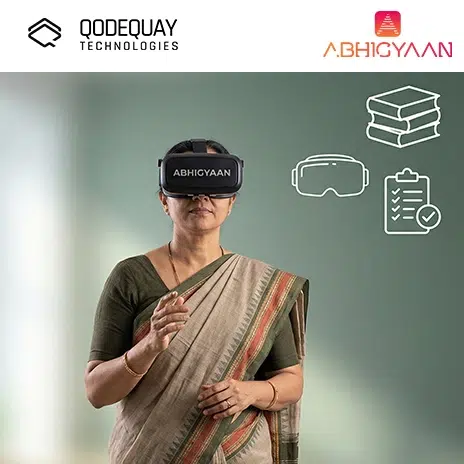
Immersive technology in schools is the use of VR, AR, and MR to create interactive learning experiences that place you inside or alongside digital content.
Instead of only reading about concepts, you can explore them.
Instead of watching a video, you can interact with the environment.
Instead of imagining a historical event, you can stand inside a simulation of it.
Immersive technology is often grouped under the term XR, which stands for Extended Reality.
The main types of immersive technology used in schools are Virtual Reality (VR), Augmented Reality (AR), and Mixed Reality (MR).
Each one has a different role.
VR places you fully inside a digital environment using a headset. Examples:
AR overlays digital content onto the real world, usually through a tablet or phone. Examples:
MR blends real and digital content so they interact with each other. Examples:
Immersive learning improves engagement because you learn by doing, not just by listening.
Traditional learning often relies on passive attention. Immersive learning forces participation. It also makes lessons feel like experiences, not tasks.
This matters because attention is one of the biggest problems in modern classrooms.
When learning becomes experiential, motivation increases naturally.
Yes, immersive technology can improve learning outcomes, especially for complex topics and skill-based learning.
A growing body of research shows that experiential learning improves retention and understanding. VR and AR are essentially experiential learning machines.
Immersive learning is especially effective when:
The key is that VR does not automatically guarantee better outcomes. Design matters.
The best classroom use cases are virtual field trips, STEM simulations, language immersion, and social skills training.
Immersive technology delivers the most value when it solves a real teaching problem.
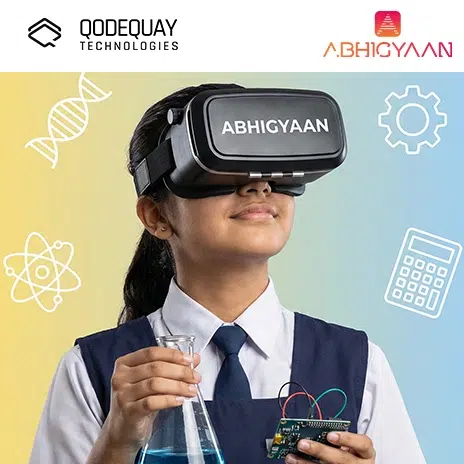
Immersive technology supports STEM education by making abstract concepts visual, interactive, and easier to understand.
STEM subjects often fail because students cannot picture what is happening. VR and AR solve that.
Immersive STEM lessons are also more inclusive because visual learning helps more students succeed.
Immersive technology helps teachers by making lessons easier to deliver, more engaging, and more interactive without replacing human guidance.
Teachers remain essential because:
Immersive technology is a teaching tool, not a teacher.
The best implementations treat VR and AR like:
Schools need headsets or tablets, strong Wi-Fi, device management, and safe classroom procedures.
The good news is that immersive technology is easier to deploy now than it was a few years ago.
Device management is often the hidden challenge, so plan for it early.
The main risks are motion sickness, privacy concerns, content quality issues, and teacher adoption barriers.
Immersive technology is powerful, but it is not magic.
The solution is not to avoid immersive technology. The solution is to implement it responsibly.
You implement immersive technology successfully by starting small, aligning to curriculum goals, training teachers, and measuring learning impact.
A strong rollout is more like a product launch than a gadget purchase.
You choose the right immersive content by prioritizing curriculum alignment, age appropriateness, accessibility, and ease of use.
Not all immersive content is built for education. Some is built for entertainment.
Content quality is often more important than device quality.
Immersive technology will evolve through AI-powered personalization, better hardware, and deeper integration into everyday learning.
This is where things get exciting.
Immersive learning will shift from “wow factor” to “expected capability.”
Qodequay helps you design and build immersive learning experiences that are practical, measurable, and aligned to real educational outcomes.
Immersive technology succeeds when it is:
At Qodequay (https://www.qodequay.com), you take a design-first approach and use technology as the enabler, not the headline.
Immersive technology in schools is not a trend, it is a shift in how learning is delivered. When you use VR, AR, and MR correctly, you move beyond memorization and into real understanding.
The schools that succeed with immersive learning will not be the ones that buy the most headsets. They will be the ones that design the best learning experiences.
At Qodequay (https://www.qodequay.com), you build that future with a design-first mindset, solving real human problems with technology as the enabler.

As the CEO and Founder of Qodequay Technologies, I bring over 20 years of expertise in design thinking, consulting, and digital transformation. Our mission is to merge cutting-edge technologies like AI, Metaverse, AR/VR/MR, and Blockchain with human-centered design, serving global enterprises across the USA, Europe, India, and Australia. I specialize in creating impactful digital solutions, mentoring emerging designers, and leveraging data science to empower underserved communities in rural India. With a credential in Human-Centered Design and extensive experience in guiding product innovation, I’m dedicated to revolutionizing the digital landscape with visionary solutions.
Follow the expert :


July 2, 2026
July 2, 2026
July 2, 2026
July 2, 2026

July 2, 2026
Monthly insights on AI, VR and DPDPA compliance — straight from our team to your inbox.
Free 30-minute consultation with our team — or see our products in action.