DPDPA Penalties Up to ₹250 Crore: The Real Cost of Waiting
July 2, 2026
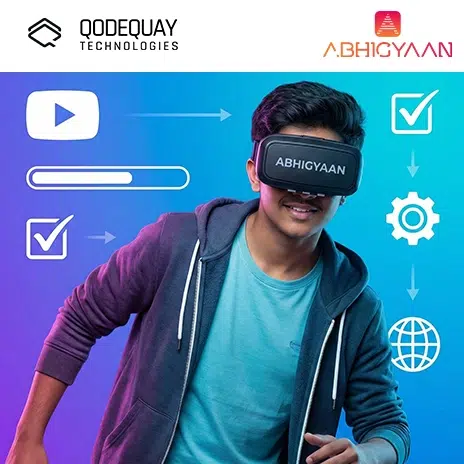
Engaging the digital generation is harder because you are competing with an always-on world of interactive apps, short-form content, and instant feedback.
Students today grow up in the attention economy. They are used to experiences that respond immediately, whether it is gaming, social media, or personalized digital platforms. Traditional classroom learning often feels slow, passive, and disconnected.
Virtual reality learning changes the rules. It gives you a way to teach using the same language modern learners already understand: interaction, immersion, and experience.
For CTOs, CIOs, Product Managers, Startup Founders, and Digital Leaders, this topic matters because education and workforce training are rapidly converging. The same digital generation you are teaching today is the workforce you will hire tomorrow.
In this article, you’ll learn how virtual reality learning engages digital learners, why it improves motivation and retention, real-world examples, best practices, and what the future of immersive learning looks like.
Virtual reality learning is a teaching method where you learn inside a simulated 3D environment using a VR headset or immersive device.
Instead of reading about a concept, you experience it. Instead of watching a video, you explore and interact.
This makes learning feel more like discovery and less like memorization.
The digital generation responds strongly to VR because it matches how you naturally engage with modern digital experiences.
Digital learners are comfortable with:
VR combines all of these into one platform.
It is not about making learning “fun” in a shallow way. It is about making learning immersive and relevant.
VR improves attention because it removes distractions and places you inside a controlled learning environment.
In a classroom, distractions are everywhere. In online learning, distractions are even worse. You are always one click away from another tab, another notification, or another app.
In VR, your field of view is focused on the learning environment. That creates a powerful sense of presence.
Presence means your brain treats the experience as something happening now, not something you are passively consuming.
VR increases motivation because it turns learning into an active challenge where you feel progress immediately.
Traditional learning often rewards memorization. VR rewards exploration and problem-solving.
For example:
This makes students more willing to participate because the learning feels personal.
VR makes learning more memorable because your brain stores immersive experiences more strongly than passive information.
When you learn through experience, you remember:
This creates stronger long-term recall.
That is why VR is often linked with better learning retention, especially for complex topics.
The subjects that benefit most are those that involve visualization, exploration, or real-world practice.
VR is especially effective when the lesson is hard to teach using only text and images.
VR supports creativity because it gives you a space to explore, experiment, and learn through discovery.
Digital learners often thrive when learning is not linear.
VR can support:
When students feel like explorers instead of test-takers, curiosity grows. And curiosity drives learning.
VR is already being used in schools and training programs for virtual field trips, lab simulations, and career readiness.
Many schools start with virtual field trips because they are easy to implement and instantly engaging.
The biggest challenges are cost, content quality, device management, and accessibility.
VR is powerful, but adoption must be practical.
The solution is to start with a pilot program and scale gradually.
The best practices are to keep sessions short, make learning goal-based, and combine VR with discussion and reflection.
VR works best when it is structured, not chaotic.
The future will include AI-powered immersive tutors, personalized learning paths, and more affordable VR hardware.
VR will become part of mainstream education, especially for skill-based learning.
Qodequay helps you design immersive learning experiences that are engaging, scalable, and aligned with real educational outcomes.
VR engagement is not only about technology. It is about designing experiences that:
At Qodequay (https://www.qodequay.com), you combine design-first thinking with technology execution to create VR learning solutions that connect with the digital generation and prepare them for the future.
Engaging the digital generation is not about making learning entertaining. It is about making learning meaningful in a world where attention is constantly under pressure.
Virtual reality learning gives you a powerful way to teach through experience, exploration, and interaction. It helps students focus, participate, and remember, while also building the future-ready skills they will need beyond school.
At Qodequay (https://www.qodequay.com), you take a design-first approach to immersive learning, solving real human challenges with technology as the enabler.

As the CEO and Founder of Qodequay Technologies, I bring over 20 years of expertise in design thinking, consulting, and digital transformation. Our mission is to merge cutting-edge technologies like AI, Metaverse, AR/VR/MR, and Blockchain with human-centered design, serving global enterprises across the USA, Europe, India, and Australia. I specialize in creating impactful digital solutions, mentoring emerging designers, and leveraging data science to empower underserved communities in rural India. With a credential in Human-Centered Design and extensive experience in guiding product innovation, I’m dedicated to revolutionizing the digital landscape with visionary solutions.
Follow the expert :


July 2, 2026
July 2, 2026
July 2, 2026
July 2, 2026

July 2, 2026
Monthly insights on AI, VR and DPDPA compliance — straight from our team to your inbox.
Free 30-minute consultation with our team — or see our products in action.