How do you choose a design thinking consultancy in India?
November 6, 2026

Choose on evidence of outcomes, not vocabulary. Shortlist firms that can show recent user research with Indian users in your segment, a dated sample timeline that ends in a tested prototype, a team that stays through build, transparent day rates (₹30,000 to ₹1.5 lakh per facilitator-day is the Indian benchmark) and clear IP and data terms. Then run a paid one-to-two-week pilot before signing anything longer.
In March 2026, Commerce and Industry Minister Piyush Goyal told an industry audience that India should treat design as "a strategic national capability rather than cosmetic", pointing to a median age of about 28.5 and nearly 2.3 million STEM graduates a year as the raw material (Construction World, 16 March 2026). The market has heard him. Almost every UX studio, IT services firm and management consultancy in India now lists "design thinking" on its services page. For a founder or product head with a real problem and a limited budget, that abundance is the difficulty: the label tells you nothing about whether the firm will change what you build.
We run design thinking engagements at Qodequay, so we are not neutral. But we have also sat on the buying side, and the questions below are the ones we would ask of ourselves. Use them to separate practitioners from workshop vendors.
Strip away the sticky notes and a design thinking engagement produces four things: primary research with the people who will use the product, a synthesis that turns that research into a small number of defensible problem statements, prototypes that real users have tried, and a decision. The decision is the point. A good engagement ends with your team knowing what to build next, what not to build, and why, with the evidence attached.
If a proposal describes a two-day workshop, an "ideation session" and a deck of personas, and nothing in it mentions recruiting users, interviewing them or testing something with them, it is a facilitation service, not design thinking. Facilitation has its place, but it is priced and bought differently. Our earlier piece on whether design thinking delivers ROI for Indian product teams sets out what measurable outcomes to expect.
Put these in your RFP or ask them on the first call. The answers are more revealing than the credentials slide.
Indian pricing has settled into recognisable bands. The numbers below combine our own quoting experience with the ranges we published in How much does a design thinking workshop cost in India? Treat them as planning figures for a mid-size company, not quotes.
| Engagement | Typical duration | Typical India fee | What you should receive |
|---|---|---|---|
| Facilitated workshop | 1–2 days | ₹30,000–1.5 lakh per facilitator-day | Framed problem, aligned stakeholders, prioritised hypotheses; no user evidence yet |
| Design sprint | 5 working days | ₹1.5–7.5 lakh | One prototype tested with 5–8 users, decision memo |
| Discovery engagement | 4–8 weeks | ₹8–25 lakh | Research across 2–3 segments, journey maps, 2–3 tested prototypes, build-ready backlog |
| Embedded design partner | 3–6 months | ₹3–8 lakh per month | Research and design capacity inside your squad; usually only worth it once a build is funded |
Two observations. First, international benchmarks are higher: the same July 2026 comparison puts the product-design work that "moves the needle" for a SaaS company in a US$30,000–60,000 band, with enterprise consultancies starting at US$50,000 and 3–6-month timelines. An Indian team with equivalent research rigour typically lands at a third to a half of that. Second, the cheapest day rate is rarely the cheapest engagement. A firm that misreads your users costs you the build that follows, which is usually ten to twenty times the research budget.
Three kinds of supplier now compete for the same Indian briefs. None is universally right; the fit depends on what happens after the research.
| Supplier type | Strength | Watch for | Best when |
|---|---|---|---|
| Global innovation consultancy | Brand credibility with boards; mature methods | Premium pricing; partner-led sales, associate-led delivery; thin Tier-2/3 field presence | Board-level transformation with a seven-figure (US$) budget |
| Indian design boutique | Craft, speed, local recruiting networks, honest pricing | Small bench; may stop at hand-off; variable research rigour | Focused product problems, 5-day sprints, early-stage startups |
| Product company with a design practice (Qodequay's model) | Research is tied to a build; the same team ships the outcome | Check that research is independent of the sales motion | You want evidence, then a working product, from one accountable team |
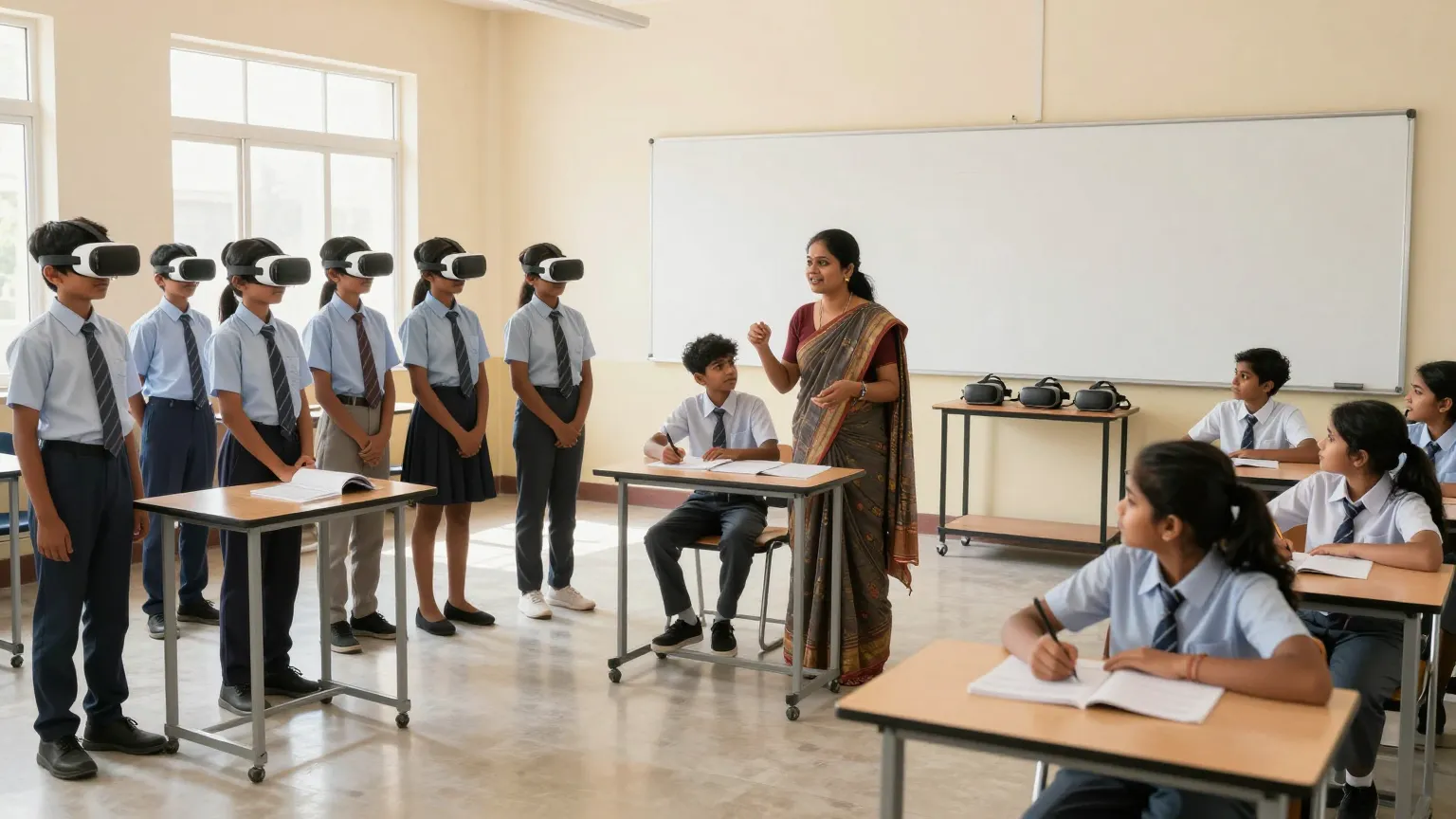
Our own bias is the third row. Qodequay runs design thinking consulting alongside product engineering and immersive learning; our Abhigyaan VR platform, now deployed in 1,350 Maharashtra Zilla Parishad schools and reaching 1.5 million-plus students, came out of that combined team. The argument for the model is simple: the research is only as valuable as the thing that gets built from it. Our note on running design thinking before an MVP shows what that sequence looks like in practice.
Whatever the supplier type, the safest purchase is a paid pilot with a hard stop. It costs ₹2–5 lakh and ten working days, and it tells you more than three rounds of proposals.
If the pilot produces a decision your team would not have reached on its own, you have found your partner. If it produces a deck, you have saved yourself a much larger invoice.
We are happy to be evaluated on exactly the questions above. Bring one problem your product team is stuck on and we will scope a ten-day pilot with named researchers, a recruitment plan for your Indian user segment and a decision memo at the end. Book a 30-minute scoping call.
Indian benchmarks in 2026 run ₹30,000 to ₹1.5 lakh per facilitator-day for workshops, ₹1.5–7.5 lakh for a five-day sprint, ₹8–25 lakh for a four-to-eight-week discovery engagement with tested prototypes, and ₹3–8 lakh a month for an embedded design partner. Global consultancies typically start around US$50,000 for comparable work.
A UX agency designs and often builds screens for a product you have already decided to make. A design thinking consultancy works earlier: it researches users, frames the problem, tests prototypes and helps you decide what to build at all. Many Indian firms do both; ask which service the proposal actually describes and what evidence it will produce.
A facilitated workshop takes one to two days, a design sprint five working days, and a discovery engagement four to eight weeks. A paid pilot of about ten working days, ending in a go/no-go review, is the lowest-risk way to test a consultancy before committing to a longer engagement or an embedded design partner.
Choose a global consultancy for board-level transformation with a large budget and a need for brand credibility. Choose an Indian boutique or a product company with a design practice when you need field research in Indian user segments, faster timelines, transparent pricing and a team that can carry the research through to a working product.
A credible proposal names the researcher and facilitators, states how many users will be recruited and from which Indian segments, includes a dated timeline ending in a tested prototype, lists concrete deliverables such as a research repository and prioritised backlog, assigns IP to you, and explains how interview data is consented, stored and deleted.
This article is for general information and is not legal, procurement or financial advice. Fee ranges are planning estimates based on Qodequay's experience and published market comparisons; confirm scope, pricing and contract terms with the firms you shortlist.

I am a founder director at Qodequay Technologies Pvt. Ltd., a leading digital transformation consulting firm that helps clients across industries to innovate, optimize, and grow their businesses. I have over two decades of experience in the digital domain, spanning product development, e-commerce, user experience, design thinking, web and app development, and business leadership. My core competencies include developing and executing digital transformation strategies, building teams globally, roadmaps, and solutions that leverage data, insights, and emerging technologies such as artificial intelligence, augmented reality, blockchain, and immersive experience. I also have expertise in digital commerce, supply chain integration, and product management, having worked with both B2B and B2C brands in various sectors. My mission is to create value for customers and stakeholders by delivering impactful and engaging digital experiences that drive growth and innovation.
November 6, 2026

November 5, 2026

November 4, 2026
November 3, 2026

November 2, 2026
Monthly insights on AI, VR and DPDPA compliance — straight from our team to your inbox.
Free 30-minute consultation with our team — or see our products in action.