Running a 5-Day Design Thinking Discovery Sprint for B2B SaaS
October 3, 2026
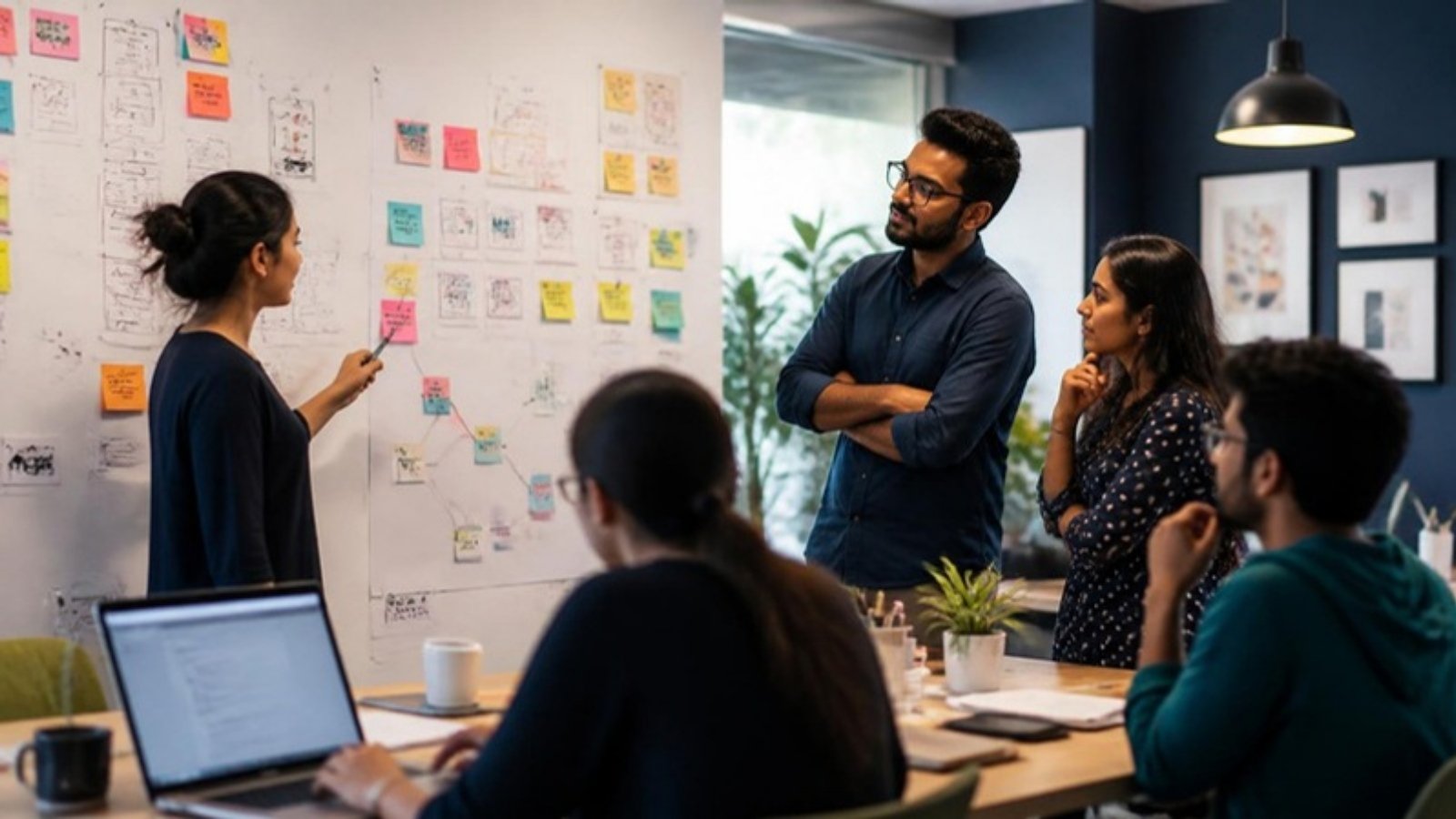
B2B SaaS teams rarely fail because they cannot build. They fail because they build the wrong thing well. A feature requested loudly by one enterprise customer ships after three months of engineering, and adoption stalls because the people who use the product every day were never asked.
A design thinking discovery sprint compresses the riskiest learning into five days. You end the week with a tested prototype and evidence for a go, pivot or stop decision, before committing a roadmap quarter. Here is the format we run with clients at Qodequay.
Map the end-to-end journey for the problem area, from the trigger that brings a user in to the outcome they want. Pull in evidence: support tickets, churn reasons, product analytics, sales call notes. Invite two or three internal experts for short lightning talks. Close the day by writing "How might we" questions on the journey map and voting on the moment that matters most.
Spend the morning talking to real users about their current workflow, not your feature ideas. Ask them to share their screen and walk through the task. Watch for workarounds: exported spreadsheets, sticky notes, WhatsApp groups. Workarounds are where the value hides.
In the afternoon, synthesise findings into an empathy map for each persona and agree on a crisp problem statement: [User] needs a way to [need] because [insight].
Generate widely, then converge hard. Each person sketches solutions individually (groups brainstorming out loud converge too early). Review sketches silently, heat-map the strongest parts, and let the decider pick one direction, or two to test head-to-head. End the day with a storyboard of the exact flow you will prototype, screen by screen.
Build a realistic facade, not a product. A clickable Figma prototype with believable data is enough for most B2B flows. Use real field names, realistic record counts and your customer's industry language; enterprise users disengage the moment a demo feels generic. Assign one person to write the interview script and a checklist of what you need to learn.
Run five or six one-hour sessions. One facilitator, everyone else watching remotely and noting observations against the checklist. After roughly five sessions patterns become obvious. Close the week with the decider: what worked, what failed, and whether to build, iterate or stop.
Five days is a small investment compared with a quarter of engineering spent on the wrong feature.
Qodequay's design thinking consulting team facilitates discovery sprints end to end, from framing the question and recruiting users to prototyping and synthesis, for product teams across SaaS, enterprise and public-sector programmes. Book a 30-minute consultation to scope yours.

I am a founder director at Qodequay Technologies Pvt. Ltd., a leading digital transformation consulting firm that helps clients across industries to innovate, optimize, and grow their businesses. I have over two decades of experience in the digital domain, spanning product development, e-commerce, user experience, design thinking, web and app development, and business leadership. My core competencies include developing and executing digital transformation strategies, building teams globally, roadmaps, and solutions that leverage data, insights, and emerging technologies such as artificial intelligence, augmented reality, blockchain, and immersive experience. I also have expertise in digital commerce, supply chain integration, and product management, having worked with both B2B and B2C brands in various sectors. My mission is to create value for customers and stakeholders by delivering impactful and engaging digital experiences that drive growth and innovation.
October 3, 2026
October 2, 2026

October 1, 2026

July 2, 2026
July 2, 2026
Monthly insights on AI, VR and DPDPA compliance — straight from our team to your inbox.
Free 30-minute consultation with our team — or see our products in action.