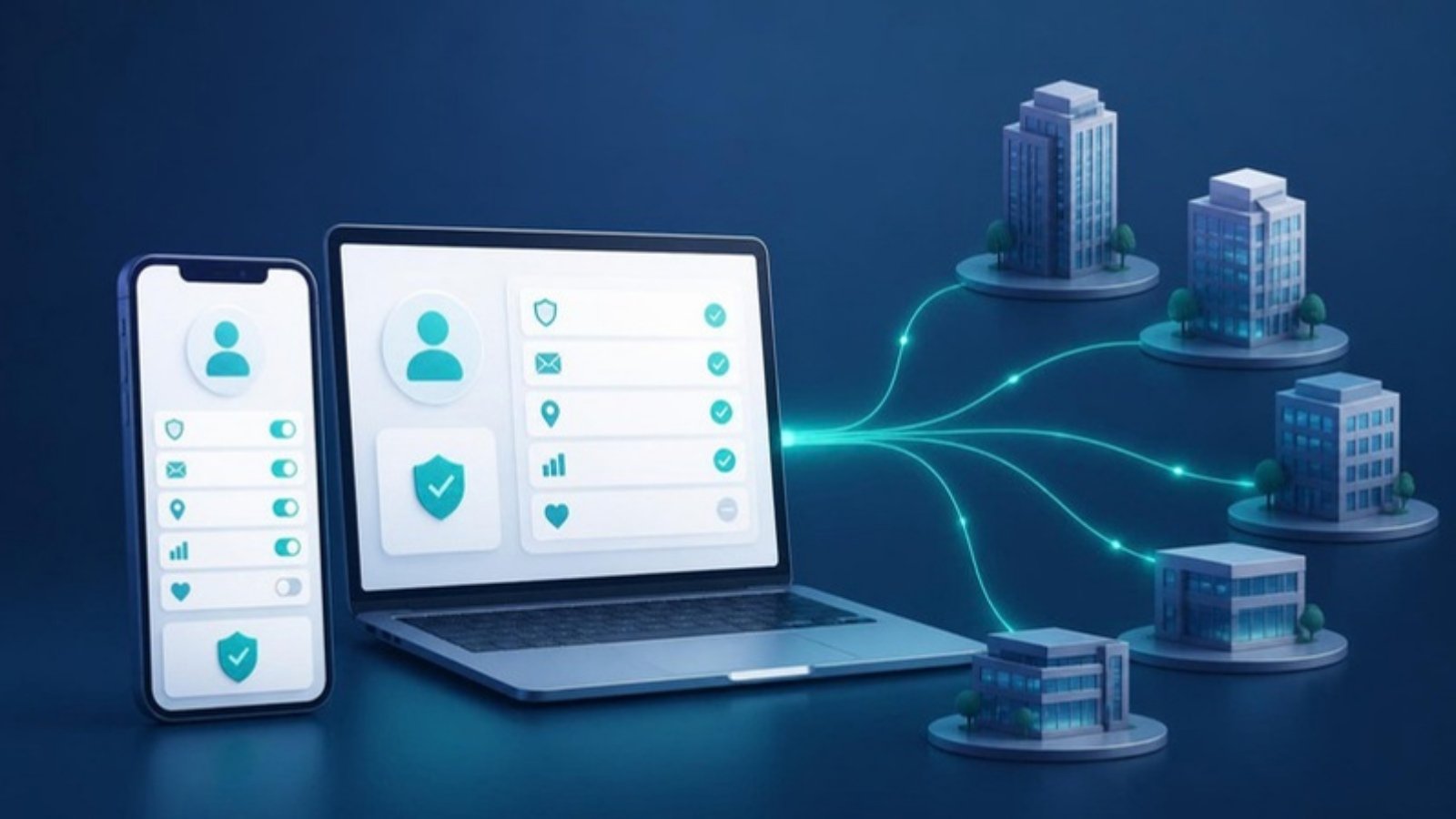
Consent Managers vs Consent Management Platforms Under DPDPA: What’s the Difference?
October 2, 2026
February 13, 2026
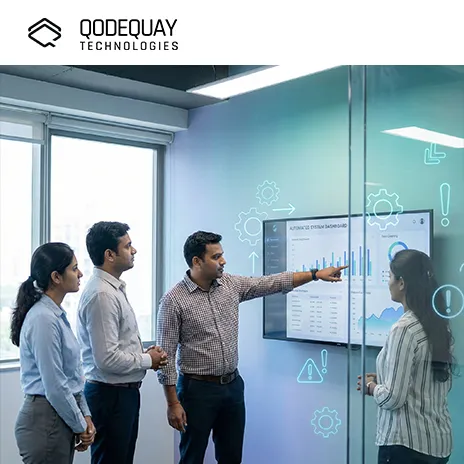
Autonomous IT Operations (AIOps) is the evolution of IT operations from reactive firefighting into intelligent, automated, and self-healing systems. And yes, this matters a lot, because your infrastructure is getting more complex every year, while your teams are not magically doubling in size.
If you are a CTO, CIO, Product Manager, Startup Founder, or Digital Leader, you are probably dealing with at least one of these realities:
This is where Autonomous IT Operations (AIOps) becomes more than a buzzword. It becomes a survival strategy.
In this article, you will learn what AIOps really is, why it matters, how it works, what problems it solves, real-world examples, best practices, and what the future looks like.
You will also walk away with a clear idea of how to approach AIOps adoption without turning your operations team into unwilling test subjects.
Autonomous IT Operations (AIOps) is the use of AI, machine learning, automation, and observability data to detect, diagnose, and resolve IT issues with minimal human intervention.
In simpler words: you build systems that can monitor themselves, understand what is wrong, and fix problems automatically.
Traditional IT operations works like this:
AIOps flips this model into:
The key is not replacing your team. The goal is reducing human toil, speeding up resolution, and improving reliability.
AIOps matters because it directly impacts uptime, cost, speed, and customer trust.
As a leader, your biggest pain is not just outages. It is the hidden cost behind them:
A well-known benchmark from IT incident studies is that the average cost of IT downtime can range from thousands to hundreds of thousands of dollars per hour, depending on your industry. For banks, airlines, healthcare, and SaaS companies, downtime is often catastrophic.
AIOps helps you reduce:
And it helps you increase:
AIOps is different because it focuses on intelligence and action, not just visibility.
Traditional monitoring tells you:
AIOps goes further and tells you:
This is the shift from metrics and dashboards to decisions and automation.
AIOps solves the most expensive operational problems: noise, complexity, and slow response.
Modern IT environments include:
Each one generates logs, metrics, traces, events, and alerts.
AIOps helps you handle:
You stop getting 500 alerts for one outage.
You stop wasting hours chasing symptoms.
You stop solving the same issue every month.
You stop depending on one senior engineer who “knows the system.”
You reduce time-to-action with automation.
AIOps works by collecting operational data, analyzing it with AI, and triggering automated actions.
A typical AIOps pipeline includes:
You pull data from:
You standardize the data so the system can compare signals across tools.
You group related alerts and events into one incident.
Example: AIOps correlates a database latency spike + API timeouts + Kubernetes pod restarts into one root incident.
You detect abnormal patterns before customers complain.
This is where ML is useful because it learns baseline behavior.
You identify the most probable source of failure.
You execute runbooks automatically.
Example actions:
You improve playbooks and reduce false positives over time.
Self-healing IT means your systems can automatically recover from failures without human intervention.
This does not mean “nothing ever breaks.” It means:
A self-healing example:
That is self-healing in the real world: practical, controlled, and measurable.
AIOps is already being used by enterprises and cloud-native companies, even if they do not call it AIOps.
During a flash sale, your traffic spikes 10x. Without AIOps, your team manually scales services and prays.
With AIOps:
A small delay in payment processing causes huge customer frustration.
With AIOps:
A new release introduces a bug.
With AIOps:
AIOps delivers measurable improvements in speed, reliability, and cost.
In many IT operations case studies across the industry, organizations commonly report:
Even a modest improvement in MTTR can create massive ROI, because downtime costs compound quickly.
For example:
That is not just technical improvement. That is business survival.
An AIOps architecture typically includes observability, intelligence, and automation layers.
This includes:
This includes:
This includes:
The best AIOps systems are designed with human-in-the-loop controls, meaning automation is guided and governed.
You implement AIOps successfully by starting small, focusing on outcomes, and building trust in automation.
Here are best practices that work in real companies:
AIOps fails when leaders try to “buy automation” without improving operational maturity.
The biggest risks of AIOps are bad data, over-automation, and unclear ownership.
If your logs are inconsistent and your monitoring is incomplete, AIOps cannot reason correctly.
Auto-remediation can make things worse if it triggers the wrong action.
ML models can become less accurate as your system evolves.
Many organizations already have too many tools. AIOps can become “one more tool” if not integrated properly.
Ops teams may fear job loss. Dev teams may distrust automated decisions.
The fix is simple but not easy: clarity, transparency, and gradual adoption.
You measure AIOps success using reliability, speed, and human workload metrics.
Here are the most meaningful metrics:
AIOps is only successful when it improves outcomes, not when it produces fancy dashboards.
AIOps strengthens DevOps, SRE, and Platform Engineering by automating the “last mile” of reliability.
DevOps helps you ship faster. SRE helps you ship reliably. Platform Engineering helps you scale delivery.
AIOps helps you operate all of it intelligently.
A strong modern stack looks like this:
This is not competing. It is a power combo.
AIOps benefits any industry where downtime is expensive and complexity is high.
Top industries include:
If your customers expect always-on services, AIOps becomes a strategic advantage.
The future of AIOps is moving toward agentic automation, predictive operations, and full-stack intelligence.
Here are the trends you should expect:
You will increasingly see AI assistants that can:
Instead of reacting to incidents, AIOps will predict failure conditions before they happen.
Example: Detecting slow memory leaks, capacity exhaustion, or traffic anomalies days earlier.
AIOps will become part of CI/CD:
As automation increases, auditability becomes mandatory.
Expect:
Observability will shift from optional tooling to a built-in standard, powered by OpenTelemetry and unified data pipelines.
The future is not “AI replacing ops.” The future is ops becoming a strategic function again, not a reactive one.
Autonomous IT Operations (AIOps) is not a futuristic dream. It is the practical next step in running modern digital systems at scale. When your infrastructure becomes too complex for humans to manage manually, automation becomes your safety net, and intelligence becomes your competitive edge.
As a digital leader, your job is not to chase shiny tools. Your job is to build resilient, scalable systems that protect customer trust and enable faster innovation. AIOps helps you do exactly that by turning IT operations into an intelligent, self-healing capability.
And when you want to design these experiences from the human side first, then engineer the technology around them, Qodequay brings the right balance. At Qodequay (https://www.qodequay.com), design leads the strategy, and technology becomes the enabler, so you solve real human problems, not just technical ones.

As the CEO and Founder of Qodequay Technologies, I bring over 20 years of expertise in design thinking, consulting, and digital transformation. Our mission is to merge cutting-edge technologies like AI, Metaverse, AR/VR/MR, and Blockchain with human-centered design, serving global enterprises across the USA, Europe, India, and Australia. I specialize in creating impactful digital solutions, mentoring emerging designers, and leveraging data science to empower underserved communities in rural India. With a credential in Human-Centered Design and extensive experience in guiding product innovation, I’m dedicated to revolutionizing the digital landscape with visionary solutions.
Follow the expert :

October 2, 2026

October 1, 2026

July 2, 2026
July 2, 2026
July 2, 2026
Monthly insights on AI, VR and DPDPA compliance — straight from our team to your inbox.
Free 30-minute consultation with our team — or see our products in action.