Consent Managers vs Consent Management Platforms Under DPDPA: What’s the Difference?
October 2, 2026
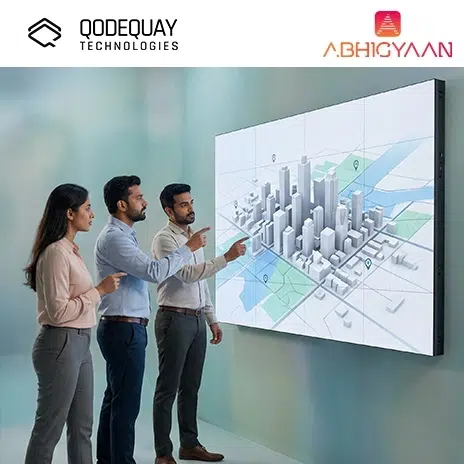
3D City Twins and geospatial mapping matter because they let you see, simulate, and improve cities before expensive decisions become permanent mistakes.
If you are a CTO, CIO, Product Manager, Startup Founder, or Digital Leader, you already know that cities are not simple systems. They are living networks of people, roads, utilities, buildings, public services, and unpredictable events. One wrong infrastructure decision can cost millions, create public backlash, or lock a city into inefficiency for decades.
This is why the world is moving toward 3D City Twins supported by geospatial mapping. Together, they create a real-time, simulation-ready model of the city.
In this article, you will learn:
A 3D City Twin is a digital, spatially accurate model of a city that can simulate and monitor real-world conditions.
A 3D City Twin goes beyond a 3D visualization. It becomes a digital environment where you can:
It is called a twin because it mirrors the real city and updates as the city changes.
The best city twins behave like:
All at once.
Geospatial mapping is the process of collecting, structuring, and analyzing location-based data so it can be used for decision-making.
Geospatial mapping is powered by:
A 3D City Twin is only as good as its spatial accuracy.
Geospatial mapping ensures:
Without geospatial accuracy, your “twin” becomes a digital illusion.
Geospatial mapping provides the data layer, while the 3D city twin provides the visualization and simulation layer.
Here’s the relationship:
You want to redesign an intersection to reduce traffic congestion.
With a 3D city twin, you can:
Instead of guessing, you simulate.
You should care because 3D city twins turn city data into actionable intelligence and reduce risk in major investments.
Cities are increasingly pressured to deliver:
At the same time, budgets are limited and public trust is fragile.
A 3D city twin improves decision quality, reduces waste, and increases transparency.
The most valuable use cases are urban planning, mobility simulation, utility management, and disaster resilience.
You can test:
This avoids long planning cycles based on static drawings.
You can simulate:
You can map:
You can also predict maintenance needs.
You can simulate:
This is one of the strongest ROI areas because it saves lives and reduces damage.
Real-world examples show 3D city twins improving planning speed, public communication, and resilience planning.
Singapore has been widely recognized for building one of the most advanced national-level city twin platforms. It supports planning, sustainability, and operational decision-making.
Helsinki has developed open 3D city models used for planning, energy efficiency analysis, and city development projects.
London has explored digital twin concepts for infrastructure planning and long-term city resilience.
3D city twins rely on multiple data sources, including GIS, LiDAR, BIM, satellite imagery, and IoT sensors.
You build a 3D city twin by starting with GIS foundations, adding 3D geometry, and then integrating operational data.
A practical roadmap looks like this:
You need:
You generate:
You enable:
You connect IoT and operational systems.
You deliver:
The biggest challenges are data accuracy, integration complexity, governance, and long-term maintenance.
City data often lives in silos:
A city changes constantly. If you do not update the twin, it becomes outdated quickly.
City data can include:
Security is not optional.
High-quality LiDAR and modeling can be expensive.
That is why phased rollouts are best.
You should build city twins as long-term platforms, not one-time visualization projects.
You measure ROI by tracking planning efficiency, operational savings, and risk reduction.
A 3D city twin pays for itself when it prevents even one major infrastructure mistake.
They improve citizen engagement by making complex planning understandable and transparent.
Instead of showing citizens a flat map or technical blueprint, you show:
This increases trust and reduces opposition driven by confusion.
The future will include real-time city twins, AI-driven planning, and immersive interfaces like AR and VR.
AI will help cities:
City planners will walk through proposed developments in AR or VR before construction begins.
City twins will become central tools for:
More cities will create open platforms where startups and developers can build services on top of city twin data.
3D City Twins and geospatial mapping represent one of the most important shifts in how cities plan and operate. Instead of working with static documents, fragmented GIS layers, and slow decision cycles, you move toward a living city model that can be monitored, tested, and improved continuously.
For CTOs, CIOs, Product Managers, Startup Founders, and Digital Leaders, this is not only a technology opportunity, it is a leadership opportunity. You can reduce infrastructure risk, accelerate smart city initiatives, and build trust through transparency.
At Qodequay (https://www.qodequay.com), you bring a design-first approach to these complex systems, ensuring that city twins are not just impressive visualizations, but usable decision platforms. You solve human problems first, then leverage technology as the enabler, which is exactly what smart cities need to move from data collection to real-world impact.

As the CEO and Founder of Qodequay Technologies, I bring over 20 years of expertise in design thinking, consulting, and digital transformation. Our mission is to merge cutting-edge technologies like AI, Metaverse, AR/VR/MR, and Blockchain with human-centered design, serving global enterprises across the USA, Europe, India, and Australia. I specialize in creating impactful digital solutions, mentoring emerging designers, and leveraging data science to empower underserved communities in rural India. With a credential in Human-Centered Design and extensive experience in guiding product innovation, I’m dedicated to revolutionizing the digital landscape with visionary solutions.
Follow the expert :

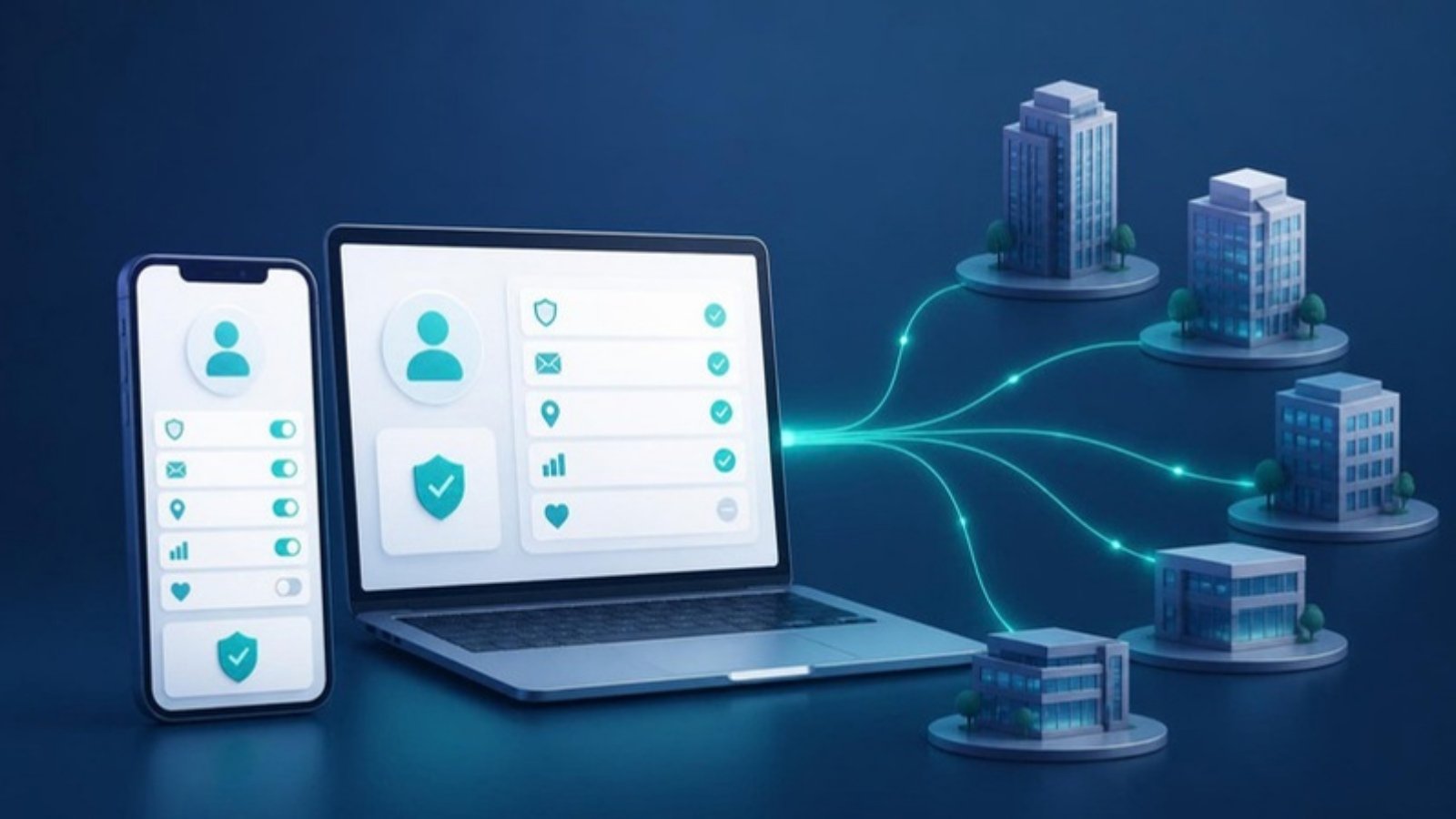
October 2, 2026

October 1, 2026

July 2, 2026
July 2, 2026
July 2, 2026
Monthly insights on AI, VR and DPDPA compliance — straight from our team to your inbox.
Free 30-minute consultation with our team — or see our products in action.