How to Budget a VR Lab for a CBSE School: Devices, Content, Training and Hidden Costs
October 6, 2026
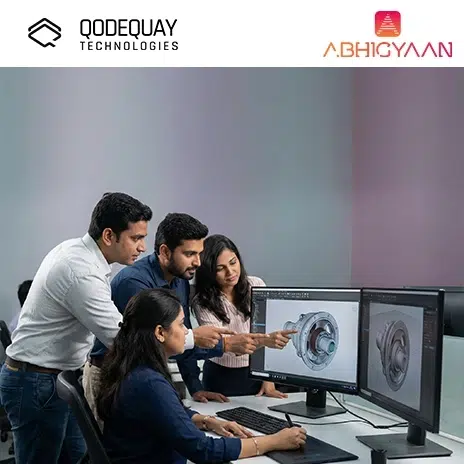
Digital Twin as a Service (DTaaS) matters because it lets you launch, scale, and manage digital twins without building everything from scratch.
If you are a CTO, CIO, Product Manager, Startup Founder, or Digital Leader, you already know the truth: digital twins can deliver huge value, but building them the traditional way can be slow, expensive, and technically heavy.
A full-scale digital twin requires:
That’s a lot to build internally.
DTaaS changes the equation. It gives you a ready-to-scale service model, similar to SaaS, where you subscribe to a platform that provides the infrastructure and tools to deploy digital twins faster.
In this article, you will learn:
Digital Twin as a Service (DTaaS) is a cloud-based service model that provides the tools, infrastructure, and integrations needed to build and run digital twins at scale.
Instead of building everything from the ground up, you use a platform that already includes:
DTaaS is essentially “digital twins on subscription.”
DTaaS is different because you buy a managed platform, while traditional twins require you to build and maintain the entire stack yourself.
You typically need:
This approach works, but it is slow and expensive.
With DTaaS, you typically get:
This makes it far more accessible for companies that want value fast.
You should consider DTaaS now because it reduces time-to-value and lowers the cost of scaling digital twins across multiple assets and sites.
Digital transformation programs often fail because they take too long to show results. DTaaS is attractive because it allows you to:
For leadership teams, that means less risk and more predictability.
DTaaS solves operational visibility problems, maintenance inefficiencies, and scaling challenges across industrial and infrastructure environments.
Many organizations still rely on manual monitoring.
DTaaS enables:
DTaaS supports predictive maintenance by connecting:
DTaaS platforms often provide connectors for:
The hardest part of digital twins is not building one twin, it is building 500 twins.
DTaaS is designed for scaling.
The most common DTaaS use cases include predictive maintenance, remote monitoring, simulation, and operational optimization.
You track vibration, temperature, pressure, and performance signals.
You monitor assets across:
You simulate:
You use real-time data to detect inefficiencies and improve output.
Industries with high-value assets, complex operations, and downtime risk benefit most from DTaaS.
A DTaaS platform typically includes data ingestion, modeling tools, dashboards, analytics, and APIs.
DTaaS is most valuable when it connects with:
You implement DTaaS successfully by starting with one high-value use case and building a repeatable scaling model.
This reduces risk and builds trust.
You should focus on governance, integration, and operational adoption, not only platform features.
The main risks are vendor lock-in, data ownership concerns, and integration complexity.
Some DTaaS platforms use proprietary formats. That can make migration difficult later.
You must ensure:
DTaaS is easier than building from scratch, but integration with legacy OT systems can still be challenging
You measure ROI by tracking downtime reduction, maintenance efficiency, and operational performance improvements.
DTaaS becomes a strategic win when it shifts operations from reactive to predictive.
The future of DTaaS will be defined by AI-powered automation, industry templates, and large-scale twin ecosystems.
You will see pre-built models for:
This will reduce setup time dramatically.
DTaaS will evolve from monitoring to:
Digital twins will connect directly to AR interfaces, enabling:
Companies will manage thousands of twins across assets, facilities, and supply chains.
DTaaS will become the operating system for those ecosystems.
Digital Twin as a Service (DTaaS) is becoming the fastest and most practical way to unlock digital twin value. Instead of spending years building complex infrastructure, you can deploy digital twins in weeks, prove ROI quickly, and scale with confidence.
For CTOs, CIOs, Product Managers, Startup Founders, and Digital Leaders, DTaaS is not only a technology decision, it is a strategic decision. It helps you move from experimentation to operational impact, without carrying the full burden of platform engineering.
At Qodequay (https://www.qodequay.com), you take a design-first approach to DTaaS solutions, ensuring that digital twins are not only technically powerful, but also usable, trusted, and aligned with real human workflows. You solve human problems first, and let technology act as the enabler, which is exactly how DTaaS delivers real transformation.

As the CEO and Founder of Qodequay Technologies, I bring over 20 years of expertise in design thinking, consulting, and digital transformation. Our mission is to merge cutting-edge technologies like AI, Metaverse, AR/VR/MR, and Blockchain with human-centered design, serving global enterprises across the USA, Europe, India, and Australia. I specialize in creating impactful digital solutions, mentoring emerging designers, and leveraging data science to empower underserved communities in rural India. With a credential in Human-Centered Design and extensive experience in guiding product innovation, I’m dedicated to revolutionizing the digital landscape with visionary solutions.
Follow the expert :


October 6, 2026
October 5, 2026

October 4, 2026

October 3, 2026
October 2, 2026
Monthly insights on AI, VR and DPDPA compliance — straight from our team to your inbox.
Free 30-minute consultation with our team — or see our products in action.