DPDPA Penalties Up to ₹250 Crore: The Real Cost of Waiting
July 2, 2026
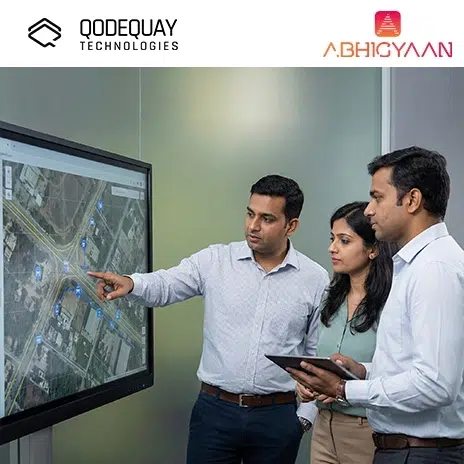
Industrial digital modeling and IoT matter because they convert factories from reactive environments into real-time, measurable systems you can optimize continuously.
If you are a CTO, CIO, Product Manager, Startup Founder, or Digital Leader, you are likely under pressure to improve:
The problem is that most industrial environments still run on fragmented data. Machines generate signals, but those signals are trapped inside PLCs, SCADA screens, or vendor-specific systems. Meanwhile, leadership teams are forced to make decisions using delayed reports.
Industrial digital modeling combined with IoT fixes this by creating a structured digital representation of industrial assets and processes, powered by live data.
In this article, you will learn:
Industrial digital modeling is the process of creating a structured digital representation of industrial assets, processes, and systems.
It includes modeling:
Digital modeling becomes extremely powerful when it is connected to real-time operational data.
IoT provides the real-time data that transforms digital models into living operational systems.
Without IoT, a digital model is static.
With IoT, the model becomes dynamic, updating continuously with:
IoT is the bridge between physical reality and digital understanding.
Industrial digital modeling is the foundation, while a digital twin is the operational version that uses live data, analytics, and actions.
You can think of it like this:
Many organizations skip the modeling foundation and jump into dashboards. That is why scaling becomes difficult later.
You should care because industrial digital modeling and IoT create measurable operational intelligence and reduce downtime at scale.
For leadership teams, this approach delivers:
It also creates a scalable digital backbone for Industry 4.0 initiatives.
It solves visibility, inefficiency, and prediction problems that traditional industrial systems cannot address.
Industrial environments often include:
IoT integration standardizes data.
A SCADA screen may show values, but it does not:
Production, maintenance, and quality teams often work separately.
Digital modeling creates shared operational truth.
The highest ROI use cases are predictive maintenance, OEE optimization, quality monitoring, and energy management.
Sensors detect early warning signs like:
Result:
OEE (Overall Equipment Effectiveness) improves when you can see:
Result:
IoT can monitor process conditions in real time:
Result:
Energy usage can be modeled per:
Result:
The architecture typically includes edge devices, data pipelines, a modeling layer, and analytics.
Edge computing reduces latency and supports:
A packaging line operational model is one of the clearest examples of industrial modeling + IoT delivering fast ROI.
Imagine a packaging line with:
IoT sensors track:
The digital model maps each machine and its role in the line.
The system detects:
Maintenance schedules repair before the line fails.
Outcome:
This is industrial intelligence in action.
You should focus on data quality, operational adoption, and scalable modeling standards.
You should avoid treating IoT as a data collection project instead of an operational improvement system.
Collecting thousands of signals without:
creates noise, not value.
Operators need:
If the system feels like surveillance, adoption will fail.
Without governance, you get:
You measure success through operational KPIs tied to downtime, efficiency, and quality.
The future is autonomous industrial operations where models and IoT data drive real-time optimization automatically.
AI will summarize:
Digital models will become mandatory infrastructure for:
Enterprises will replicate models across:
using reusable templates.
Technicians will use AR overlays to:
Industrial IoT will increasingly require:
Industrial digital modeling and IoT are no longer experimental technologies. They are becoming the operating system of modern manufacturing and industrial operations. They help you move from reactive problem-solving to real-time intelligence, prediction, and continuous optimization.
For CTOs, CIOs, Product Managers, Startup Founders, and Digital Leaders, this combination is one of the strongest investments you can make because it delivers measurable impact: higher uptime, better throughput, improved quality, and lower costs.
At Qodequay (https://www.qodequay.com), you build industrial modeling and IoT solutions with a design-first approach, ensuring the systems are not only technically correct, but also genuinely usable for operators, maintenance teams, and leadership. You solve human problems first, and then use technology as the enabler, which is how industrial intelligence becomes real business value.

As the CEO and Founder of Qodequay Technologies, I bring over 20 years of expertise in design thinking, consulting, and digital transformation. Our mission is to merge cutting-edge technologies like AI, Metaverse, AR/VR/MR, and Blockchain with human-centered design, serving global enterprises across the USA, Europe, India, and Australia. I specialize in creating impactful digital solutions, mentoring emerging designers, and leveraging data science to empower underserved communities in rural India. With a credential in Human-Centered Design and extensive experience in guiding product innovation, I’m dedicated to revolutionizing the digital landscape with visionary solutions.
Follow the expert :


July 2, 2026
July 2, 2026
July 2, 2026
July 2, 2026
July 2, 2026
Monthly insights on AI, VR and DPDPA compliance — straight from our team to your inbox.
Free 30-minute consultation with our team — or see our products in action.