Consent Managers vs Consent Management Platforms Under DPDPA: What’s the Difference?
October 2, 2026
February 11, 2026
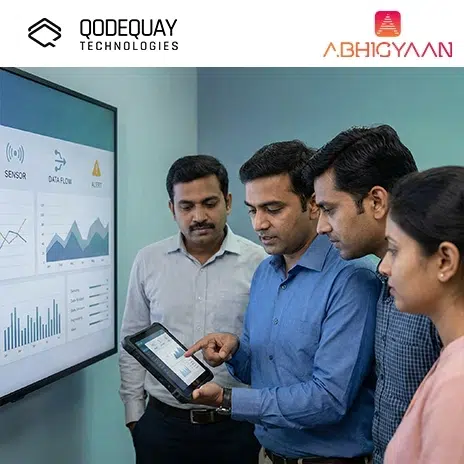
IoT-Based Predictive Excellence matters because it helps you predict breakdowns, optimize performance, and protect revenue before problems happen.
If you are a CTO, CIO, Product Manager, Startup Founder, or Digital Leader, you are living in the world of operational pressure. Customers want faster delivery. Boards want cost reduction. Teams want fewer firefights. And your machines, assets, and systems are expected to run nonstop.
Traditional maintenance models simply cannot keep up:
IoT-based predictive systems change the game. Instead of guessing, you measure. Instead of reacting, you anticipate.
In this article, you will learn:
IoT-Based Predictive Excellence means using connected sensors, real-time data, and analytics to predict failures and optimize asset performance.
This is not just predictive maintenance. It is a full operational strategy where your systems continuously learn from real-world data and help you make better decisions.
Predictive excellence includes:
In short, you are not just preventing breakdowns, you are building an intelligent operational nervous system.
Traditional maintenance fails because it relies on fixed schedules and human detection, not real-time reality.
Reactive maintenance means you fix equipment after it fails. That leads to:
Preventive maintenance means you service equipment on a schedule, like every 30 days. That leads to:
Predictive maintenance means you service equipment based on actual condition. That leads to:
IoT-based predictive excellence is the system that makes predictive maintenance scalable.
IoT predicts failures by capturing sensor data, detecting anomalies, and forecasting breakdown patterns using analytics and machine learning.
Here is the simplified pipeline:
IoT sensors measure:
Even small deviations can signal early failure.
Depending on your setup:
The system identifies patterns like:
Machine learning models forecast:
Maintenance teams receive:
This is where predictive becomes operational.
The most powerful outcomes are reduced downtime, improved asset life, and predictable operational performance.
Unplanned downtime is one of the most expensive industrial problems. Even one unexpected failure can cause:
You replace only what needs replacing.
You stop overstocking parts “just in case.”
Assets last longer when you avoid catastrophic breakdown cycles.
Equipment failures can cause injuries, leaks, and dangerous incidents. Predictive monitoring reduces that risk.
Industries with expensive downtime and complex assets gain the fastest ROI from predictive IoT.
Real-world examples show predictive systems cutting downtime, improving productivity, and enabling smarter planning.
A large manufacturing plant installs vibration sensors on motors. The system detects increasing vibration patterns.
Instead of waiting for failure, the plant schedules maintenance during planned downtime. Result:
Utilities use IoT sensors on transformers to detect heat anomalies. When overheating begins, teams intervene early.
Result:
Warehouses use IoT temperature sensors for cold storage.
When temperature rises above threshold, alerts trigger action before goods spoil. Result:
IoT-Based Predictive Excellence is powered by sensors, connectivity, analytics, and AI models working together.
Sensors are the foundation. Without good sensor data, predictive models are blind.
The network must support:
Edge computing processes data near the asset. It matters when:
Cloud systems provide:
AI models power:
You build a predictive IoT strategy by starting with business-critical assets and scaling based on proven ROI.
Many predictive projects fail because they start too big or too technical.
You should focus on data quality, integration, and operational adoption, not just dashboards.
The best KPIs are uptime, repair time, failure frequency, and cost reduction.
A predictive program becomes “excellent” when it shifts maintenance from emergency mode to planned, data-driven action.
The most common mistakes are ignoring adoption, overcomplicating models, and underestimating integration.
If sensor data is noisy, AI will produce unreliable results.
Predictive excellence requires collaboration across:
Alert fatigue kills adoption. Your system must prioritize critical warnings.
A predictive alert is useless if it does not create a real work order or action.
Predictive excellence becomes far more powerful when connected to Digital Twins.
IoT gives you real-time data. Digital Twins give you simulation and “what-if” modeling.
When combined, you can:
This is how industries move from predictive maintenance to predictive operations.
The future will be driven by AI automation, real-time simulation, and predictive intelligence at every layer of operations.
Machines will increasingly detect issues and adjust automatically before failure.
Instead of custom models, you will see:
You will predict:
As IoT expands, predictive systems become a security target. Security will be built into:
IoT-Based Predictive Excellence is not just a technical upgrade, it is a strategic shift in how you run industrial operations. When you build systems that detect problems early, predict outcomes, and guide action, you stop firefighting and start controlling performance.
For CTOs, CIOs, Product Managers, Startup Founders, and Digital Leaders, this is a direct competitive advantage. You reduce downtime, protect revenue, and scale operations with confidence.
At Qodequay (https://www.qodequay.com), you approach these transformations design-first, ensuring that predictive intelligence is not only powerful, but also usable, trusted, and built around human workflows. Technology becomes the enabler, but human problems remain the focus, which is exactly how predictive excellence turns into real business impact.

As the CEO and Founder of Qodequay Technologies, I bring over 20 years of expertise in design thinking, consulting, and digital transformation. Our mission is to merge cutting-edge technologies like AI, Metaverse, AR/VR/MR, and Blockchain with human-centered design, serving global enterprises across the USA, Europe, India, and Australia. I specialize in creating impactful digital solutions, mentoring emerging designers, and leveraging data science to empower underserved communities in rural India. With a credential in Human-Centered Design and extensive experience in guiding product innovation, I’m dedicated to revolutionizing the digital landscape with visionary solutions.
Follow the expert :


October 2, 2026

October 1, 2026

July 2, 2026
July 2, 2026
July 2, 2026
Monthly insights on AI, VR and DPDPA compliance — straight from our team to your inbox.
Free 30-minute consultation with our team — or see our products in action.