How to Budget a VR Lab for a CBSE School: Devices, Content, Training and Hidden Costs
October 6, 2026
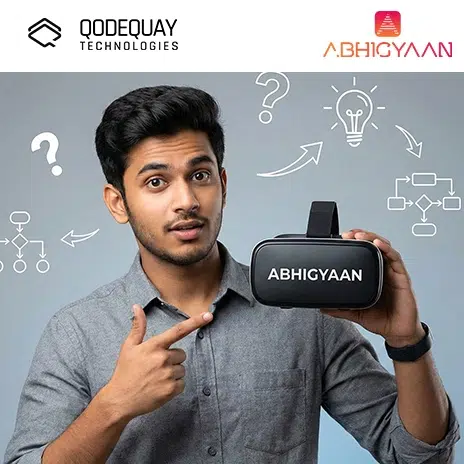
Virtual reality is a technology that places you inside a computer-generated 3D environment where you can look around, move, and interact as if you were physically there.
That single shift, from watching a screen to stepping inside an experience, is why VR is transforming education, healthcare, manufacturing, retail, and enterprise training.
For CTOs, CIOs, Product Managers, Startup Founders, and Digital Leaders, virtual reality matters because it is no longer a niche experiment. VR is now a practical platform for immersive learning, simulation-based training, customer engagement, and new digital products.
In this article, you’ll learn what virtual reality is, how it works, the main types of VR, where it is used, key benefits and risks, and what the future of VR will look like.
Virtual reality is a digital experience that makes you feel like you are inside a simulated world instead of looking at it from the outside.
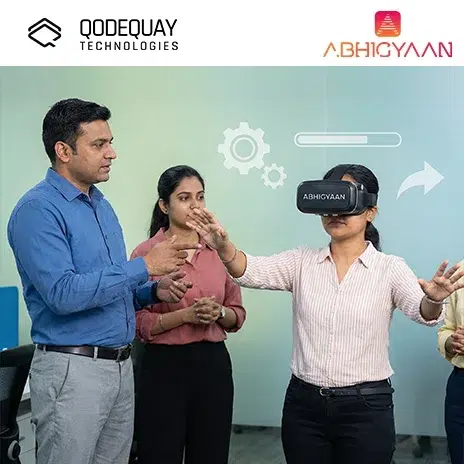
When you wear a VR headset, you see a 3D environment around you. When you turn your head, the view changes instantly. When you move your hands, your virtual hands move too.
This creates immersion, meaning your brain accepts the virtual space as “real enough” to respond naturally.
Virtual reality works by combining a VR headset, motion tracking, and 3D graphics to create a responsive environment that updates in real time.
VR is convincing because it reacts instantly to your movements. If it does not, you feel disconnected, or worse, motion sickness.
The magic is not only the visuals. It is the responsiveness.
The main types of VR are non-immersive VR, semi-immersive VR, and fully immersive VR.
This is VR-like simulation on a screen. It is common in flight simulators or interactive learning platforms.
This uses large screens or partial headsets. It feels immersive but not fully “inside” the world.
This is the most common today, using headsets like Meta Quest or HTC Vive. You feel present in the virtual environment.
For most businesses and education programs, fully immersive VR is where the strongest value exists.
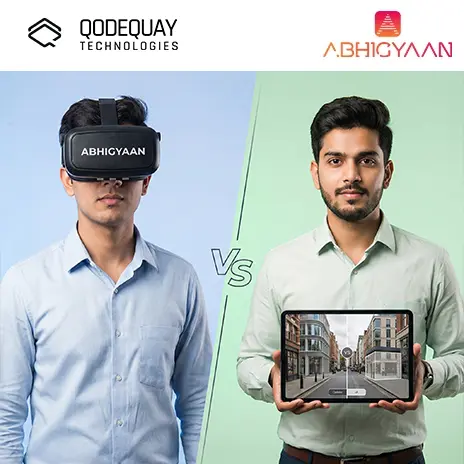
VR replaces your world, AR adds to your world, and MR blends digital objects into your real environment in a more interactive way.
These terms are often confused, so here is the simplest breakdown:
If VR is stepping into a new world, AR is adding layers to your current world.
VR feels real because your brain prioritizes sensory input, especially vision and motion, over logical knowledge.
Even when you know you are in a simulation, your brain responds emotionally and physically.
That is why:
This realism is exactly why VR is powerful for learning and training.
Virtual reality is used today in education, healthcare, enterprise training, manufacturing, retail, architecture, and entertainment.
VR is not one industry. It is a cross-industry capability.
The strongest ROI often comes from training and simulation.
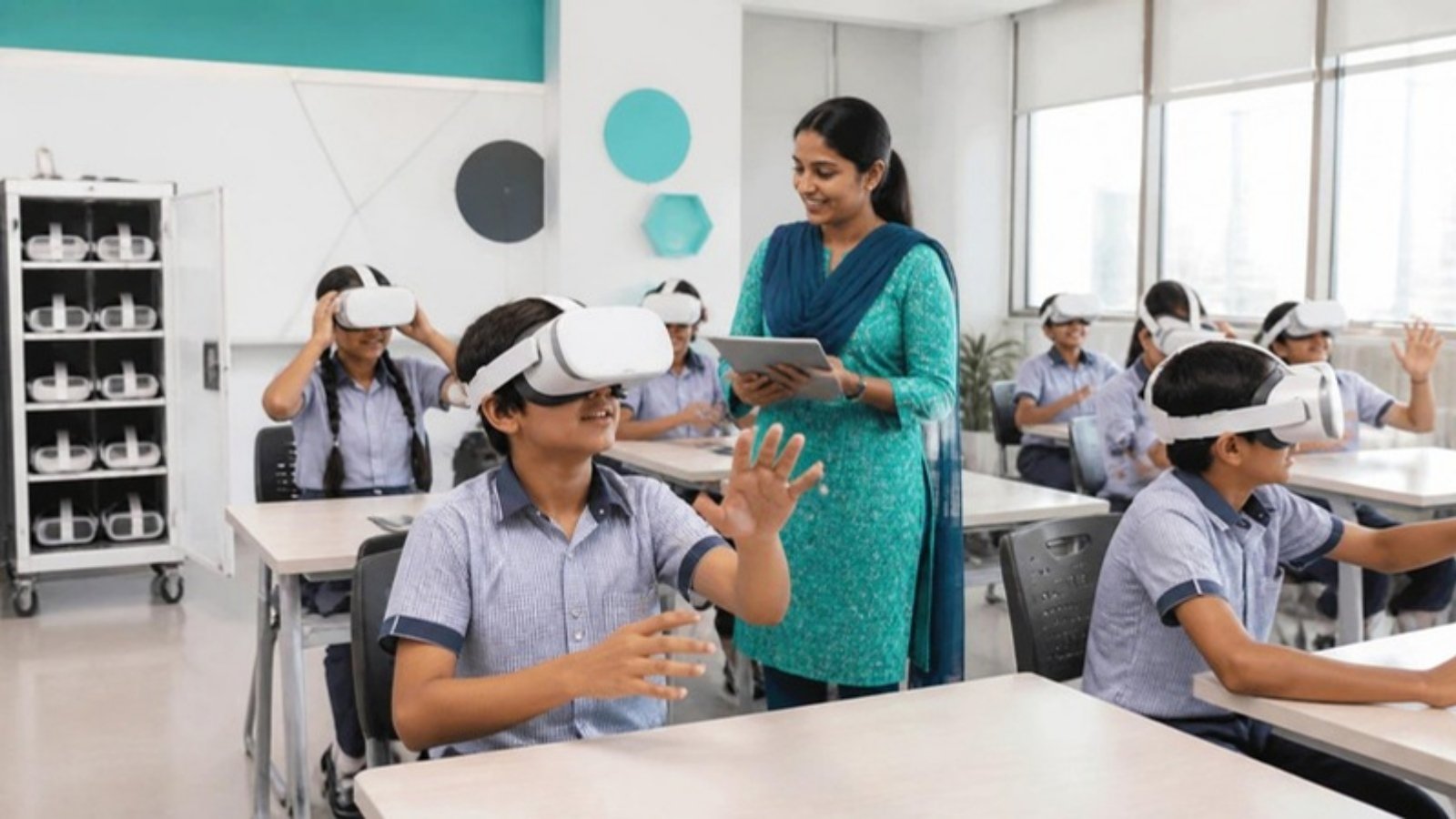
VR improves learning outcomes because it enables experiential learning, meaning you learn by doing rather than only reading or watching.
Traditional learning is often passive. VR makes learning active.
This is why VR is used for high-risk training, such as safety, healthcare, and industrial operations.
The biggest benefits of VR are immersion, safe practice, better retention, scalability, and stronger engagement.
VR is not just a new interface. It is a new way to transfer knowledge and skills.
The main risks are motion sickness, device costs, content quality, privacy, and accessibility concerns.
VR is powerful, but it is not perfect.
These risks can be managed with good design and responsible rollout.
You choose the right VR headset based on your use case, budget, content needs, and deployment environment.
For most organizations, standalone VR is the easiest starting point.
The future of VR will be shaped by lighter headsets, mixed reality, AI-driven experiences, and deeper enterprise adoption.
VR will move from “innovation projects” to standard digital infrastructure.
Qodequay helps you design and build VR experiences that solve real human problems, not just showcase technology.
The biggest reason VR projects fail is not hardware. It is poor experience design. People stop using VR if it feels confusing, uncomfortable, or disconnected from real outcomes.
At Qodequay (https://www.qodequay.com), you combine design-first thinking with strong technology execution. You build immersive products, training platforms, and learning solutions where VR is the enabler, not the distraction.
Virtual reality is one of the most exciting shifts in modern technology because it changes how you experience information. Instead of learning through screens, you learn through presence. That unlocks new possibilities for education, training, and digital products.
As VR becomes more affordable and enterprise-ready, the organizations that adopt it strategically will gain an advantage in learning speed, workforce readiness, and innovation capability.
At Qodequay (https://www.qodequay.com), you take a design-first approach to immersive technology, solving real human problems with technology as the enabler.

As the CEO and Founder of Qodequay Technologies, I bring over 20 years of expertise in design thinking, consulting, and digital transformation. Our mission is to merge cutting-edge technologies like AI, Metaverse, AR/VR/MR, and Blockchain with human-centered design, serving global enterprises across the USA, Europe, India, and Australia. I specialize in creating impactful digital solutions, mentoring emerging designers, and leveraging data science to empower underserved communities in rural India. With a credential in Human-Centered Design and extensive experience in guiding product innovation, I’m dedicated to revolutionizing the digital landscape with visionary solutions.
Follow the expert :

October 6, 2026

October 5, 2026

October 4, 2026

October 3, 2026
October 2, 2026
Monthly insights on AI, VR and DPDPA compliance — straight from our team to your inbox.
Free 30-minute consultation with our team — or see our products in action.