DPDPA Penalties Up to ₹250 Crore: The Real Cost of Waiting
July 2, 2026
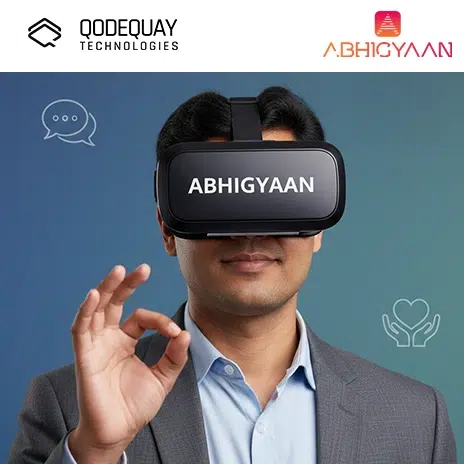
Organizations are using virtual reality to build soft skills because VR creates realistic practice environments where you can train communication, leadership, and decision-making safely and repeatedly.
Soft skills are the hardest skills to train. Not because they are unimportant, but because they require practice, reflection, and real-world behavior change, not just theory.
For CTOs, CIOs, Product Managers, Startup Founders, and Digital Leaders, VR-based soft skills training matters because it combines human development with measurable data. You can scale training across teams, reduce coaching costs, improve consistency, and track outcomes.
In this article, you’ll learn why soft skills training through virtual reality works, what benefits it delivers, how real organizations use it, and what the future looks like.
Soft skills training through virtual reality means using immersive simulations to practice human interactions such as leadership, conflict resolution, negotiation, empathy, and public speaking.
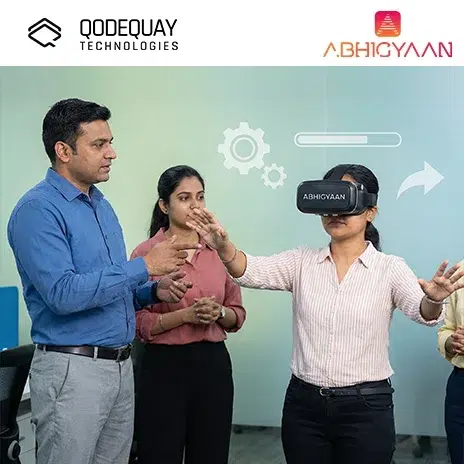
Instead of watching videos or attending workshops, you step into a realistic scenario. You speak, respond, and make decisions in real time.
VR soft skills training often includes:
It is not gaming. It is structured practice.
Soft skills are harder to build because they depend on behavior, emotion, and context, not just knowledge.
Technical skills often have clear answers:
Soft skills are more complex:
This is why many training programs fail. They teach concepts, but they do not build muscle memory.
VR solves this by creating practice at scale.
VR improves learning because it creates active participation, realistic stress, and stronger memory retention through experience.
Traditional soft skills training is often:
VR training is:
When you practice a difficult conversation in VR, your brain treats it as a real experience. That makes the learning stick.
The biggest benefits are safe practice, faster improvement, consistent training, and measurable performance insights.
Let’s break down the real value.
VR creates a safe space because you can make mistakes without harming real relationships or business outcomes.
In real life:
In VR:
This psychological safety is a major reason VR accelerates growth.
VR builds confidence faster because repeated exposure reduces anxiety and improves performance under pressure.
For example, public speaking training in VR works well because:
Confidence is not taught. It is earned through repetition.
VR improves empathy because it can simulate perspectives and emotional situations that are difficult to recreate in real training.
For example, empathy training in VR can simulate:
This helps you understand emotional cues and respond better.
VR makes empathy practical, not abstract.
VR provides measurable feedback by tracking voice tone, response timing, decision paths, and scenario outcomes.
Unlike a workshop, VR can capture:
This turns soft skills into something you can measure and improve.
That is extremely valuable for leadership development and customer-facing roles.
The strongest use cases include leadership training, sales coaching, customer service, onboarding, and safety communication.
Here are common examples you can implement.
These are situations where practice matters more than theory.
VR reduces costs because once a training simulation is built, it can be reused repeatedly with consistent quality.
Traditional training often requires:
VR allows:
You still need facilitation and coaching, but the cost per learner drops significantly as you scale.
VR supports distributed teams because training experiences become consistent regardless of location.
This matters when:
Instead of flying people in for workshops, you deliver training experiences remotely with the same quality.
The main challenges are device management, content quality, adoption resistance, and aligning training to business outcomes.
VR is powerful, but it is not magic.
Common adoption challenges include:
The solution is to start with a clear pilot and focus on measurable outcomes.
The best practices are starting small, measuring impact, designing for realism, and integrating with coaching.
VR works best when it is part of a learning system, not a standalone gadget.
VR soft skills training will grow rapidly as headsets become cheaper, AI-driven role-play becomes more realistic, and companies demand measurable learning outcomes.
Soft skills training will become more data-driven and scalable.
Qodequay helps you design and deliver VR soft skills training experiences that solve real human problems and align with business outcomes.
VR training succeeds when it is:
At Qodequay (https://www.qodequay.com), you get a design-first approach that leverages technology as the enabler. You create immersive training experiences that improve real performance, not just engagement.
Soft skills shape leadership, culture, customer experience, and business outcomes. But traditional training often struggles because it is passive, inconsistent, and difficult to measure.
Virtual reality changes that. It gives you immersive practice, consistent scenarios, and data-driven improvement. You build confidence, communication ability, empathy, and decision-making skills faster, and you do it at scale.
At Qodequay (https://www.qodequay.com), you approach VR training with a design-first mindset, solving human problems first and using technology as the enabler. That is how you turn immersive learning into real workforce transformation.

As the CEO and Founder of Qodequay Technologies, I bring over 20 years of expertise in design thinking, consulting, and digital transformation. Our mission is to merge cutting-edge technologies like AI, Metaverse, AR/VR/MR, and Blockchain with human-centered design, serving global enterprises across the USA, Europe, India, and Australia. I specialize in creating impactful digital solutions, mentoring emerging designers, and leveraging data science to empower underserved communities in rural India. With a credential in Human-Centered Design and extensive experience in guiding product innovation, I’m dedicated to revolutionizing the digital landscape with visionary solutions.
Follow the expert :


July 2, 2026
July 2, 2026
July 2, 2026
July 2, 2026

July 2, 2026
Monthly insights on AI, VR and DPDPA compliance — straight from our team to your inbox.
Free 30-minute consultation with our team — or see our products in action.