DPDPA Penalties Up to ₹250 Crore: The Real Cost of Waiting
July 2, 2026

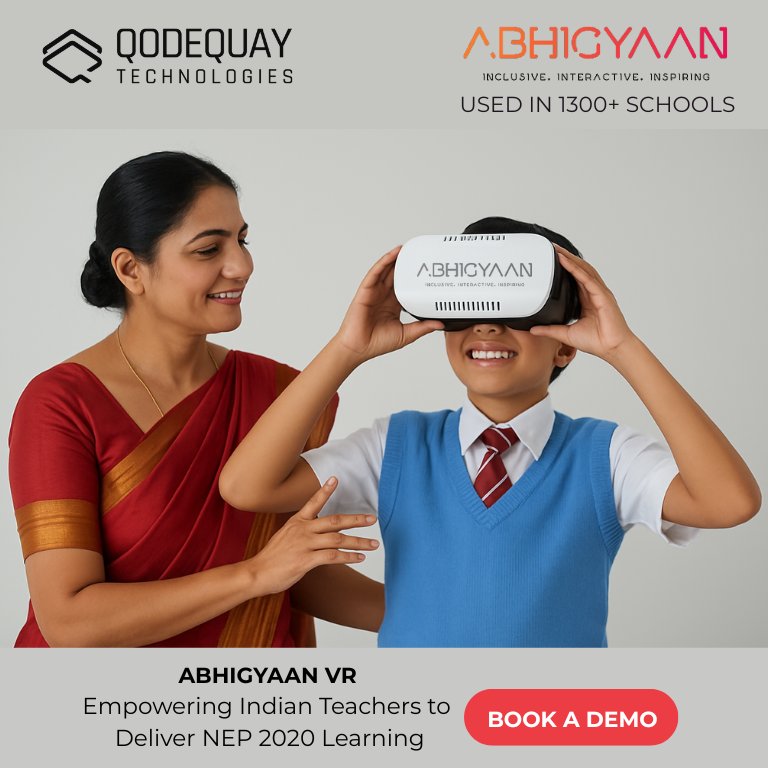
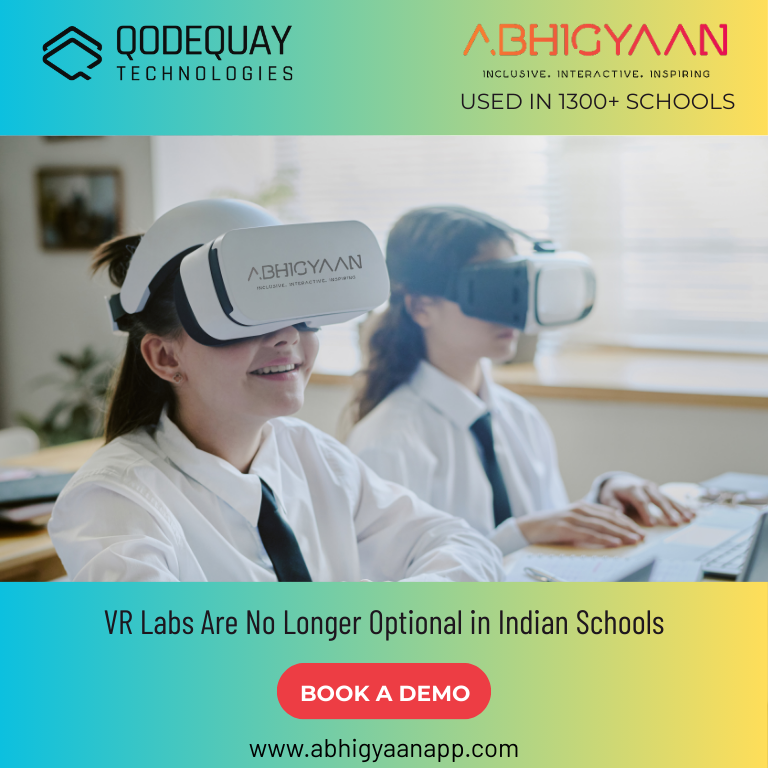
Explore NEP 2020–aligned VR labs built for Indian schools to move learning beyond theory and prepare students with real-world skills.
Attention spans are shrinking, but expectations from schools continue to rise. You are expected to deliver conceptual clarity, skill development, and career readiness, often with limited time and resources.
VR labs for schools address this challenge by transforming how students learn, shifting education from memorization to application. Instead of only reading or listening, students experience concepts in immersive, interactive environments that connect learning to real life.
This article explains how NEP 2020–ready VR labs support modern education and why Qodequay is a trusted expert in building them.
VR labs for schools are dedicated learning environments where students use Virtual Reality to explore concepts through immersive simulations.
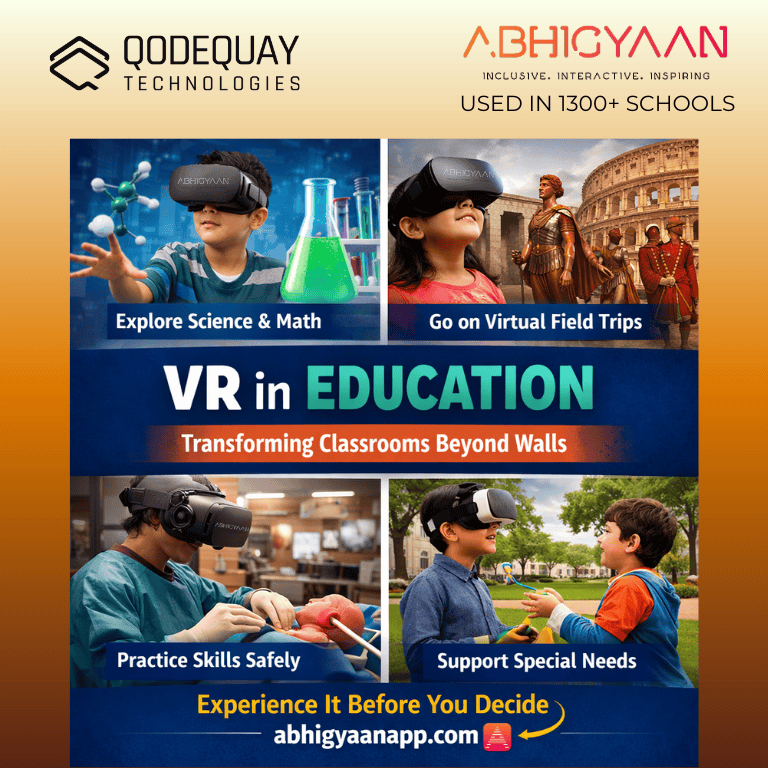
Unlike traditional computer labs, VR labs place students inside 3D environments where they can interact with subjects such as science, geography, vocational skills, and career scenarios. These labs support experiential learning, practical application, and skill development, which are central to NEP 2020.
VR labs are aligned with NEP 2020 because they focus on experiential, skill-based, and application-driven learning.
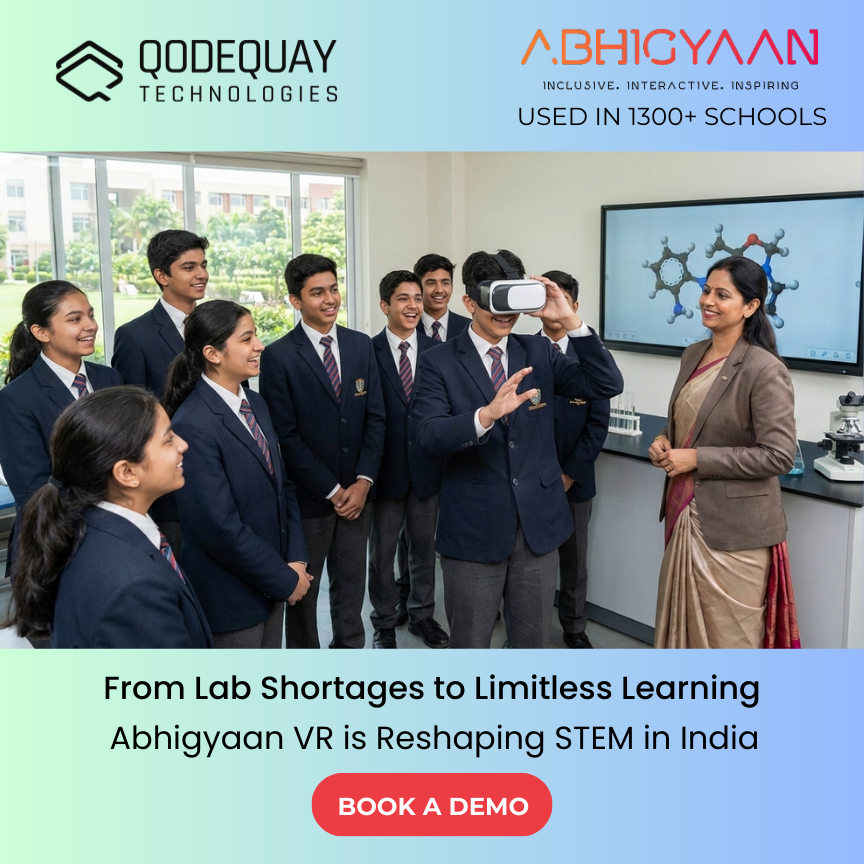
NEP 2020 emphasizes moving beyond rote memorization toward understanding, creativity, and real-world problem solving. VR labs support this by enabling students to apply theoretical knowledge in simulated real-life situations.
Direct alignment includes:
Experiential and discovery-based learning
Integration of technology in classrooms
Focus on skill development and employability
Multidisciplinary and practical learning
VR labs improve real-world skill development by allowing students to practice, experiment, and learn through experience.
When students perform tasks instead of only studying them, they develop critical thinking, decision-making, and problem-solving skills. VR simulations allow repeated practice without risk, which is especially valuable for science experiments, technical skills, and career exploration.
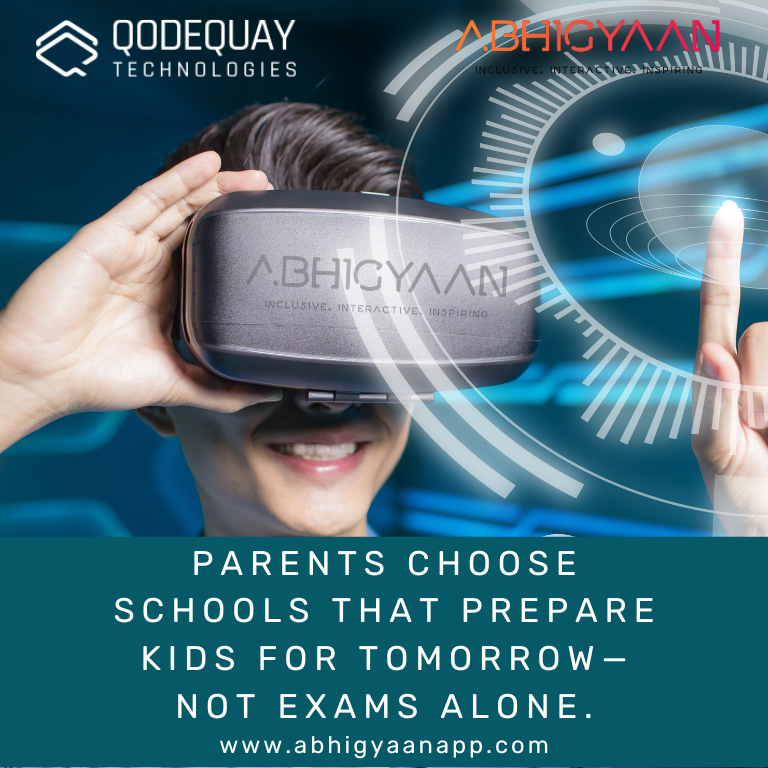
This approach prepares students not just for exams, but for life beyond school.
Qodequay is an expert because it combines AR and VR development expertise with deep understanding of educational needs.
Qodequay designs and delivers NEP 2020–ready VR labs that are built for actual classroom use, not temporary demonstrations. Every lab is developed with curriculum alignment, scalability, and ease of adoption in mind.
Qodequay’s VR lab expertise includes:
End-to-end AR and VR development
Purpose-built VR labs using modern technology
Curriculum-aligned immersive learning
Focus on application, skills, and career readiness
This ensures schools receive solutions that work long-term.
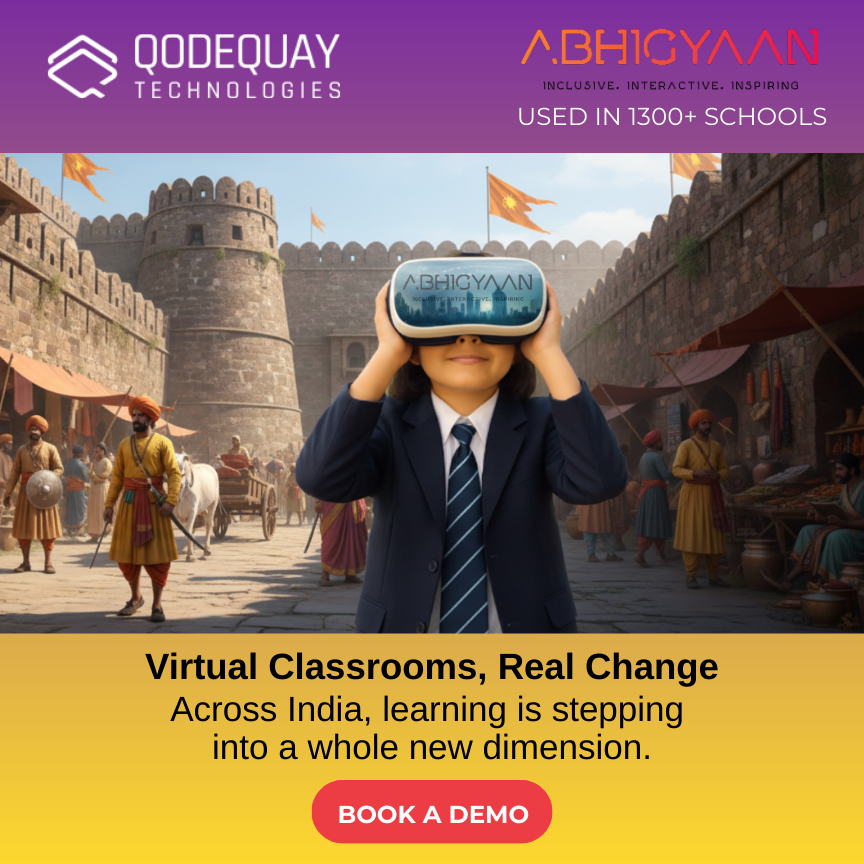
VR labs move learning beyond theory by turning abstract concepts into experiences.
Complex ideas become easier to understand when students can see them in 3D, explore them from different angles, and interact with them. This reduces confusion, increases engagement, and improves long-term retention.
For students who struggle with traditional teaching methods, VR offers an inclusive and effective alternative.
Successful VR lab implementation depends on thoughtful integration.
Best practices include:
Align VR sessions with curriculum objectives
Use VR for complex or high-impact topics
Train teachers before large-scale rollout
Keep sessions structured and focused
Combine VR with discussion and reflection
When implemented correctly, VR labs enhance teaching instead of disrupting it.
The future of VR labs in education points toward wider adoption and deeper integration.
As schools focus more on skills, career readiness, and experiential learning, VR labs will move from being innovative to being expected. Integration with analytics, AI, and adaptive learning will further personalize student experiences.
Schools that adopt early gain a clear advantage in credibility, outcomes, and student engagement.
VR labs for schools support experiential, skill-based learning
NEP 2020 emphasizes application over memorization
VR labs help students develop real-world and career-ready skills
Qodequay delivers NEP 2020–ready VR labs built for classrooms
Early adoption prepares schools for future expectations
Education today demands more than theoretical knowledge. VR labs designed to turn knowledge into real-world skills help schools meet the goals of NEP 2020 while preparing students for modern careers.
Qodequay brings proven AR and VR expertise to education, delivering scalable, curriculum-aligned VR labs that make learning practical, relevant, and future-ready.
Abhigyaan brings this shift into your classrooms today.
See it in action.
👉 Book your VR demo now: https://abhigyaanapp.com/
Because the future of learning will not wait, and neither will your students.

As the CEO and Founder of Qodequay Technologies, I bring over 20 years of expertise in design thinking, consulting, and digital transformation. Our mission is to merge cutting-edge technologies like AI, Metaverse, AR/VR/MR, and Blockchain with human-centered design, serving global enterprises across the USA, Europe, India, and Australia. I specialize in creating impactful digital solutions, mentoring emerging designers, and leveraging data science to empower underserved communities in rural India. With a credential in Human-Centered Design and extensive experience in guiding product innovation, I’m dedicated to revolutionizing the digital landscape with visionary solutions.
Follow the expert :


July 2, 2026
July 2, 2026
July 2, 2026
July 2, 2026
July 2, 2026
Monthly insights on AI, VR and DPDPA compliance — straight from our team to your inbox.
Free 30-minute consultation with our team — or see our products in action.