How to Budget a VR Lab for a CBSE School: Devices, Content, Training and Hidden Costs
October 6, 2026
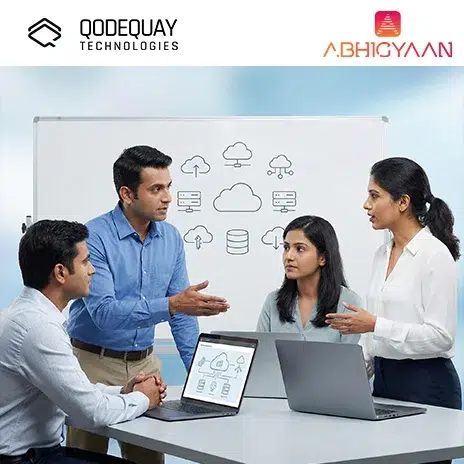
Managed Cloud Computing is the difference between “running in the cloud” and actually winning in the cloud.
You can migrate your workloads to AWS, Azure, or Google Cloud and still fail to get the outcomes you expected. Why? Because cloud is not just infrastructure, it is an operating model. And without the right expertise, governance, monitoring, and cost controls, cloud quickly becomes expensive, complex, and risky.
As a CTO, CIO, Product Manager, Startup Founder, or Digital Leader, you are expected to scale products quickly, maintain uptime, stay secure, and optimize cost at the same time. That is a brutal combination. Managed cloud computing exists to make that combination achievable.
In this article, you will learn what managed cloud computing is, how it works, what services it includes, how it delivers ROI, real-world examples, best practices, common mistakes, and what trends will shape managed cloud over the next few years.
Managed cloud computing is a service model where you outsource cloud operations, monitoring, optimization, and security to experts while keeping ownership of your cloud strategy.
In simple terms: you focus on product and business growth, while a managed cloud team keeps your cloud stable, secure, and cost-efficient.
Managed cloud computing typically covers:
Managed cloud computing matters because cloud complexity has grown faster than most teams can handle.
Even small companies now run:
That is not “just hosting.” That is a full-time discipline.
If you do not manage it properly, the consequences are painful:
Managed cloud helps you avoid those outcomes.
Managed cloud computing solves cost chaos, operational risk, security gaps, and scalability challenges.
Here are the biggest problems it solves in real businesses.
Cloud bills often grow silently.
Common causes:
A managed cloud team implements cost governance and FinOps practices to reduce waste.
Uptime is not automatic in the cloud.
You still need:
Managed cloud improves reliability through proactive operations.
Cloud security requires continuous work.
Managed cloud services typically cover:
Security becomes consistent instead of reactive.
Many teams struggle to ship quickly because deployments are fragile.
Managed cloud improves:
This allows faster product delivery.
Cloud operations can drain your best engineers.
Instead of building product features, they end up:
Managed cloud reduces operational burden and improves team morale.
Managed cloud computing includes infrastructure management, monitoring, security, optimization, and governance.
Most providers cover the following.
This includes:
This includes:
This is especially important for customer-facing SaaS products.
This includes:
FinOps means cloud financial operations.
Managed cloud teams help with:
Even a 15% cost reduction can be a major win.
This includes:
Backups are not useful unless recovery is tested.
Managed cloud often includes modernization work such as:
This improves scalability and long-term efficiency.
Managed cloud computing delivers ROI by reducing cloud waste, improving uptime, increasing team productivity, and preventing security incidents.
ROI comes from multiple directions:
Managed cloud is not only a cost decision, it is a growth decision.
Managed cloud success is best understood through practical scenarios.
A startup running a B2B SaaS platform experiences rapid growth.
Challenges:
Managed cloud implementation:
Result: They scale reliably without hiring 3 to 5 extra infrastructure engineers.
An eCommerce business faces downtime during sales campaigns.
Managed cloud improvements:
Result: Higher uptime during peak events and increased revenue protection.
A mid-size enterprise needs SOC2 compliance for enterprise sales.
Managed cloud helps by:
Result: Faster audit readiness and stronger enterprise trust.
You choose the right partner by evaluating expertise, security practices, transparency, and operational maturity.
Here are the most important evaluation points:
Managed cloud should feel like an extension of your team, not a black box.
The best practices are to standardize operations, automate infrastructure, measure performance, and optimize continuously.
Here are best practices you should follow:
These practices prevent cloud chaos as you scale.
The biggest mistakes are unclear ownership, poor visibility, and treating managed cloud as only support.
Here are common pitfalls:
You must define who owns:
Managed cloud without FinOps becomes expensive quickly.
Cloud security is not optional.
Managed cloud is not just “fixing tickets.” It should include proactive improvement.
If you only maintain legacy infrastructure, you lose cloud’s real value.
Managed cloud supports innovation by freeing your team from infrastructure distraction.
When cloud operations are stable, your team can:
This is especially important for startups and high-growth SaaS.
Your engineers should spend time building differentiation, not managing servers.
The future will be driven by automation, AI-assisted operations, stronger security, and multi-cloud governance.
Here are the trends you should prepare for:
AIOps uses AI to:
This improves uptime and reduces human load.
Cloud cost optimization will become a core leadership KPI.
Managed cloud providers will focus more on:
Cloud operations will become specialized by industry:
More companies will reduce operational overhead by using:
This shifts focus from infrastructure to product delivery.
Managed Cloud Computing is one of the smartest moves you can make when you want to scale without drowning in operational complexity. It gives you the expertise, monitoring, governance, and cost control needed to run cloud systems with confidence, while your internal team stays focused on building the product and growing the business.
At Qodequay, you take a design-first approach to managed cloud computing by aligning cloud operations with real human and business outcomes. Technology becomes the enabler, while the real goal stays clear: build secure, scalable, high-performing digital systems that people trust and love to use.

As the CEO and Founder of Qodequay Technologies, I bring over 20 years of expertise in design thinking, consulting, and digital transformation. Our mission is to merge cutting-edge technologies like AI, Metaverse, AR/VR/MR, and Blockchain with human-centered design, serving global enterprises across the USA, Europe, India, and Australia. I specialize in creating impactful digital solutions, mentoring emerging designers, and leveraging data science to empower underserved communities in rural India. With a credential in Human-Centered Design and extensive experience in guiding product innovation, I’m dedicated to revolutionizing the digital landscape with visionary solutions.
Follow the expert :


October 6, 2026
October 5, 2026

October 4, 2026

October 3, 2026

October 2, 2026
Monthly insights on AI, VR and DPDPA compliance — straight from our team to your inbox.
Free 30-minute consultation with our team — or see our products in action.