DPDPA Penalties Up to ₹250 Crore: The Real Cost of Waiting
July 2, 2026
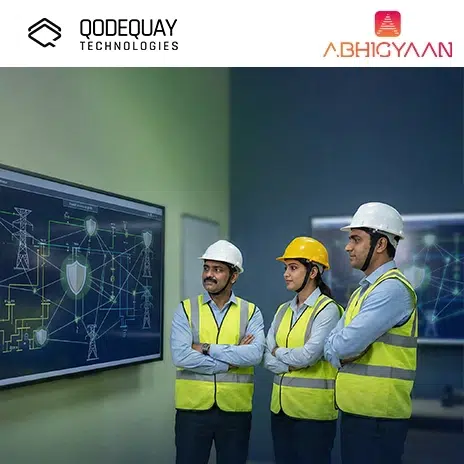
Live data and AR synergy matters because it puts the right information in front of you at the exact moment you need it, without slowing you down.
If you are a CTO, CIO, Product Manager, Startup Founder, or Digital Leader, you already know the biggest challenge in industrial and enterprise operations is not lack of data.
It is lack of usable data.
You can have:
Yet your field teams still struggle because the information is:
Augmented Reality (AR) changes that by turning real-time data into a visual layer on top of the real world.
In this article, you will learn:
It means overlaying real-time operational data onto physical environments through AR interfaces.
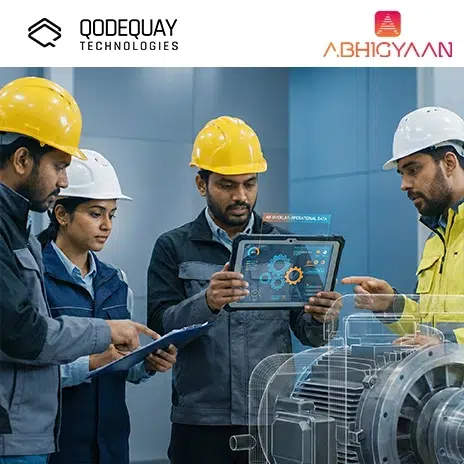
Instead of reading data from a dashboard and then walking to a machine, AR allows you to look at the machine and instantly see:
This is the difference between: data access and data presence
It matters because AR turns digital transformation investments into frontline productivity and faster decisions.
Many digital programs fail because they stop at:
But real operational value happens where work is done:
AR is a delivery layer for digital intelligence.
For leadership, the benefits are direct:
Live data makes AR useful because it transforms AR from a static visualization into a real operational tool.
Static AR is impressive, but limited.
Live AR is actionable.
With real-time data, AR can show:
This creates instant situational awareness.
The best use cases are maintenance, remote support, safety guidance, and training.
A technician can see:
This reduces:
A remote engineer can:
This is extremely valuable when:
AR can highlight:
This reduces human error in high-risk environments.
AR training allows new staff to learn:
without disrupting production.
Digital twins provide the structured model that AR needs to display the right data on the right asset.
AR needs context.
A digital twin provides:
When combined, you get:
That is one of the most powerful combinations in Industry 4.0.
A pump maintenance workflow in a water utility is one of the clearest examples of live data and AR synergy.
Imagine you are maintaining a pump station.
With AR smart glasses, you look at a pump and instantly see:
The system highlights:
If you need help, you call a remote expert who sees your view and guides you.
Outcome:
It typically includes IoT, edge computing, digital models, and an AR delivery layer.
Edge computing is often required because:
The best practices are to start with one workflow, ensure data accuracy, and design AR experiences for real humans.
You should avoid treating AR as a novelty instead of a productivity tool.
Too much data in AR creates confusion and slows teams down.
If sensor data is inaccurate, teams will stop using AR immediately.
If technicians do not trust the workflow, adoption will fail.
Live data in AR is sensitive.
You must implement:
You measure ROI through faster maintenance, fewer errors, reduced downtime, and shorter training time.
The future is AI-guided AR workflows powered by real-time digital twins and predictive analytics.
AR systems will include AI that can:
For many operational roles, AR will replace:
AR will improve in:
This will make overlays more reliable.
AR will not only show data, it will show:
directly on the equipment.
Live data and AR synergy is not just about futuristic visuals. It is about turning information into action at the exact moment it matters. When done well, it improves uptime, safety, training, and productivity, while reducing operational friction.
For CTOs, CIOs, Product Managers, Startup Founders, and Digital Leaders, this is one of the most practical ways to make IoT, digital twins, and analytics truly usable in the real world.
At Qodequay (https://www.qodequay.com), you build AR and live data solutions with a design-first mindset, ensuring frontline teams can use them confidently and efficiently. You solve human problems first, and then use technology as the enabler, which is how AR becomes real operational value.

As the CEO and Founder of Qodequay Technologies, I bring over 20 years of expertise in design thinking, consulting, and digital transformation. Our mission is to merge cutting-edge technologies like AI, Metaverse, AR/VR/MR, and Blockchain with human-centered design, serving global enterprises across the USA, Europe, India, and Australia. I specialize in creating impactful digital solutions, mentoring emerging designers, and leveraging data science to empower underserved communities in rural India. With a credential in Human-Centered Design and extensive experience in guiding product innovation, I’m dedicated to revolutionizing the digital landscape with visionary solutions.
Follow the expert :


July 2, 2026
July 2, 2026
July 2, 2026
July 2, 2026
July 2, 2026
Monthly insights on AI, VR and DPDPA compliance — straight from our team to your inbox.
Free 30-minute consultation with our team — or see our products in action.