DPDPA Penalties Up to ₹250 Crore: The Real Cost of Waiting
July 2, 2026
February 12, 2026
Cybersecurity is no longer just an IT problem, it is a business survival strategy. Every product you ship, every customer you onboard, and every workflow you digitize expands your attack surface. And the uncomfortable truth is this: attackers are not slowing down, they are scaling.
As a CTO, CIO, Product Manager, Startup Founder, or Digital Leader, you are responsible for protecting customer trust, business continuity, and brand reputation. A single breach can destroy years of growth, trigger regulatory penalties, and stop operations overnight.
In this article, you will learn what cybersecurity really means today, why it matters, the biggest threats you face, how modern security works, the best practices you should implement, real-world examples, and what the future of cybersecurity will look like.
Cybersecurity is the practice of protecting your systems, networks, applications, and data from digital attacks, misuse, and unauthorized access.
In business terms, cybersecurity is how you protect:
Cybersecurity is not one tool. It is a system of controls, processes, and culture.
Cybersecurity matters because security failures create direct financial loss, legal exposure, and customer churn.
If you lead technology or product, security impacts:
A breach is not only a technical incident. It is a leadership incident.
The biggest cybersecurity threats today are ransomware, phishing, supply chain attacks, insider risk, and cloud misconfigurations.
Let’s break them down in practical terms.
Phishing remains the most common entry point for attackers.
Attackers do not “hack” systems first. They hack people first.
Example: A finance employee receives a fake email that looks like the CEO asking for an urgent transfer. That one click can lead to credential theft or malware.
Ransomware attacks encrypt your data and demand payment to restore access.
This is especially dangerous because it can:
Hospitals, manufacturing plants, and logistics companies are major targets because downtime is extremely costly.
Cloud breaches often happen because of:
The cloud is secure, but only if you configure it correctly.
Supply chain attacks happen when attackers compromise a vendor, dependency, or third-party tool you trust.
Example: A malicious library update enters your build pipeline, then spreads into production.
This is why SBOM (Software Bill of Materials) is becoming more important.
Insider threats can be intentional or accidental.
Examples:
Most insider risk is caused by weak processes, not bad people.
Most cyber attacks follow a predictable lifecycle: access, escalation, persistence, and impact.
A simplified attack chain looks like this:
Understanding this helps you build defenses at every stage.
Cybersecurity focuses on protecting systems from digital attacks, while information security focuses on protecting information in all forms.
In practice:
Modern enterprises need both, working together.
A modern cybersecurity strategy includes prevention, detection, response, and recovery.
You cannot rely only on prevention anymore. Attackers will eventually get in.
A strong cybersecurity strategy covers:
You implement cybersecurity without slowing delivery by shifting security left and automating controls.
Shift left means integrating security early in development, not at the end.
Examples:
Security becomes a workflow, not a gate.
The best cybersecurity practices are simple, repeatable, and measurable.
Here are the most effective best practices:
Small changes here can prevent huge disasters.
You should follow frameworks like NIST, ISO 27001, and CIS Controls because they provide proven security structure.
Here is how they help:
Helps you organize security around:
Helps you build a formal information security management system (ISMS), useful for enterprise trust and compliance.
Provides practical security controls that are easy to implement, especially for growing companies.
Frameworks prevent chaos. They make security scalable.
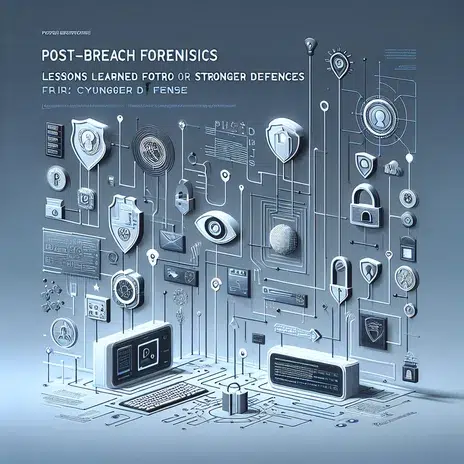
Cybersecurity incidents show you that even large companies can fail without fundamentals.
Here are lessons you should take seriously:
Many breaches begin with stolen passwords reused across systems.
Attackers often exploit known vulnerabilities that were not patched in time.
Without tested backups, ransomware can destroy operations for weeks.
Many breaches are discovered weeks or months after the initial compromise.
The longer attackers stay inside, the more damage they cause.
You measure cybersecurity performance through risk reduction, response speed, and control maturity.
Cybersecurity ROI is not always “profit,” it is prevented loss.
Strong security metrics include:
Security is measurable. You just need the right metrics.
Cybersecurity impacts trust because customers choose brands that protect them.
A breach can cause:
In SaaS and digital products, security is part of your customer experience.
A secure product feels reliable. An insecure one feels risky.
AI helps cybersecurity by detecting anomalies, automating response, and improving threat intelligence.
AI can:
But you should also know this: attackers use AI too.
This is becoming an arms race.
The future of cybersecurity will focus on zero trust, identity-first security, AI-driven defense, and stronger regulation.
Here are the trends you should prepare for:
Zero trust means: Never trust, always verify.
Every user, device, and request must be authenticated and authorized.
Passkeys and biometrics will reduce password-based attacks.
Governments will push stronger data protection and breach disclosure laws.
Deepfake phishing, AI malware generation, and automated exploitation will increase.
Security will become a competitive differentiator, especially in B2B SaaS.
Cybersecurity is ultimately about trust. Every digital product you build depends on the confidence customers place in your systems. The stronger your security, the stronger your brand, your growth, and your long-term resilience.
At Qodequay, you take a design-first approach to cybersecurity by building secure experiences that protect real human needs. Technology becomes the enabler, while the goal stays simple: create digital systems that are safe, scalable, and trusted by the people who rely on them.

As the CEO and Founder of Qodequay Technologies, I bring over 20 years of expertise in design thinking, consulting, and digital transformation. Our mission is to merge cutting-edge technologies like AI, Metaverse, AR/VR/MR, and Blockchain with human-centered design, serving global enterprises across the USA, Europe, India, and Australia. I specialize in creating impactful digital solutions, mentoring emerging designers, and leveraging data science to empower underserved communities in rural India. With a credential in Human-Centered Design and extensive experience in guiding product innovation, I’m dedicated to revolutionizing the digital landscape with visionary solutions.
Follow the expert :


July 2, 2026
July 2, 2026
July 2, 2026
July 2, 2026
July 2, 2026
Monthly insights on AI, VR and DPDPA compliance — straight from our team to your inbox.
Free 30-minute consultation with our team — or see our products in action.