Home » Digital Transformation » Live Data & AR Synergy

Live Data & AR Synergy

Shashikant Kalsha

February 11, 2026

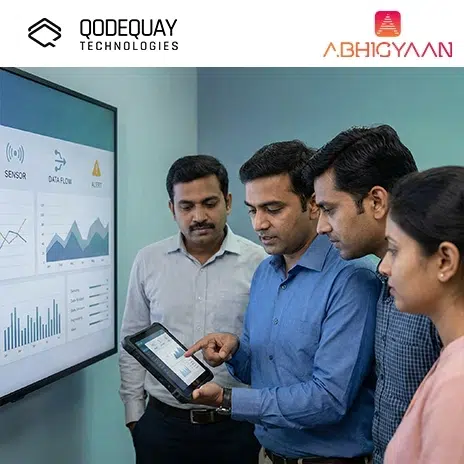
Blog features image

Introduction: Why Live Data + AR Is Becoming the New Interface for Operations

Live data and AR synergy matters because it puts the right information in front of you at the exact moment you need it, without slowing you down.

If you are a CTO, CIO, Product Manager, Startup Founder, or Digital Leader, you already know the biggest challenge in industrial and enterprise operations is not lack of data.

It is lack of usable data.

You can have:

  • dashboards
  • SCADA screens
  • maintenance reports
  • IoT sensor feeds
  • digital twin platforms

Yet your field teams still struggle because the information is:

  • in the wrong place
  • hard to interpret
  • not contextual
  • not available hands-free
  • not connected to the real physical asset

Augmented Reality (AR) changes that by turning real-time data into a visual layer on top of the real world.

In this article, you will learn:

  • what live data and AR synergy really means
  • why it is valuable for industrial and infrastructure teams
  • the most high-impact use cases
  • the technical architecture behind it
  • best practices for adoption
  • future trends shaping AR-driven operations

What Does Live Data & AR Synergy Mean?

It means overlaying real-time operational data onto physical environments through AR interfaces.

Instead of reading data from a dashboard and then walking to a machine, AR allows you to look at the machine and instantly see:

  • current status
  • sensor values
  • alarms
  • maintenance history
  • operating limits
  • next recommended actions

This is the difference between: data access and data presence

Why Does This Matter to CTOs and CIOs?

It matters because AR turns digital transformation investments into frontline productivity and faster decisions.

Many digital programs fail because they stop at:

  • data integration
  • dashboards
  • analytics models

But real operational value happens where work is done:

  • in factories
  • in plants
  • in substations
  • in warehouses
  • on construction sites
  • in hospitals and facilities

AR is a delivery layer for digital intelligence.

For leadership, the benefits are direct:

  • reduced downtime
  • faster troubleshooting
  • improved safety
  • fewer errors
  • shorter training cycles

How Does Live Data Make AR Actually Useful?

Live data makes AR useful because it transforms AR from a static visualization into a real operational tool.

Static AR is impressive, but limited.

Live AR is actionable.

With real-time data, AR can show:

  • machine running state (idle, running, fault)
  • temperature and pressure trends
  • vibration anomalies
  • production throughput
  • energy usage
  • asset health scores

This creates instant situational awareness.

What Are the Best Use Cases for Live Data + AR?

The best use cases are maintenance, remote support, safety guidance, and training.

1) Maintenance and Troubleshooting

A technician can see:

  • fault codes
  • sensor readings
  • step-by-step repair guidance
  • correct component identification

This reduces:

  • misdiagnosis
  • repeated visits
  • downtime

2) Remote Expert Assistance

A remote engineer can:

  • see what the technician sees
  • guide them through complex steps
  • annotate the technician’s view

This is extremely valuable when:

  • experts are limited
  • assets are geographically distributed

3) Safety and Compliance

AR can highlight:

  • hazard zones
  • lockout-tagout steps
  • PPE requirements
  • restricted areas

This reduces human error in high-risk environments.

4) Operator Training

AR training allows new staff to learn:

  • procedures
  • machine layouts
  • safety protocols

without disrupting production.

How Does This Connect to Digital Twins?

Digital twins provide the structured model that AR needs to display the right data on the right asset.

AR needs context.

A digital twin provides:

  • asset identity
  • location mapping
  • component hierarchy
  • operational relationships

When combined, you get:

  • a live digital twin
  • visualized through AR
  • in the physical environment

That is one of the most powerful combinations in Industry 4.0.

What Real-World Example Shows the Value Clearly?

A pump maintenance workflow in a water utility is one of the clearest examples of live data and AR synergy.

Imagine you are maintaining a pump station.

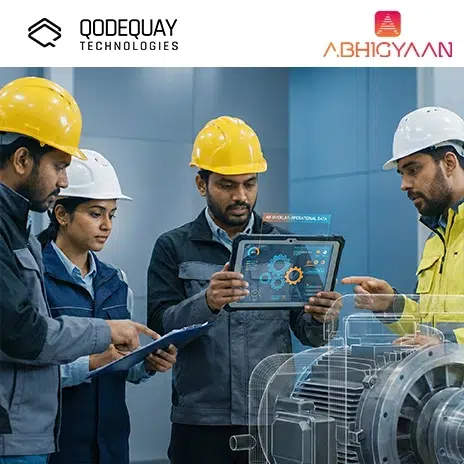
With AR smart glasses, you look at a pump and instantly see:

  • pressure readings
  • vibration levels
  • motor temperature
  • last service date
  • predicted failure risk

The system highlights:

  • the exact valve to close
  • the correct bolt sequence
  • the correct replacement part number

If you need help, you call a remote expert who sees your view and guides you.

Outcome:

  • faster repair
  • fewer mistakes
  • reduced downtime
  • safer execution

What Does the Technical Architecture Look Like?

It typically includes IoT, edge computing, digital models, and an AR delivery layer.

Core Components

  • IoT sensors and PLC data
  • edge gateway for real-time processing
  • digital twin or asset model layer
  • time-series database for sensor history
  • API layer to serve data securely
  • AR application (mobile, tablet, or smart glasses)
  • identity and access management

Why Edge Computing Matters

Edge computing is often required because:

  • latency must be low
  • connectivity can be unstable
  • safety workflows cannot rely only on cloud access

What Are the Best Practices for Implementation?

The best practices are to start with one workflow, ensure data accuracy, and design AR experiences for real humans.

Best Practices (Bullet List)

  • start with a single high-value workflow (maintenance is best)
  • choose one asset category first (pumps, motors, conveyors)
  • ensure asset tagging and identification is reliable
  • integrate with CMMS to pull maintenance history
  • keep overlays minimal, avoid clutter
  • design for hands-free and fast interactions
  • test in real field conditions, not just labs
  • build offline and degraded-mode support
  • prioritize safety-first UI design
  • measure results with downtime and MTTR improvements

What Mistakes Should You Avoid?

You should avoid treating AR as a novelty instead of a productivity tool.

Mistake 1: Overloading the Screen

Too much data in AR creates confusion and slows teams down.

Mistake 2: Ignoring Data Trust

If sensor data is inaccurate, teams will stop using AR immediately.

Mistake 3: Building Without Operator Input

If technicians do not trust the workflow, adoption will fail.

Mistake 4: No Security Planning

Live data in AR is sensitive.

You must implement:

  • role-based access
  • device authentication
  • secure APIs
  • OT network segmentation

How Do You Measure ROI From Live Data + AR?

You measure ROI through faster maintenance, fewer errors, reduced downtime, and shorter training time.

Key ROI Metrics

  • reduction in mean time to repair (MTTR)
  • reduced unplanned downtime
  • fewer repeat maintenance visits
  • fewer safety incidents
  • reduced training time for new technicians
  • improved first-time fix rate
  • improved operator productivity

What Is the Future of Live Data & AR Synergy?

The future is AI-guided AR workflows powered by real-time digital twins and predictive analytics.

Trend 1: AI as the AR Co-Pilot

AR systems will include AI that can:

  • explain alarms
  • recommend next actions
  • summarize asset history
  • detect what you are looking at automatically

Trend 2: AR Becomes the Default Interface

For many operational roles, AR will replace:

  • paper manuals
  • handheld checklists
  • even some dashboards

Trend 3: More Accurate Spatial Anchoring

AR will improve in:

  • object recognition
  • alignment accuracy
  • mapping inside industrial sites

This will make overlays more reliable.

Trend 4: Real-Time Simulation in AR

AR will not only show data, it will show:

  • predicted outcomes
  • failure probabilities
  • what-if scenarios

directly on the equipment.

Key Takeaways

  • Live data + AR puts operational intelligence directly in the real world
  • The best use cases are maintenance, remote support, safety, and training
  • Digital twins provide the structure AR needs for contextual overlays
  • Success depends on workflow design, data trust, and adoption
  • The future is AI-guided, real-time, predictive AR operations

Conclusion

Live data and AR synergy is not just about futuristic visuals. It is about turning information into action at the exact moment it matters. When done well, it improves uptime, safety, training, and productivity, while reducing operational friction.

For CTOs, CIOs, Product Managers, Startup Founders, and Digital Leaders, this is one of the most practical ways to make IoT, digital twins, and analytics truly usable in the real world.

At Qodequay (https://www.qodequay.com), you build AR and live data solutions with a design-first mindset, ensuring frontline teams can use them confidently and efficiently. You solve human problems first, and then use technology as the enabler, which is how AR becomes real operational value.

Author profile image

Shashikant Kalsha

As the CEO and Founder of Qodequay Technologies, I bring over 20 years of expertise in design thinking, consulting, and digital transformation. Our mission is to merge cutting-edge technologies like AI, Metaverse, AR/VR/MR, and Blockchain with human-centered design, serving global enterprises across the USA, Europe, India, and Australia. I specialize in creating impactful digital solutions, mentoring emerging designers, and leveraging data science to empower underserved communities in rural India. With a credential in Human-Centered Design and extensive experience in guiding product innovation, I’m dedicated to revolutionizing the digital landscape with visionary solutions.

Follow the expert : linked-in Logo