DPDPA Penalties Up to ₹250 Crore: The Real Cost of Waiting
July 2, 2026
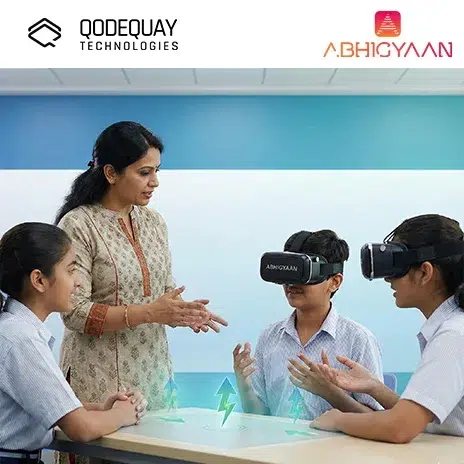
In the past, risk management was often seen as a compliance function. A department. A set of reports. A quarterly exercise. But in today’s world, risk is everywhere, and it moves fast. Cyberattacks evolve weekly. Supply chains break overnight. Regulations tighten constantly. One viral incident can destroy years of brand trust.
That means risk leaders cannot be trained the old way.
You cannot build future risk leaders by only teaching frameworks, policies, and spreadsheets. You need leaders who can make decisions under pressure, communicate clearly during chaos, coordinate across teams, and learn fast when conditions change.
This is why VR risk management training is becoming one of the most powerful tools for developing the next generation of risk leaders.
If you are a CTO, CIO, Product Manager, Startup Founder, or Digital Leader, this matters because your future risk leaders will not only protect the organization. They will shape how you innovate. Risk and innovation are now tied together. The leaders who understand risk deeply are the leaders who can move faster, safer, and smarter.
In this article, you will learn how virtual reality trains future risk leaders, what leadership skills it develops, real-world examples, metrics to track, best practices for building VR leadership programs, and what the future of immersive risk education looks like.
Training future risk leaders means building people who can anticipate, manage, and communicate risk across the entire organization, not just follow rules.
A risk leader is not only someone who understands risk registers and compliance checklists. A true risk leader can:
These skills are behavioral. They are learned through experience.
That is why VR is so effective.
Traditional training is not enough because leadership is practiced, not memorized.
Most risk education still relies on:
These methods teach knowledge. But leadership is more than knowledge.
In a crisis, the risk leader must:
That is difficult to teach without simulation.
VR gives you that missing layer: leadership rehearsal.
VR develops risk leadership skills by placing you inside realistic scenarios where you must lead, decide, and communicate.
In a VR simulation, you can be trained as:
You are not watching a scenario. You are inside it.
You must interpret information, respond to events, and make decisions that affect outcomes.
This builds real confidence and leadership readiness.
VR strengthens leadership abilities that require pressure handling, situational awareness, and decision-making.
Here are the most valuable skills:
You learn to scan environments, notice hazards, and detect early warning signals.
You learn to choose actions when you do not have perfect information.
You practice who to inform, when to escalate, and how to coordinate response teams.
You practice staying calm, giving clear instructions, and managing stakeholder expectations.
You practice realistic dilemmas where compliance and business pressures collide.
You practice reflection and root cause thinking after the simulation ends.
These are leadership muscles. VR trains them through repetition.
VR prepares leaders by giving them “experience before experience.”
Many leaders are promoted because they perform well in normal operations. But risk leadership is tested during abnormal operations. A crisis exposes gaps quickly.
VR allows you to practice:
You learn what it feels like to lead under stress, without the real-world damage.
That is the difference between theoretical readiness and practical readiness.
VR leadership training is increasingly used in high-stakes industries, where risk decisions have immediate consequences.
Examples include:
A VR scenario can simulate a ransomware outbreak. You must decide:
A scenario can simulate a near-miss event. You must:
A scenario can simulate a sudden patient surge. You must:
These scenarios teach leadership through action.
VR improves confidence because it reduces fear of the unknown.
New leaders often struggle with:
VR gives you practice runs. You experience the scenario, learn the process, and improve.
This creates calm confidence, not overconfidence.
And that is exactly what you want in risk leadership.
You measure success by tracking behavioral performance, decision quality, and improvement over time.
Key metrics include:
You can also measure real-world impact through:
VR makes leadership measurable in a way traditional training cannot.
The best VR programs focus on leadership behaviors, not just technical procedures.
Best practices include:
A VR program succeeds when it becomes part of leadership development, not just training.
You should plan for content relevance, adoption, and integration challenges.
Common challenges include:
These issues are solvable when VR is positioned as a leadership tool, not a novelty.
The future is adaptive, collaborative, and integrated into enterprise risk strategy.
Here are the biggest trends:
Scenarios will adapt dynamically based on your decisions, making training more personalized.
Leadership teams will rehearse incidents together in shared virtual environments.
VR will mirror real facilities, systems, and workflows for maximum realism.
Instead of annual risk workshops, leaders will train regularly through short simulations.
VR performance data will inform real risk reporting and risk culture assessments.
Over time, VR will become a standard part of how organizations build resilient leadership.
Risk leadership is no longer optional, and it is no longer slow. You need leaders who can respond quickly, think clearly, and coordinate across teams when the pressure is real.
VR risk management training is revolutionizing leadership development because it gives you a rare advantage: the ability to practice crisis leadership before a crisis happens. It turns risk education into experience, and experience into readiness.
This is where design-first thinking matters. At Qodequay (https://www.qodequay.com), immersive learning is built around human behavior and real decision-making, with technology as the enabler. Because the ultimate goal is not to use VR. The goal is to create leaders who protect people, protect systems, and drive innovation safely in a world where risk never sleeps.

As the CEO and Founder of Qodequay Technologies, I bring over 20 years of expertise in design thinking, consulting, and digital transformation. Our mission is to merge cutting-edge technologies like AI, Metaverse, AR/VR/MR, and Blockchain with human-centered design, serving global enterprises across the USA, Europe, India, and Australia. I specialize in creating impactful digital solutions, mentoring emerging designers, and leveraging data science to empower underserved communities in rural India. With a credential in Human-Centered Design and extensive experience in guiding product innovation, I’m dedicated to revolutionizing the digital landscape with visionary solutions.
Follow the expert :


July 2, 2026
July 2, 2026
July 2, 2026
July 2, 2026

July 2, 2026
Monthly insights on AI, VR and DPDPA compliance — straight from our team to your inbox.
Free 30-minute consultation with our team — or see our products in action.