DPDPA Penalties Up to ₹250 Crore: The Real Cost of Waiting
July 2, 2026
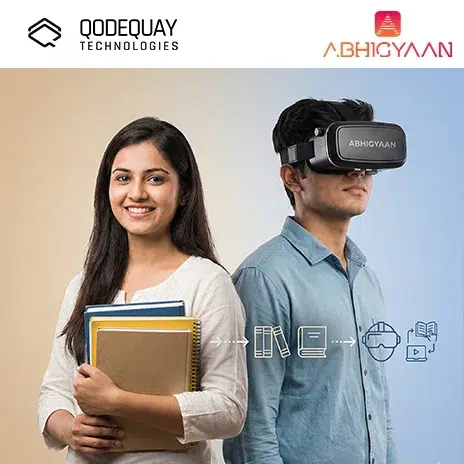
It is one of the most important areas of training in any organization, but it is also one of the easiest to ignore. Not because leaders do not care, but because risk training often feels like paperwork. It looks like compliance. It sounds like policy. It ends with a quiz that people pass and forget.
Then reality shows up, and it does not care that you scored 90%.
That is why simulation-based learning is changing the entire game. When you train through simulation, you stop teaching risk as theory and start teaching it as behavior. You give people a safe space to make decisions, feel pressure, learn consequences, and build readiness.
And when simulation becomes immersive, especially through VR risk management training, the impact becomes even bigger.
If you are a CTO, CIO, Product Manager, Startup Founder, or Digital Leader, this matters because risk is no longer a side function. Risk is now deeply connected to technology, digital operations, customer trust, and business resilience. A single failure can mean downtime, data loss, legal exposure, or a brand crisis. The organizations that win are the ones that prepare people, not just systems.
In this article, you will learn why simulation-based learning matters in risk education, what makes it effective, how it compares to traditional methods, where it delivers the highest ROI, how to implement it successfully, and what the future looks like.
Simulation-based learning is a training approach where you practice risk scenarios in a realistic environment instead of only studying them in theory.
In risk education, simulation means you do not just read about hazards, cyber threats, compliance issues, or crisis response. You practice them. You make choices, respond to events, and learn through outcomes.
Simulations can be delivered through:
VR is the most immersive option because it recreates environments, pressure, and decision-making with high realism.
Risk education needs simulations because risk is a performance skill, not a memorization skill.
A lecture can teach you what a risk is. It can teach frameworks like:
But risk in real life is messy.
You face distractions, unclear information, emotional stress, and time pressure. People rarely fail because they did not know the rule. They fail because they did not execute the rule under pressure.
Simulations teach execution.
Simulations improve decision-making because they create “practice memory” that your brain can reuse during real incidents.
In real crises, your brain often shifts into survival mode. You rely on patterns and habits. That is why training must be more than knowledge. It must be rehearsal.
Simulation-based learning gives you:
This creates faster, more confident decisions when real risk occurs.
VR is powerful because it combines realism with safety and repeatability.
Many risk scenarios are too dangerous, expensive, or disruptive to practice in real life. For example:
VR lets you simulate these situations without shutting down operations or putting people in danger.
That is why VR risk management training is increasingly seen as a strategic investment, not a novelty.
Simulations work best for risks that require situational awareness, procedural accuracy, and fast judgment.
High-value risk areas include:
You learn to spot hazards early and follow safety protocols.
You practice how to react when a breach is detected, not just how to avoid it.
You train for process breakdowns, equipment failures, and escalation paths.
You practice real-world decision moments, not just policy reading.
You rehearse disruptions like supply chain failure, data loss, or facility shutdown.
Simulation improves retention because you remember experiences better than information.
When training is passive, your brain treats it as low priority. It fades quickly.
When training is active, your brain stores it as a lived event. You remember:
That is why simulation-based learning often leads to stronger long-term retention than slides, PDFs, or video modules.
Simulation-based risk education reduces real-world incidents and improves organizational resilience.
Business benefits include:
For leadership, the value is clear: simulation reduces risk exposure.
Simulations create measurable outcomes because they track behavior, not just completion.
In traditional training, you measure:
But these do not tell you if people can perform under pressure.
In simulation-based learning, you can measure:
This is especially powerful in VR, where every action can be tracked and analyzed.
Simulation-based learning is already used in high-stakes fields, because it works.
Examples include:
Pilots train for engine failure, storms, and emergency landings without risking lives.
Doctors and nurses practice procedures, triage, and emergency response in controlled environments.
Security teams rehearse breach response, containment, and communication.
Workers practice hazardous tasks and emergency shutdown procedures.
VR is now bringing this same approach into more industries, at lower cost and higher scalability.
You implement simulation learning successfully by focusing on real risks and building repeatable practice loops.
Best practices include:
A simulation program should feel like practice, not entertainment.
You should expect challenges in adoption, realism, and operational rollout.
Common challenges include:
These challenges are manageable, especially when simulation is positioned as risk reduction, not as a tech experiment.
The future is more adaptive, more collaborative, and more data-driven.
Key trends include:
Training will adjust difficulty based on your performance, keeping learning efficient.
Teams will train together, improving coordination during crises.
Simulations will mirror real facilities and workflows for maximum relevance.
Training results will feed into compliance reporting and enterprise risk management tools.
Instead of yearly compliance modules, simulation will become ongoing, like fitness for decision-making.
In short, simulation will become a core part of how organizations build resilience.
Risk education fails when it stays theoretical. It succeeds when it becomes practice.
Simulation-based learning matters because it trains people the way real risk happens, through pressure, decisions, and consequences. When you combine simulation with immersive VR risk management training, you unlock a safer, faster, and more measurable way to build readiness across your organization.
This is where design-first strategy becomes the differentiator. At Qodequay (https://www.qodequay.com), immersive learning is built by understanding human behavior first, then using technology as the enabler. Because the goal is not just to train. The goal is to reduce risk, protect people, and create organizations that are prepared for whatever reality throws next.

As the CEO and Founder of Qodequay Technologies, I bring over 20 years of expertise in design thinking, consulting, and digital transformation. Our mission is to merge cutting-edge technologies like AI, Metaverse, AR/VR/MR, and Blockchain with human-centered design, serving global enterprises across the USA, Europe, India, and Australia. I specialize in creating impactful digital solutions, mentoring emerging designers, and leveraging data science to empower underserved communities in rural India. With a credential in Human-Centered Design and extensive experience in guiding product innovation, I’m dedicated to revolutionizing the digital landscape with visionary solutions.
Follow the expert :


July 2, 2026
July 2, 2026
July 2, 2026
July 2, 2026
July 2, 2026
Monthly insights on AI, VR and DPDPA compliance — straight from our team to your inbox.
Free 30-minute consultation with our team — or see our products in action.