DPDPA Penalties Up to ₹250 Crore: The Real Cost of Waiting
July 2, 2026
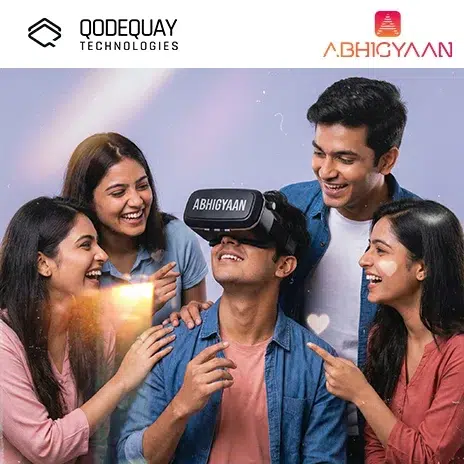
When you learn risk the traditional way, the lesson often arrives after something has already gone wrong, an accident, a cyber breach, a compliance failure, a production shutdown, or a reputational crisis. The real-world consequences are rarely small. They cost money, time, trust, and sometimes human lives.
That is exactly why modern organizations are changing how they teach risk. They are moving away from purely theoretical training and toward immersive experiences where people can practice decisions under pressure, without damage.
This is where VR risk management training becomes a game-changer.
If you are a CTO, CIO, Product Manager, Startup Founder, or Digital Leader, this matters because risk is now a cross-functional business problem. It is not just safety. It is operational resilience, cybersecurity, governance, customer trust, and business continuity. And the truth is brutal: your technology stack can be world-class, but if people are not trained to respond correctly, your risk exposure stays high.
In this article, you will learn how VR makes risk education safer, faster, and more effective. You will explore why consequence-free learning works, where it delivers the highest ROI, real-world use cases, best practices, metrics, and what the future holds for immersive risk training.
It means you practice high-stakes scenarios in a virtual environment where mistakes teach you, but do not harm anyone.
In traditional risk training, the learning loop is slow and painful. You study policies, attend workshops, and pass a quiz. Then, one day, a real event happens and you discover whether training worked.
In VR, you reverse the order. You experience the event first, safely. You make decisions, see outcomes, and learn through repetition. This is how pilots train, and it is increasingly how organizations train for operational, cyber, and safety risks.
Risk education is difficult because most risks are rare, unpredictable, and too dangerous to practice.
Think about what you cannot safely “rehearse” in a real workplace:
Even if you could simulate some of these events physically, the cost would be enormous. You would need equipment shutdowns, safety teams, controlled environments, and time away from operations.
VR makes the impossible practical.
VR creates safety by separating the learner from real physical danger while keeping the experience psychologically realistic.
This is the core magic of immersive learning.
In VR risk management training, you can:
No real machines are damaged. No one is injured. No customer data is compromised. But the learner still feels pressure and urgency.
That is the sweet spot.
Consequence-free training improves decision-making because it builds muscle memory without fear of real failure.
When a crisis happens, you do not rise to the level of your knowledge. You fall to the level of your training.
That is not motivational poster wisdom. It is cognitive science.
Under stress, your brain shifts toward faster thinking. You rely on habits and practiced patterns. If you have never practiced a scenario, you will hesitate, improvise poorly, or follow the wrong sequence.
VR gives you the chance to build correct patterns in advance.
VR teaches risks best when they involve environments, decisions, or procedures that must be performed correctly.
Here are high-impact categories:
You can practice spotting hazards before incidents happen.
You can simulate breakdowns in workflow, equipment, and escalation.
You can train incident response, phishing awareness, and escalation behavior.
You can simulate realistic decision moments, not just policy reading.
You can train coordinated responses to complex disruptions.
VR helps you learn from mistakes because it shows consequences immediately and lets you try again.
In most organizations, risk training is passive:
But real risk is active.
In VR, mistakes can trigger outcomes like:
The key is that you can fail safely and learn fast.
This is how you turn mistakes into mastery, without the cost of real-world failure.
VR is more effective because it delivers experiential learning, not theoretical learning.
Classroom training can be useful for:
But it struggles with:
VR complements classroom learning by providing the missing “practice layer.”
In other words, classroom gives you the map. VR gives you the terrain.
Real-world VR risk training is already being used across industries, because the ROI is clear.
Examples include:
You can practice working at heights, identifying fall risks, and choosing correct PPE (personal protective equipment).
You can train for machine guarding, lockout-tagout procedures, and emergency shutdowns.
You can simulate patient surge, infection control breakdowns, and triage decisions.
You can train what happens after a phishing email is clicked, how to escalate, and how to contain the breach.
You can simulate smoke, blocked exits, panic behavior, and correct evacuation routes.
In every case, the learner experiences the risk in a controlled, safe environment.
VR supports compliance because it produces measurable proof of training performance, not just completion.
Traditional compliance training often creates a false sense of security. People complete a module, check a box, and forget.
VR changes this by tracking:
This creates stronger audit evidence and helps identify where training needs reinforcement.
You measure success by tracking behavioral improvement and real-world incident reduction.
Here are practical metrics:
The strongest signal is when incidents decrease because people notice risks earlier.
The best VR risk training programs focus on realism, repetition, and measurable outcomes.
Best practices include:
The biggest mistake is treating VR like a one-time demo.
You should plan for hardware, adoption, and content maintenance challenges.
Common challenges include:
You need charging, cleaning, storage, and device tracking.
Enterprise VR requires secure device configuration and network controls.
Some learners may experience discomfort, so you need alternatives.
If scenarios feel unrealistic, learners disengage quickly.
Instructors must understand how VR fits into the learning journey.
These are solvable problems, but they require planning.
The future is more adaptive, more personalized, and more integrated into enterprise risk systems.
Here are trends you should expect:
Training will adapt to your choices, making each session unique.
Organizations will build VR models of real facilities and workflows.
Teams will train together in shared virtual spaces for coordinated response.
Training data will reveal weak points before incidents happen.
Immersive training will become standard in high-risk industries.
Over time, VR will not be “special training.” It will be normal training.
Risk is unavoidable, but preventable damage is not.
When you train people only through theory, you leave the hardest part untrained: real decisions under real pressure. VR risk management training solves this by turning risk education into experience. You learn by doing, failing safely, improving quickly, and building confidence that holds up in real situations.
This is where design-first thinking becomes a strategic advantage. At Qodequay (https://www.qodequay.com), immersive learning is built around human behavior first, then powered by technology as the enabler. Because the goal is not to impress with VR. The goal is to solve human problems, reduce risk, and create organizations that are truly prepared.

As the CEO and Founder of Qodequay Technologies, I bring over 20 years of expertise in design thinking, consulting, and digital transformation. Our mission is to merge cutting-edge technologies like AI, Metaverse, AR/VR/MR, and Blockchain with human-centered design, serving global enterprises across the USA, Europe, India, and Australia. I specialize in creating impactful digital solutions, mentoring emerging designers, and leveraging data science to empower underserved communities in rural India. With a credential in Human-Centered Design and extensive experience in guiding product innovation, I’m dedicated to revolutionizing the digital landscape with visionary solutions.
Follow the expert :


July 2, 2026
July 2, 2026
July 2, 2026
July 2, 2026

July 2, 2026
Monthly insights on AI, VR and DPDPA compliance — straight from our team to your inbox.
Free 30-minute consultation with our team — or see our products in action.