DPDPA Penalties Up to ₹250 Crore: The Real Cost of Waiting
July 2, 2026
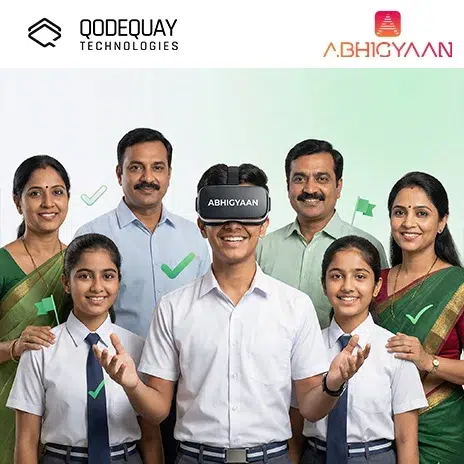
Risk management education has always had a strange problem. It is critically important, but it is also painfully abstract. You can teach frameworks, compliance rules, safety protocols, and incident response checklists all day long, but when a real crisis hits, people often freeze, panic, or make the wrong decision.
That gap between knowing and doing is exactly where organizations lose money, trust, and sometimes lives.
This is why VR risk management training is becoming one of the most valuable applications of immersive learning. VR makes risk education real. It puts you inside realistic scenarios where you must make decisions, experience consequences, and learn under pressure, safely.
If you are a CTO, CIO, Product Manager, Startup Founder, or Digital Leader, this matters because risk management is no longer a department-only concern. It affects cybersecurity, operations, compliance, finance, safety, supply chain resilience, and business continuity. A single mistake can trigger massive cost, regulatory damage, or reputational harm. VR changes how fast and how well people can prepare.
In this article, you will explore how VR is revolutionizing risk management education, why it works, real-world examples, high-ROI use cases, implementation best practices, metrics to track, and the future outlook.
VR risk management training is an immersive education method where you practice identifying, assessing, and responding to risks inside realistic virtual scenarios.
Instead of reading about risk, you experience it. You may be placed in a virtual factory, hospital, office, construction site, or control room where something goes wrong. Your job is to react, follow procedures, and make decisions.
This training can cover:
The main value is simple: you practice the hard part before reality forces you to.
Traditional risk education is not enough because it teaches knowledge, not behavior under pressure.
Risk is rarely a calm situation. In real life, you deal with:
A slide deck cannot replicate that. A written exam cannot replicate that. Even a classroom workshop struggles to recreate real risk conditions.
VR solves this by creating controlled realism. You can practice the same scenario multiple times, improve, and build confidence.
VR improves risk awareness because it trains your brain to notice danger cues and respond automatically.
Risk management is often about pattern recognition. You need to identify:
VR accelerates this because it gives you “experience memory.” You are not just told what to look for. You learn it through realistic exposure.
This is especially useful for new employees who lack real-world risk exposure.
VR creates stronger retention because immersive experiences are stored in memory more deeply than passive information.
Your brain remembers:
This is why you remember a near-miss incident for years, but forget a safety policy you read last week.
VR risk management training uses this mechanism in a safe way. You get the emotional realism without the real-world damage.
Industries with high stakes, complex operations, or strict compliance benefit the most.
Here are the strongest use cases:
You can simulate machine hazards, lockout-tagout procedures, and near-miss events.
You can practice fall prevention, equipment safety, and hazard identification.
You can train for infection control, emergency response, and patient safety scenarios.
You can simulate control room failures, hazardous environments, and emergency shutdowns.
You can simulate ethical decision-making, fraud detection, and regulatory compliance risks.
You can train for ransomware response, phishing attacks, and incident escalation procedures.
VR scenarios are powerful because they replicate situations that are dangerous or expensive to practice in real life.
Examples include:
In each case, you practice the response, not just the theory.
VR supports compliance by turning rules into behavior and making training auditable.
Many compliance programs fail because they focus on “completion.” People click through modules, pass a quiz, and forget.
VR improves compliance training by:
For regulated industries, VR can also produce detailed training records, showing that employees practiced correct procedures.
VR improves outcomes by reducing incidents, reducing training time, and improving readiness.
Measurable business outcomes can include:
VR is not only an education tool. It is a risk reduction strategy.
You measure ROI by tracking incident reduction, training efficiency, and performance improvement.
Strong ROI metrics include:
You can also measure cost avoidance. Preventing one serious incident can justify an entire VR program.
VR training succeeds when you start with real risks, not technology hype.
Here are best practices:
The goal is behavior change, not entertainment.
You should expect challenges in device management, content quality, and adoption.
Common challenges include:
These challenges are manageable when you treat VR as part of a broader learning ecosystem.
The future will be AI-assisted, more realistic, and more integrated into enterprise risk systems.
Here are trends shaping the next 3 to 5 years:
Scenarios will adjust based on your performance, creating personalized difficulty levels.
Risk simulations will replicate real workplaces and equipment.
Teams will train together in shared VR environments, improving coordination.
VR training data will help organizations identify risk weak spots before incidents occur.
Hardware will become more comfortable and more scalable.
VR will move from “innovation pilot” to “required training” in high-risk industries.
Risk management education only works when it changes behavior under pressure. VR is revolutionizing this space because it creates safe realism. You practice what matters most, decision-making, awareness, and response, before real risk forces you to.
This is where design-first thinking becomes essential. At Qodequay (https://www.qodequay.com), immersive training is built by understanding human behavior first, then applying technology as the enabler. When you combine thoughtful experience design with VR, risk education becomes more than a lesson. It becomes readiness.

As the CEO and Founder of Qodequay Technologies, I bring over 20 years of expertise in design thinking, consulting, and digital transformation. Our mission is to merge cutting-edge technologies like AI, Metaverse, AR/VR/MR, and Blockchain with human-centered design, serving global enterprises across the USA, Europe, India, and Australia. I specialize in creating impactful digital solutions, mentoring emerging designers, and leveraging data science to empower underserved communities in rural India. With a credential in Human-Centered Design and extensive experience in guiding product innovation, I’m dedicated to revolutionizing the digital landscape with visionary solutions.
Follow the expert :


July 2, 2026
July 2, 2026
July 2, 2026
July 2, 2026

July 2, 2026
Monthly insights on AI, VR and DPDPA compliance — straight from our team to your inbox.
Free 30-minute consultation with our team — or see our products in action.