How to Budget a VR Lab for a CBSE School: Devices, Content, Training and Hidden Costs
October 6, 2026
February 6, 2026
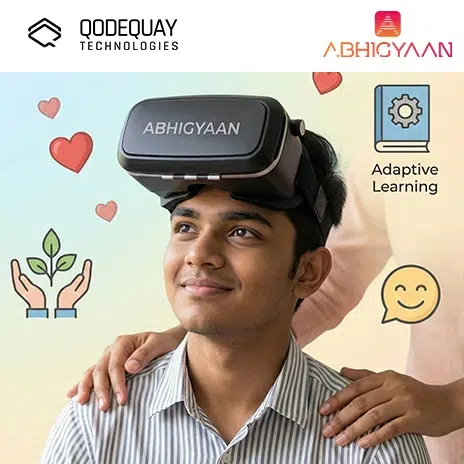
Virtual reality can support diverse and additional educational needs by providing safe, immersive, personalized learning experiences that adapt to how you learn best.
In a traditional classroom, learning is often designed for the average student. But real learning is not average. You may learn differently because of attention challenges, anxiety, sensory sensitivity, physical disabilities, speech difficulties, or neurodiversity.
That is where VR becomes more than a “cool technology.” It becomes an accessibility tool.
For CTOs, CIOs, Product Managers, Startup Founders, and Digital Leaders, this topic matters because inclusive learning is becoming a priority across schools, universities, and corporate training programs. VR gives you a scalable way to deliver support without stigmatizing learners.
In this article, you’ll explore how VR helps diverse learners, where it works best, real-world examples, best practices, risks to avoid, and what the future holds.
Diverse and additional educational needs include any learning, developmental, emotional, or physical differences that require extra support.
This can include:
The key point is simple: you learn best when learning adapts to you.
VR is especially useful for inclusive learning because it creates controlled environments where you can learn at your own pace without social pressure.
Unlike a classroom, VR can:
It is not about replacing teachers. It is about giving you an additional support layer.
VR helps neurodiverse learners by offering structured environments, reduced sensory overload, and repeatable social or academic practice.
For many learners, the classroom is not only educational, it is emotionally exhausting. Noise, movement, interruptions, and social cues can become barriers.
VR can support you through:
Instead of being forced into stressful group interactions, you can practice:
This builds real-world confidence over time.
VR supports learners with anxiety by providing gradual exposure and practice without fear of judgment.
Many learners know the answer but freeze in real situations. VR helps you build confidence through repetition.
VR can simulate:
This is especially powerful in career readiness programs and soft skills training.
VR can support dyslexia and reading challenges by shifting learning from text-heavy formats to visual and interactive experiences.
You do not need to rely only on reading when learning concepts. VR enables:
For example, instead of reading about the solar system, you can explore it in 3D. Instead of reading about geometry, you can manipulate shapes.
VR helps learners with physical disabilities by giving you access to experiences that may be difficult or impossible in the real world.
VR can provide:
With adaptive controllers and accessible design, VR can remove barriers and create independence.
VR supports speech and communication development by enabling guided practice with realistic role-play and feedback.
Speech therapy often requires repetition, but repetition can feel uncomfortable in front of others.
VR can offer:
This works well for both children and adults.
The subjects that benefit most are those where visualization, practice, and engagement matter more than memorization.
High-impact areas include:
The best VR use cases are the ones that reduce barriers, not just add technology.
VR is already being used in education and therapy to support social skills, anxiety reduction, and life skills training.
Common real-world applications include:
Even when programs start small, the results often show higher engagement and improved confidence.
The main risks are sensory overload, poor content design, overuse, and lack of accessibility standards.
VR is not automatically inclusive. Bad VR can be worse than no VR.
Key risks include:
The solution is careful design and controlled implementation.
VR becomes inclusive when you design for flexibility, comfort, and learner control.
When VR is designed well, it feels supportive, not overwhelming.
The future of VR in inclusive education will be driven by AI personalization, better accessibility standards, and wider adoption in schools and training programs.
Over time, VR will become a normal part of learning support, not a special add-on.
Qodequay helps you build VR learning solutions that are designed for humans first, not technology first.
Supporting diverse learning needs requires:
At Qodequay (https://www.qodequay.com), you create inclusive VR learning experiences where technology enables dignity, independence, and confidence, not complexity.
Supporting diverse and additional educational needs is not only an education challenge, it is a human challenge. You learn best when learning adapts to you, not when you are forced to adapt to the system.
Virtual reality makes inclusive learning more possible because it creates safe, repeatable, and personalized environments where you can build skills without pressure. Done right, VR becomes a bridge to confidence, independence, and equal opportunity.
At Qodequay (https://www.qodequay.com), you take a design-first approach to immersive learning, solving real human problems with technology as the enabler.

As the CEO and Founder of Qodequay Technologies, I bring over 20 years of expertise in design thinking, consulting, and digital transformation. Our mission is to merge cutting-edge technologies like AI, Metaverse, AR/VR/MR, and Blockchain with human-centered design, serving global enterprises across the USA, Europe, India, and Australia. I specialize in creating impactful digital solutions, mentoring emerging designers, and leveraging data science to empower underserved communities in rural India. With a credential in Human-Centered Design and extensive experience in guiding product innovation, I’m dedicated to revolutionizing the digital landscape with visionary solutions.
Follow the expert :

October 6, 2026
October 5, 2026
October 4, 2026
October 3, 2026
October 2, 2026
Monthly insights on AI, VR and DPDPA compliance — straight from our team to your inbox.
Free 30-minute consultation with our team — or see our products in action.