How do you apply design thinking to a government digital service in India?
November 24, 2026
November 24, 2026
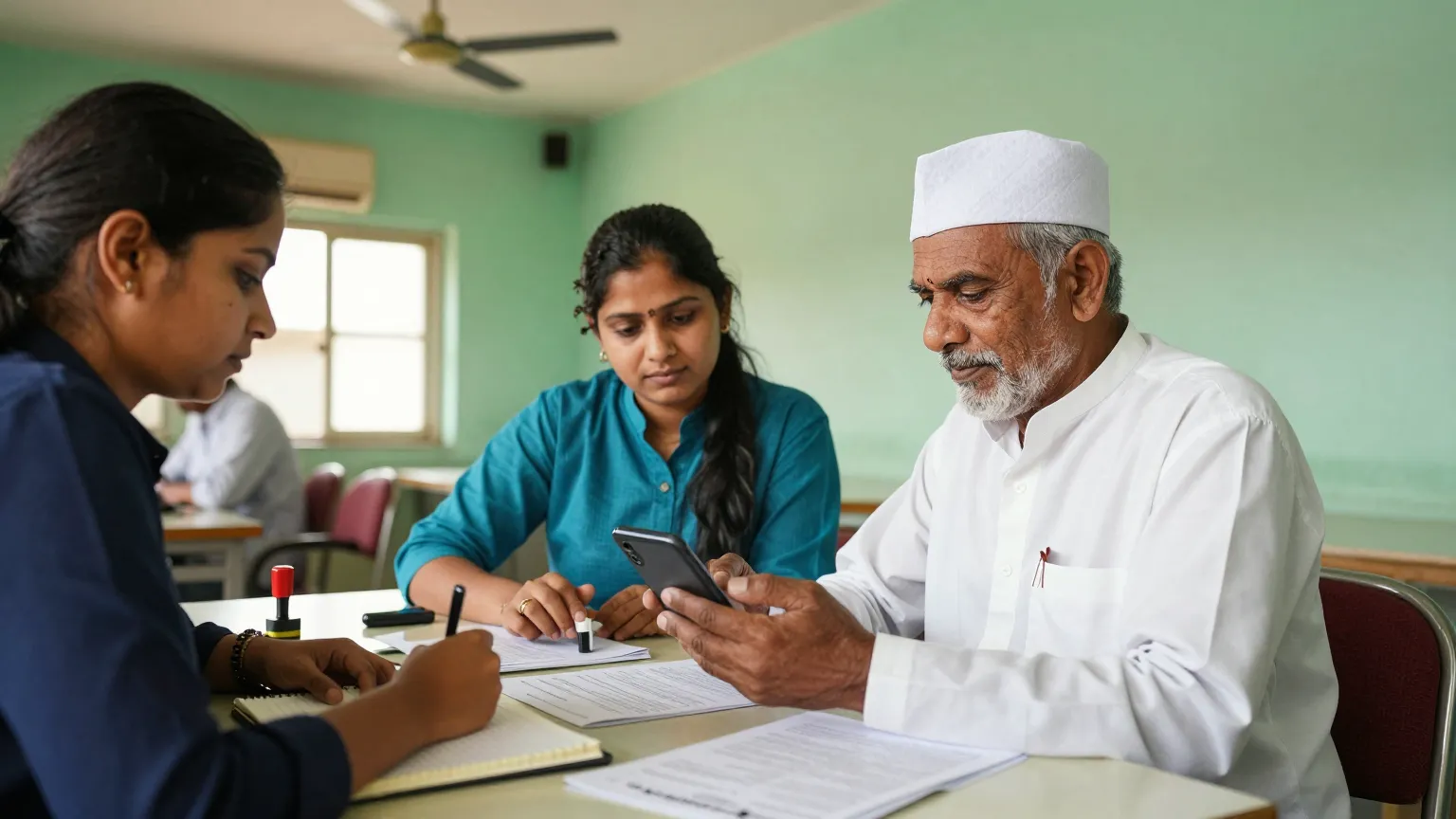
Start with the citizen journey, not the paper form. Design thinking for a government service in India means observing real users (including older, feature-phone and first-time users) where they transact, redefining the problem around their task, prototyping the fewest possible steps, testing with five citizens before the tender is finalised, and measuring task completion after launch, with GIGW 3.0 and IS 17802 accessibility built in from the start.
On 20 November 2026, the Ministry of Electronics and Information Technology briefed Heba Hagrass, the UN Special Rapporteur on the Rights of Persons with Disabilities, on how India makes its digital services usable: GIGW 3.0 aligned with WCAG 2.1 Level AA, IS 17802 enforceable under the amended RPwD Rules, STQC certification for 73 ministries and departments, UX4G design support for over 400 websites and apps, and UMANG in 23 languages. Five months earlier, The Economist had described many Indian government websites as “hostile” to users, observing that India’s digital bureaucracy tends to “reproduce paper processes in digital form rather than rethinking them altogether”.
Both pictures are true. India has the standards, the design system and the scale; what many departments still lack is the method that turns a digitised form into a service a citizen can finish alone. That method is design thinking. This guide sets out how to apply it to an Indian government digital service, from the first field visit to the clause in the tender.
The problem is not adoption. UMANG recorded about 798 crore transactions in three years, and 4,07,122 Common Service Centres (70,069 run by women village-level entrepreneurs) give assisted access where devices or skills are missing. The problem is that services were designed for the department’s workflow, not the citizen’s task. A 2016 audit found that only 31 of 957 central government portals complied with the government’s own website guidelines, and user experience entered those guidelines only in 2023.
The cost of that gap falls on the people least able to absorb it. Analysing the NSS Comprehensive Modular Survey on Telecom 2025, researchers writing for Ideas for India found smartphone access of 88.6% among adults aged 18–49 but 44.7% at 60–69 and 42% at 70 and above. Of those aged 60 and above, 53.1% can transact online against 71.4% of younger adults, and only 8% know how to report fraud on the cybercrime portal, falling to 4% among older rural residents. Their list of causes reads like a usability audit: small text, crowded screens, unfamiliar symbols, multiple authentication steps, time-limited one-time passwords and English-dominant instructions. UX4G’s own FAQ names the same failures: unclear navigation, complex forms, inconsistent pages and unclear next steps.
Before a department commissions a redesign, it helps to know what is already mandatory and what is only recommended. The table below summarises the framework MeitY presented on 20 November.
| Instrument | What it covers | Status |
|---|---|---|
| GIGW 3.0 (Guidelines for Indian Government Websites and Apps) | Accessibility aligned with WCAG 2.1 Level AA, plus security, content and operational requirements; since 2023 includes user experience | Mandatory for government websites and apps; STQC certifies compliance (73 ministries and departments certified) |
| IS 17802 (Parts 1 and 2) | Indian Standard for accessibility of ICT products and services | Enforceable under the Rights of Persons with Disabilities Rules as amended in 2023 |
| UX4G Design System 3.0 | Over 50 pre-tested, WCAG-aligned components, design tokens, Figma kit, npm package; free for departments | Recommended; UX4G advises writing it into the SoW or TOR so vendors are bound to it |
| UX4G audit tools (Audit 360, manual compliance matrix) | Automated scan for accessibility and compliance gaps plus a human self-assessment of usability, content and journeys | Available to any ministry or department on request |
| UX4G Accessibility Widget | Front-end assistive controls (text size, contrast, screen reader, voice navigation) on over 1,800 websites | Optional; UX4G states it does not make a site WCAG-compliant by itself |
| Bhashini and UMANG language support | Multilingual access; UMANG delivers services in 23 languages | Platform capability a service can inherit |
Notice what the table does not contain: a requirement to watch a citizen use the service before it ships. Compliance tells you a form is readable by a screen reader. It does not tell you whether a pensioner in Beed can complete it before her OTP expires. That is the gap design thinking fills.
A UX audit, including UX4G’s heuristic evaluation against Jakob Nielsen’s ten usability heuristics, checks an existing interface against standards. Design thinking questions whether the interface should exist in its current shape at all. It runs in five moves: empathise with real users in their context, define the problem as the citizen experiences it, ideate alternatives, prototype the most promising one cheaply, and test it with the people who will use it. The difference shows up in the questions each asks.
We covered the general case in whether design thinking delivers ROI; for a government service the return is measured in fewer office visits, fewer grievances and fewer calls to the CSC operator.
A sprint for a state or central service can run in four to six weeks before a line of production code is written. This is the sequence we use.
AI can draft interview guides and cluster transcripts, but it should not stand in for the field visit; we explained why in our note on AI and user research, and UX4G’s FAQ reaches the same conclusion for citizen-facing services.
The Economist piece quoted the view that governments often outsource both strategy and execution and end up with “a costly, unmanageable liability”. The remedy is to separate the two: run the discovery sprint first, with the department’s own officers in the room, and let its outputs define the build tender. A service RFP that follows design thinking should contain, at minimum:
The mechanics of writing such a document, including how to brief a consultancy and what to ask for in a proposal, are in our guide to writing a design thinking brief or RFP in India.
We run discovery sprints and service redesign for public-sector and regulated clients through our design thinking consulting practice, and we have shipped a government-facing product ourselves: Abhigyaan, our VR learning platform, is deployed in 1,350 Maharashtra Zilla Parishad schools reaching 1.5M+ students, with teachers and students as the test users. If your department or implementation partner is planning a citizen service redesign, book a 30-minute call with our team and we will scope a sprint around one journey.
Design thinking is a problem-solving method that starts by observing how citizens actually use a service, defines the problem in their terms, and prototypes and tests solutions with them before building. For government it means designing around the citizen’s task rather than the department’s paper process, which is the approach UX4G’s handbook recommends for Indian digital services.
Yes. Government websites and apps must follow GIGW 3.0, which is aligned with WCAG 2.1 Level AA, and the Rights of Persons with Disabilities Act, 2016. Indian Standard IS 17802 for accessible ICT products and services became enforceable under the amended RPwD Rules in 2023, and STQC certifies compliance; 73 ministries and departments were certified as of November 2026.
UX4G is the Government of India’s user-experience programme under the National e-Governance Division. It provides a free design system of over 50 WCAG-aligned components, a Figma kit, an accessibility widget used on over 1,800 websites, automated and manual audit tools, a UX handbook and workshops, and has given audit and design support to more than 400 government websites and apps.
As of 31 July 2026, UMANG had 11.66 crore registered users and offered about 2,575 services, 880 central and 1,695 state, while DigiLocker had more than 72.43 crore users and 5,437 document types and services, according to the Minister for Electronics and Information Technology’s reply in the Rajya Sabha on 7 August 2026. UMANG recorded about 798 crore transactions over three years.
Five users per segment is enough to catch most major usability problems, according to UX4G’s guidance, provided the segments reflect real differences in capability. For an Indian citizen service that usually means separate rounds with older users, women, rural residents, feature-phone users and people who rely on assisted access at a Common Service Centre.
This article is for general information and is not legal advice. Confirm obligations against the current text of the Guidelines for Indian Government Websites and Apps (GIGW 3.0), IS 17802, the Rights of Persons with Disabilities Act, 2016 and its Rules, and your department’s procurement rules, and consult qualified counsel for your situation.

I am a founder director at Qodequay Technologies Pvt. Ltd., a leading digital transformation consulting firm that helps clients across industries to innovate, optimize, and grow their businesses. I have over two decades of experience in the digital domain, spanning product development, e-commerce, user experience, design thinking, web and app development, and business leadership. My core competencies include developing and executing digital transformation strategies, building teams globally, roadmaps, and solutions that leverage data, insights, and emerging technologies such as artificial intelligence, augmented reality, blockchain, and immersive experience. I also have expertise in digital commerce, supply chain integration, and product management, having worked with both B2B and B2C brands in various sectors. My mission is to create value for customers and stakeholders by delivering impactful and engaging digital experiences that drive growth and innovation.
November 24, 2026

November 23, 2026

November 22, 2026

November 21, 2026

November 20, 2026
Monthly insights on AI, VR and DPDPA compliance — straight from our team to your inbox.
Free 30-minute consultation with our team — or see our products in action.