DPDPA Penalties Up to ₹250 Crore: The Real Cost of Waiting
July 2, 2026
February 12, 2026
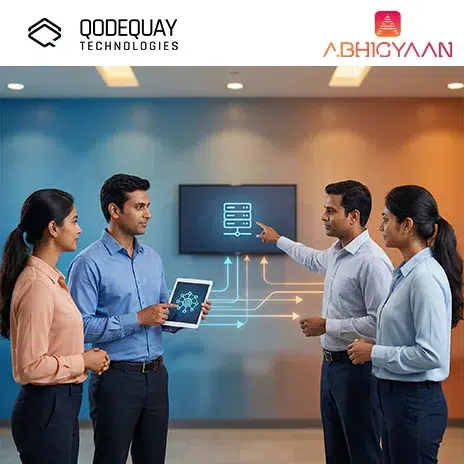
Edge-to-Cloud Integration is how you turn connected devices into real business outcomes. It is the missing link between physical reality and digital intelligence.
You already know the problem: data is being generated everywhere. Sensors in factories, cameras in retail stores, GPS in logistics fleets, smart meters in utilities, and wearables in healthcare. But collecting data is not the goal. The goal is to use that data to make faster decisions, automate actions, and improve operations.
This is where edge-to-cloud integration becomes critical.
As a CTO, CIO, Product Manager, Startup Founder, or Digital Leader, you are expected to deliver real-time insights, reduce latency, improve resilience, and scale digital systems across physical environments. You are also expected to do it securely and cost-effectively.
In this article, you will learn what edge-to-cloud integration is, why it matters, how it works, the best architectures, real-world use cases, best practices, common mistakes, and the future outlook.
Edge-to-cloud integration is the architecture and technology that connects edge devices and local computing systems to cloud platforms for data processing, storage, analytics, and AI.
In simple terms: You process some data near the device (edge), and you send the right data to the cloud for deeper intelligence and scaling.
This approach is essential because edge devices generate massive data, and not all of it should be sent to the cloud.
Edge-to-cloud integration matters because it enables real-time systems, reduces operational cost, and improves reliability in physical environments.
For leaders, the benefits are not only technical. They are strategic:
If your business touches the physical world, edge-to-cloud integration becomes a competitive advantage.
Edge-to-cloud integration works by distributing computing across three layers: device, edge, and cloud.
Let’s break down the flow.
Devices include:
They generate raw signals and events.
Edge computing happens on:
At the edge, you can:
The cloud handles:
This combination gives you both speed and scalability.
Edge-to-cloud integration solves latency, bandwidth cost, reliability, and privacy challenges.
Here are the biggest problems it addresses.
Latency is the delay between data generation and action.
If you are running:
…you cannot wait for cloud round trips.
Edge processing allows millisecond decisions.
Raw video streams and sensor data are huge.
Sending everything to the cloud is:
Edge filtering ensures only valuable data is transmitted.
Many edge environments have unstable connectivity.
Factories, mines, ships, remote sites, and rural areas cannot depend on perfect internet.
Edge-to-cloud systems allow:
Some data should not leave the site due to:
Edge processing helps you keep sensitive data local.
The best use cases are those that require real-time action, high-volume data, or physical system monitoring.
Factories use edge-to-cloud integration for:
Example: A camera detects a defect on a production line. The edge system stops the line immediately, while the cloud stores defect trends for long-term analytics.
Retailers use edge-to-cloud integration for:
Edge reduces cloud cost by processing video locally and sending only insights.
Fleet systems use edge-to-cloud integration for:
Edge devices can alert drivers instantly, while the cloud aggregates insights across the entire fleet.
Cities use edge-to-cloud integration for:
Cloud platforms provide city-wide dashboards, while edge devices handle local actions.
Healthcare uses edge-to-cloud integration for:
Edge ensures quick alerts, cloud supports analytics and patient history.
The key components are edge devices, gateways, connectivity, cloud platforms, and observability.
Here’s what a typical architecture includes:
Gateways collect data and provide:
Without observability, edge deployments become unmanageable.
You design a scalable strategy by standardizing device onboarding, securing identity, and automating deployment.
Edge-to-cloud becomes hard when you scale from: 10 devices → 10,000 devices
The complexity explodes.
A scalable strategy includes:
The best practices are to prioritize reliability, security, and cost efficiency from the start.
Use these best practices:
The biggest mistakes are treating edge devices like servers, ignoring offline scenarios, and skipping governance.
Here are common mistakes:
This increases cost and latency.
Real-world connectivity is messy.
Edge devices are physical and vulnerable to tampering.
Without OTA updates, devices become outdated and insecure.
If every site sends different formats, cloud analytics becomes painful.
Edge-to-cloud integration supports AI by enabling real-time inference at the edge and model training in the cloud.
A powerful workflow looks like this:
Example: A retail store uses edge AI to detect shelf stockouts instantly, while cloud analytics improves demand forecasting across all stores.
You secure edge-to-cloud integration by applying identity-first security, encryption, and continuous monitoring.
Security must cover:
Best security practices:
Edge security is harder because devices live outside your controlled environment.
The future will be driven by edge AI, 5G expansion, and industrial-scale automation.
Here are the trends shaping the next few years:
More AI models will run directly on edge devices, especially for:
Private 5G will accelerate industrial deployments by providing:
More companies will adopt standardized edge stacks using:
Industries will require stronger device security and compliance reporting.
Edge-to-cloud will power real-time digital twins for factories, cities, and infrastructure.
This will allow simulation-based decisions before real-world actions.
Edge-to-Cloud Integration is how you build systems that operate in the real world with real-time intelligence. It gives you the speed of local decision-making and the power of cloud-scale analytics, without forcing you to choose one over the other.
At Qodequay, you approach edge-to-cloud integration with a design-first mindset, ensuring every connected experience is built around human and operational realities. Technology becomes the enabler, while the goal stays clear: solve meaningful problems, create resilient systems, and build digital solutions that scale with trust.

As the CEO and Founder of Qodequay Technologies, I bring over 20 years of expertise in design thinking, consulting, and digital transformation. Our mission is to merge cutting-edge technologies like AI, Metaverse, AR/VR/MR, and Blockchain with human-centered design, serving global enterprises across the USA, Europe, India, and Australia. I specialize in creating impactful digital solutions, mentoring emerging designers, and leveraging data science to empower underserved communities in rural India. With a credential in Human-Centered Design and extensive experience in guiding product innovation, I’m dedicated to revolutionizing the digital landscape with visionary solutions.
Follow the expert :


July 2, 2026

July 2, 2026
July 2, 2026
July 2, 2026
July 2, 2026
Monthly insights on AI, VR and DPDPA compliance — straight from our team to your inbox.
Free 30-minute consultation with our team — or see our products in action.