DPDPA Penalties Up to ₹250 Crore: The Real Cost of Waiting
July 2, 2026
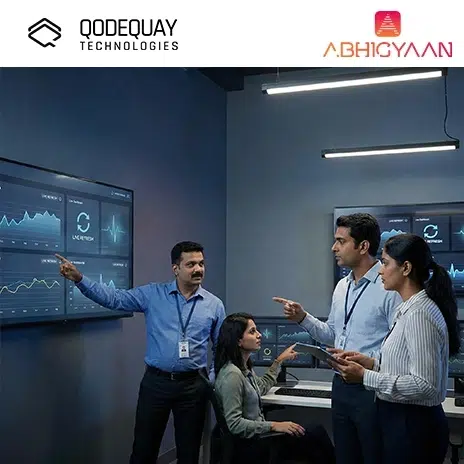
Smart building and facility twins matter because they turn buildings into measurable, controllable systems instead of expensive black boxes.
If you are a CTO, CIO, Product Manager, Startup Founder, or Digital Leader, you already know the reality: buildings are among the most expensive assets your organization owns or operates, yet they are often managed with outdated tools, disconnected systems, and reactive maintenance.
And buildings are no longer just “spaces.” They are:
A smart building twin gives you a real-time digital replica of your facility that helps you manage energy, comfort, safety, and maintenance as one integrated system.
In this article, you will learn:
Smart building and facility twins are digital replicas of buildings that update in real time using IoT, automation, and facility data.
A facility twin represents both:
Unlike basic dashboards, a twin creates a structured model of the building so you can simulate, monitor, and optimize operations continuously.
Facility twins go beyond BMS by combining data, context, and intelligence into one operational layer.
A Building Management System usually:
A facility twin:
Think of it like this: BMS is control, a facility twin is operational intelligence.
You should care because facility twins reduce operating costs, improve comfort, and help you meet sustainability targets.
Buildings are one of the largest cost centers for most enterprises. A facility twin gives you direct control over the biggest levers:
It also supports modern work trends like hybrid work, where space usage is unpredictable and needs continuous optimization.
Facility twins solve problems related to energy waste, reactive maintenance, poor space usage, and fragmented systems.
Many buildings consume energy inefficiently due to:
Facility twins expose this waste in real time.
Traditional facility maintenance is often:
Facility twins enable predictive maintenance and faster diagnosis.
Without occupancy analytics, you cannot confidently answer:
Facility twins convert occupancy into measurable insights.
Most facilities have disconnected systems for:
Facility twins unify them into a single operational view.
Smart building twins work by connecting building systems to a real-time data model that updates continuously.
The twin layer organizes all data into:
This structure makes analytics and automation far more powerful.
The highest ROI use cases are energy optimization, predictive maintenance, indoor air quality monitoring, and space utilization.
Energy is often the biggest controllable cost.
A facility twin helps you:
Real-world impact: many organizations see 10% to 30% energy savings depending on baseline inefficiency and automation maturity.
Facility assets like chillers, AHUs, pumps, and elevators are expensive and failure-prone.
A twin helps you detect:
This prevents failures and reduces downtime.
Post-pandemic, indoor air quality is now a board-level concern.
Facility twins help you monitor:
This improves employee experience and reduces complaints.
Facility twins allow you to plan based on reality, not assumptions.
You can:
Facility twins improve safety by providing live situational awareness and faster incident response.
In emergencies, seconds matter.
A facility twin can help:
Facility twins are already delivering measurable value across offices, hospitals, campuses, and industrial facilities.
A company runs a facility twin across multiple office buildings.
The twin reveals HVAC is running full capacity on floors with low occupancy.
Outcome:
A hospital uses a facility twin to monitor:
Outcome:
A university manages dozens of buildings with different ages and systems.
A facility twin creates a unified dashboard for:
Outcome:
A facility twin stack usually includes IoT, real-time data streaming, a twin model layer, analytics, and visualization.
BIM (Building Information Modeling) gives you a rich 3D representation of the facility.
But you can still build a powerful twin using:
You should start small, focus on measurable outcomes, and scale through standardization.
You should avoid overbuilding the twin, ignoring facility team workflows, and treating the twin as a “dashboard project.”
A 3D model without automation, analytics, or workflows becomes a fancy screen.
Facility managers need:
If your twin does not support this, it will not be used.
More sensors are not always better.
Better approach:
You measure success through cost reduction, improved comfort, reduced downtime, and sustainability performance.
Facility twins are valuable when they move these numbers consistently.
The future is autonomous, sustainability-driven facilities where twins act as the building’s operating system.
Facility twins will increasingly:
Organizations will manage hundreds of buildings using:
Facility twins will become a key part of:
Technicians will use AR overlays to:
Smart building and facility twins are no longer a futuristic idea, they are quickly becoming the standard for modern facility operations. They help you manage buildings like intelligent systems, with real-time awareness, predictive insight, and measurable outcomes.
For CTOs, CIOs, Product Managers, Startup Founders, and Digital Leaders, facility twins offer a rare combination of strategic and operational value: cost savings, improved employee experience, sustainability performance, and stronger resilience.
At Qodequay (https://www.qodequay.com), you approach facility twins with a design-first mindset, ensuring the twin is not just technically impressive, but genuinely usable by the people who operate the building every day. You solve human problems first, and then apply technology as the enabler, which is how smart spaces become smarter businesses.

As the CEO and Founder of Qodequay Technologies, I bring over 20 years of expertise in design thinking, consulting, and digital transformation. Our mission is to merge cutting-edge technologies like AI, Metaverse, AR/VR/MR, and Blockchain with human-centered design, serving global enterprises across the USA, Europe, India, and Australia. I specialize in creating impactful digital solutions, mentoring emerging designers, and leveraging data science to empower underserved communities in rural India. With a credential in Human-Centered Design and extensive experience in guiding product innovation, I’m dedicated to revolutionizing the digital landscape with visionary solutions.
Follow the expert :


July 2, 2026
July 2, 2026
July 2, 2026
July 2, 2026

July 2, 2026
Monthly insights on AI, VR and DPDPA compliance — straight from our team to your inbox.
Free 30-minute consultation with our team — or see our products in action.