DPDPA Penalties Up to ₹250 Crore: The Real Cost of Waiting
July 2, 2026
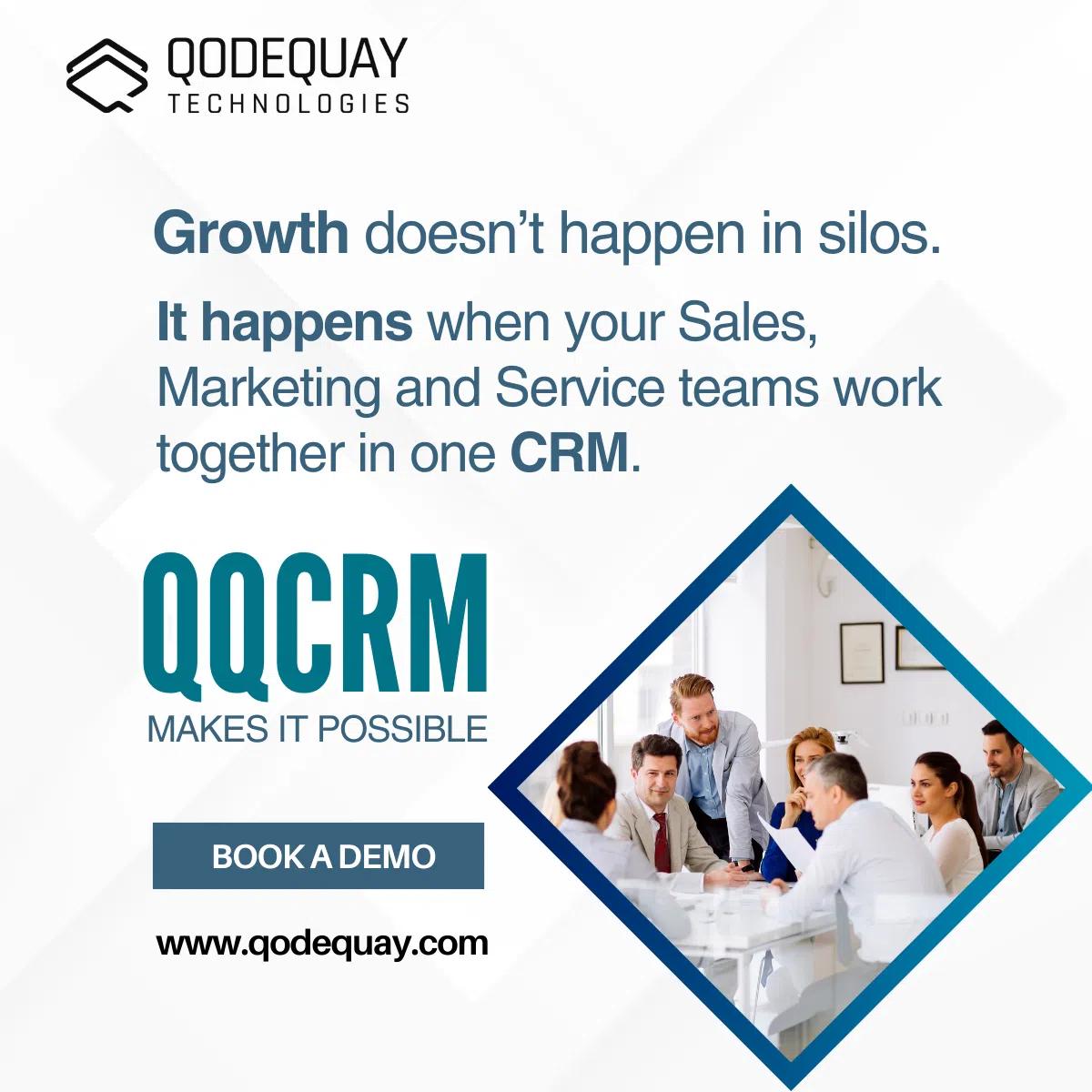
You operate in a business landscape where speed, alignment, and customer experience decide who leads and who falls behind. Growth no longer comes from isolated teams or disconnected tools. It happens when your sales, marketing, and service functions work together in one coordinated system. That system is your CRM.
A modern CRM is not just software. It is the backbone of business growth because it centralizes customer insights, automates workflows, and helps you act on real-time intelligence. In an environment where the future of business is predictive rather than reactive, a CRM becomes the engine that powers alignment, efficiency, and revenue. This article breaks down why unified CRM systems matter, how they transform business operations, and what capabilities drive long-term success.
Growth depends on a unified CRM because it brings every customer interaction into one place, allowing teams to move in sync instead of working independently. When sales, marketing, and service operate in silos, information gets duplicated, delayed, or lost entirely. This creates inefficiency and weakens the customer experience.
A unified CRM solves this by creating a single source of truth. Your teams share data, insights, and context, which leads to smoother handoffs, faster responses, and stronger decision-making. Alignment becomes natural because everyone sees the same information at the same time.
A CRM becomes the backbone of your business by powering every stage of the customer journey. It captures leads, nurtures them, manages conversations, tracks deals, and supports ongoing service needs. Every touchpoint becomes visible, measurable, and predictable.
When your foundational systems are centralized, your business becomes more resilient. You gain control, consistency, and clarity across operations. This infrastructure allows you to scale without losing quality or speed.
A CRM transforms your operations by using real-time data to forecast customer needs, identify patterns, and recommend actions. Instead of relying on guesswork or outdated reports, you can make proactive decisions.
Predictive capabilities help you:
Understand which leads are most likely to convert
Identify customers who may churn
Personalize communication based on behavior
Anticipate demand and allocate resources
Strengthen sales forecasting accuracy
Modern platforms like QQCRM take this even further with AI-driven insights that help your team know what to do next without manual analysis.
CRM has evolved far beyond basic customer data management. It is now a system that activates your information and turns it into outcomes that fuel growth. Centralized data enables faster workflows, better engagement, and clearer strategy.
A CRM becomes a growth engine when it helps you:
Convert leads faster
Improve retention through personalized care
Deliver seamless cross-platform experiences
Reduce manual tasks through automation
Build strong, long-term customer relationships
Businesses that embrace CRM as a growth engine outperform those that treat it as a simple database.
Automation elevates productivity by eliminating repetitive tasks that drain time and energy. When your CRM automates follow-ups, reminders, nurturing flows, and pipeline updates, your team focuses on selling, supporting, and strategizing.
Automation drives revenue by ensuring no lead is forgotten, no customer is ignored, and no opportunity is lost. Consistency becomes automatic rather than dependent on manual effort.
Key workflows that automation improves include:
Lead qualification
Email and WhatsApp follow-ups
Deal stage updates
Ticket routing and service responses
Reporting and forecasting
When your CRM works automatically in the background, your team becomes significantly more efficient.
A unified CRM improves engagement by pulling together every bit of customer context, from first touch to ongoing support. Your communication becomes more personalized, timely, and relevant.
Retention increases when you understand customers better. With unified data, your business can:
Identify repeat purchase signals
Detect satisfaction or dissatisfaction trends
Offer targeted upgrades and cross-sells
Improve post-purchase experience
Deliver service that feels responsive and informed
This level of connected engagement builds trust and extends customer lifetime value.
AI elevates CRM performance by interpreting patterns, predicting outcomes, and recommending actions that move the business forward. Instead of analyzing data manually, your CRM surfaces insights instantly.
AI capabilities include:
Real-time insight dashboards
Predictive lead scoring
Automated sales workflows
Customer behavior predictions
Intelligent reminders and suggestions
Automated communication sequences
AI transforms CRM from a reactive tool into a proactive partner that helps your team stay ahead.
To get the best results from your CRM, follow these practices:
Integrate sales, marketing, and service workflows
Automate repetitive tasks for consistency
Maintain clean, validated customer data
Keep your pipeline simple and standardized
Use AI-powered insights to prioritize actions
Synchronize communication channels
Review performance metrics frequently
These steps ensure your CRM becomes a powerful driver of alignment, efficiency, and predictable growth.
The future of CRM is fully integrated, predictive, and intelligent. Businesses will move toward systems that automate more tasks, understand customers more deeply, and guide teams through suggested actions.
Future trends include:
Sales and support copilots
Predictive customer health scoring
Automated opportunity movement
Unified dashboards across all departments
Hyper-personalized customer journeys
AI-driven campaign generation
Real-time customer intent tracking
Companies that adopt unified CRM systems early will outperform slower competitors in customer experience, speed, and revenue.
Growth happens when sales, marketing, and service work together in a unified CRM.
A CRM is the backbone of modern business operations, not just a software tool.
Predictive intelligence helps you move from reactive actions to proactive strategy.
Centralized insights strengthen customer relationships and retention.
Automation boosts productivity and ensures consistent communication.
AI-powered CRM systems turn data into revenue and smarter decisions.
Unified workflows create efficiency, clarity, and scalable growth.
A unified CRM unlocks growth by connecting teams, centralizing insights, and turning data into real outcomes. When your business moves from reactive to predictive, you accelerate revenue and deliver better experiences across the entire customer journey. Platforms like QQCRM bring this vision to life by combining AI, automation, and design-first thinking to create systems that solve real business challenges. When technology empowers people instead of complicating their work, growth becomes natural and sustainable.
To see how a unified CRM transforms your business, book your demo today: https://www.qodequay.com/qqcrm

As the CEO and Founder of Qodequay Technologies, I bring over 20 years of expertise in design thinking, consulting, and digital transformation. Our mission is to merge cutting-edge technologies like AI, Metaverse, AR/VR/MR, and Blockchain with human-centered design, serving global enterprises across the USA, Europe, India, and Australia. I specialize in creating impactful digital solutions, mentoring emerging designers, and leveraging data science to empower underserved communities in rural India. With a credential in Human-Centered Design and extensive experience in guiding product innovation, I’m dedicated to revolutionizing the digital landscape with visionary solutions.
Follow the expert :


July 2, 2026

July 2, 2026

July 2, 2026

July 2, 2026

July 2, 2026
Monthly insights on AI, VR and DPDPA compliance — straight from our team to your inbox.
Free 30-minute consultation with our team — or see our products in action.