Can VR safety training meet OSH Code requirements for Indian factories?
October 23, 2026
November 24, 2025
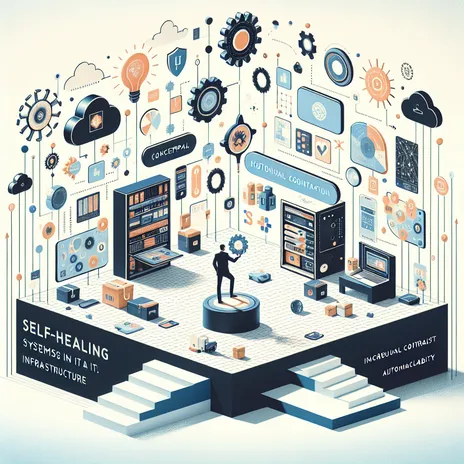
In today's hyper-connected digital landscape, the expectation for always-on services is no longer a luxury but a fundamental requirement. Businesses across every sector rely heavily on their IT infrastructure to deliver critical services, process transactions, and maintain customer trust. However, the complexity of modern IT environments, characterized by distributed systems, cloud-native applications, and microservices, makes them inherently prone to failures, whether due to hardware malfunctions, software bugs, network issues, or human error. Even minor outages can lead to significant financial losses, reputational damage, and decreased customer satisfaction, underscoring the urgent need for robust, resilient IT operations.
This is where self-healing systems emerge as a transformative solution. Imagine an IT infrastructure that can detect its own problems, diagnose the root cause, and automatically apply fixes without human intervention. This proactive approach to system management moves beyond traditional reactive incident response, offering a paradigm shift towards truly autonomous and resilient operations. Self-healing systems are designed to minimize downtime, optimize performance, and free up valuable IT staff from repetitive troubleshooting tasks, allowing them to focus on innovation and strategic initiatives.
Throughout this comprehensive guide, we will delve deep into the world of self-healing systems, exploring their fundamental concepts, key components, and the myriad benefits they offer. You will learn why these systems are not just a trend but a necessity in 2024 and beyond, understanding their profound impact on market dynamics and future relevance. We will provide practical, step-by-step instructions for implementing self-healing capabilities, share expert best practices, and address common challenges with actionable solutions. By the end of this post, you will have a clear roadmap to automate resilience in your IT infrastructure, ensuring your business remains robust, efficient, and continuously available.
Self-healing systems represent a sophisticated approach to IT infrastructure management where the system itself possesses the intelligence and capabilities to detect, diagnose, and automatically resolve issues without requiring human intervention. At its core, it's about building resilience directly into the fabric of your IT environment, enabling it to withstand failures, recover swiftly, and maintain optimal performance autonomously. This concept moves beyond simple automation, which typically executes predefined tasks, by incorporating elements of monitoring, analysis, decision-making, and remediation, often powered by artificial intelligence and machine learning. The goal is to create an infrastructure that is not only robust but also adaptive and self-correcting, significantly reducing the Mean Time To Recovery (MTTR) from incidents.
The importance of self-healing capabilities cannot be overstated in an era where digital services are the backbone of most businesses. Traditional IT operations often rely on human operators to monitor alerts, investigate problems, and manually apply fixes, a process that can be slow, error-prone, and costly. Self-healing systems automate this entire lifecycle, from anomaly detection to resolution, ensuring that critical services remain available even when components fail. For instance, if a specific microservice starts consuming excessive memory, a self-healing system might automatically restart that service, scale up its resources, or even shift its workload to a healthier instance, all within seconds, preventing a potential outage before users even notice a problem.
Key characteristics of a self-healing system include continuous monitoring, intelligent anomaly detection, automated diagnosis, and proactive remediation. It's not just about fixing a problem after it occurs; it's also about anticipating potential issues and taking preventative measures. This involves collecting vast amounts of data from logs, metrics, and traces, analyzing this data in real-time to identify deviations from normal behavior, determining the root cause of these deviations, and then executing predefined or dynamically generated actions to restore the system to a healthy state. The ultimate aim is to create an IT environment that is inherently more stable, efficient, and capable of delivering uninterrupted service, thereby enhancing business continuity and customer satisfaction.
Implementing a truly self-healing IT infrastructure relies on several interconnected components working in harmony. The foundation is Monitoring and Observability, which involves collecting comprehensive data from every part of the system—servers, networks, applications, databases—through logs, metrics, and traces. Tools like Prometheus, Grafana, ELK Stack (Elasticsearch, Logstash, Kibana), and commercial Application Performance Monitoring (APM) solutions are crucial here, providing the eyes and ears for the system.
Next is Anomaly Detection, often powered by AI and Machine Learning algorithms. This component analyzes the collected data in real-time to identify patterns that deviate from established baselines or normal behavior. Instead of relying on static thresholds, AI can detect subtle changes that might indicate an impending issue, such as a gradual increase in latency or a sudden spike in error rates. This intelligence allows the system to be proactive rather than purely reactive.
The Diagnosis Engine takes detected anomalies and attempts to pinpoint the root cause. This can range from simple rule-based logic (e.g., "if CPU > 90% for 5 minutes, then it's a CPU issue") to more sophisticated AI-driven correlation engines that analyze multiple data points to determine dependencies and causal relationships. Once a diagnosis is made, the Automation and Orchestration component springs into action. This involves a set of predefined scripts, playbooks, or automated workflows that execute the necessary remediation steps. Tools like Ansible, Kubernetes operators, Terraform, and custom scripting are used to perform actions such as restarting services, scaling resources up or down, re-routing traffic, or deploying patches.
Finally, a critical, often overlooked component is the Knowledge Base and Learning System. Every incident, its diagnosis, and the applied remediation action, along with its outcome, should be recorded and fed back into the system. Over time, this allows the self-healing system to learn from past experiences, refine its diagnostic capabilities, improve the effectiveness of its remediation actions, and even predict future failures more accurately. This continuous feedback loop is what truly distinguishes a self-healing system from mere automation.
The adoption of self-healing systems brings a multitude of profound benefits to organizations, fundamentally transforming how IT infrastructure is managed and experienced. One of the most significant advantages is Increased Uptime and Availability. By automating the detection and resolution of issues, the Mean Time To Recovery (MTTR) is drastically reduced, often from minutes or hours to mere seconds. This ensures that critical business services remain operational, minimizing disruptions for customers and employees alike. For example, an e-commerce platform using self-healing capabilities can automatically recover from a database connection error, preventing lost sales and maintaining customer trust during peak shopping hours.
Another major benefit is Operational Efficiency and Cost Reduction. Self-healing systems significantly reduce the need for manual intervention by IT staff for routine troubleshooting and incident response. This frees up highly skilled engineers from repetitive, time-consuming tasks, allowing them to focus on strategic initiatives, innovation, and system improvements rather than firefighting. This not only optimizes resource allocation but also leads to substantial cost savings by reducing overtime, minimizing the financial impact of outages, and potentially lowering the overall operational expenditure associated with IT support. An IT department can manage a larger, more complex infrastructure with the same or even fewer personnel.
Furthermore, self-healing systems contribute to Improved Security Posture and Enhanced User Experience. By automating responses to security incidents, such as isolating a compromised server or blocking suspicious network traffic, the system can [react](https://www.qodequay.com/is-react-js-seo-friendly) much faster than human operators, mitigating potential damage. This proactive security response is vital in today's threat landscape. For users, the consistent availability and performance of services translate directly into a superior experience, fostering loyalty and satisfaction. When systems are consistently reliable and performant, users can complete their tasks without frustration, leading to higher productivity and a positive perception of the organization's digital capabilities.
In 2024, the relevance of self-healing systems is more pronounced than ever, driven by the relentless pace of digital transformation and the increasing complexity of modern IT environments. The widespread adoption of cloud-native architectures, microservices, containers, and serverless functions has created highly distributed and dynamic infrastructures. While these technologies offer unparalleled agility and scalability, they also introduce new challenges in terms of monitoring, troubleshooting, and maintaining stability. A single application might consist of dozens or hundreds of interconnected services, making manual incident management a near-impossible task. Self-healing systems provide the necessary automation and intelligence to manage this complexity effectively, ensuring that these intricate systems remain robust and performant.
Moreover, the business landscape demands "always-on" availability. Customers expect seamless experiences, and any downtime can lead to immediate financial losses, damage to brand reputation, and erosion of customer trust. Industries like finance, healthcare, and e-commerce, where even seconds of downtime can have catastrophic consequences, are particularly reliant on resilient infrastructure. Market trends also point towards greater reliance on Artificial Intelligence and Machine Learning (AI/ML) in IT operations, often referred to as AIOps. Self-healing systems are a natural evolution of AIOps, leveraging AI/ML not just for anomaly detection and insights, but for automated action and remediation. This shift-left in operations, where issues are resolved earlier or prevented entirely, is critical for competitive advantage.
The business impact of self-healing systems extends beyond mere technical efficiency. Organizations that successfully implement these capabilities gain a significant competitive edge. They can innovate faster, deploy new features with greater confidence, and scale their operations without being hampered by infrastructure fragility. The ability to guarantee high availability and performance directly translates into better customer satisfaction, stronger brand loyalty, and ultimately, increased revenue. Furthermore, regulatory compliance often mandates certain levels of system availability and data integrity, which self-healing systems can help achieve more reliably. In a world where digital resilience is paramount, self-healing systems are no longer a futuristic concept but a strategic imperative for any forward-thinking enterprise.
The advent and maturation of self-healing systems are profoundly reshaping the IT market. Firstly, they are driving a significant shift in enterprise IT spending, moving away from purely reactive incident response tools towards proactive, intelligent automation platforms. This has fueled the growth of the AIOps market, with vendors offering sophisticated solutions that integrate monitoring, analytics, and automation capabilities. Companies are investing in platforms that can not only detect anomalies but also automatically trigger remediation workflows, leading to a more efficient allocation of IT budgets.
Secondly, self-healing systems are influencing the demand for specific skill sets within the IT workforce. There's a growing need for Site Reliability Engineers (SREs), DevOps specialists, and automation architects who can design, implement, and manage these complex autonomous systems. The focus is shifting from manual troubleshooting to engineering solutions that prevent problems from occurring or automatically fix them when they do. This creates new career opportunities and necessitates upskilling existing IT professionals in areas like scripting, cloud automation, AI/ML operations, and system design for resilience.
Finally, the market impact is visible in the competitive differentiation it offers. Businesses that successfully implement robust self-healing capabilities can boast superior service level agreements (SLAs), higher customer satisfaction, and a reputation for reliability. This becomes a key selling point in competitive industries. For instance, a cloud provider with advanced self-healing infrastructure can offer more stable and performant services, attracting and retaining more customers compared to competitors with less resilient systems. This creates a virtuous cycle where investment in self-healing capabilities directly translates into market leadership and sustained growth.
The future relevance of self-healing systems is undeniable and will only continue to grow as IT infrastructures become even more distributed, complex, and critical. As organizations increasingly adopt edge computing and Internet of Things (IoT) devices, the sheer volume and geographical dispersion of endpoints will make centralized, manual management impossible. Self-healing capabilities will be essential at the edge, allowing devices and localized systems to autonomously resolve issues without constant connectivity to a central data center or cloud, ensuring continuous operation in remote or resource-constrained environments.
Furthermore, the role of Artificial Intelligence and Machine Learning within self-healing systems is set to expand dramatically. We will move beyond simple anomaly detection to more sophisticated predictive healing, where AI models forecast potential failures based on historical data and real-time patterns, triggering preventative actions before any actual degradation occurs. Imagine a system predicting a disk failure weeks in advance and automatically migrating data or replacing the virtual disk, all without human intervention. This cognitive self-healing will lead to near-zero downtime for many critical systems.
Finally, self-healing systems will become more deeply integrated with business logic and security protocols. They won't just fix technical issues but will understand the business impact of various failures, prioritizing remediation based on criticality. On the security front, automated threat detection and response will evolve into self-healing security systems that can not only identify attacks but also autonomously quarantine compromised systems, reconfigure firewalls, or even roll back to a secure state, providing an unprecedented level of cyber resilience. The evolution towards fully autonomous IT operations, where human oversight shifts from reactive troubleshooting to strategic governance and continuous improvement, is the inevitable trajectory for the future.
Embarking on the journey of implementing self-healing systems might seem daunting, given the complexity involved, but a structured, phased approach can make it manageable and highly effective. The key is to start small, identify your most critical pain points, and gradually expand your automation capabilities. Begin by pinpointing areas in your IT infrastructure that frequently experience issues, cause significant downtime, or consume a disproportionate amount of your IT team's time for manual troubleshooting. These "hot spots" are ideal candidates for initial self-healing initiatives because the impact of automation will be immediately visible and valuable.
A practical starting point is to focus on simple, well-understood problems with clear remediation steps. For instance, if a specific web server frequently becomes unresponsive due to a memory leak, and the current manual fix is to restart the service, this is a perfect candidate for automation. You would first ensure robust monitoring is in place to detect the unresponsive state, then define an automated action (e.g., a script to restart the web server process), and finally, integrate this into your system. This iterative process of "Monitor -> Alert -> Automate Simple Fix -> Automate Complex Fix" allows your team to gain experience, build confidence, and refine their processes without overwhelming the system or introducing undue risk.
As you progress, document every automated solution thoroughly, including the problem it addresses, the trigger conditions, the remediation steps, and any potential side effects. This documentation becomes a valuable knowledge base for your team and helps in scaling your self-healing efforts. Remember that self-healing is not a one-time project but a continuous journey of improvement. By starting with manageable tasks and demonstrating tangible benefits, you can build momentum and secure organizational buy-in for more ambitious automation projects, gradually transforming your IT infrastructure into a more resilient and autonomous entity.
Before diving into the implementation of self-healing systems, several foundational elements must be firmly in place to ensure success and prevent potential pitfalls. The most crucial prerequisite is a Robust Monitoring and Logging Infrastructure. You cannot heal what you cannot see. This means having comprehensive tools and practices for collecting metrics (e.g., CPU usage, memory, network traffic), logs (application, system, security), and traces (for distributed systems) from every component of your IT environment. Without high-quality, real-time data, any self-healing attempt will be blind and ineffective.
Secondly, a Centralized Observability Platform is essential. Raw data from various sources needs to be aggregated, correlated, and visualized in a way that provides a holistic view of system health. Tools like Splunk, Datadog, New Relic, or open-source alternatives like Prometheus and Grafana, enable teams to understand system behavior, identify anomalies, and validate the effectiveness of automated actions. This platform acts as the brain that processes information for the self-healing system.
Thirdly, you need Defined Incident Response Procedures, even if they are initially manual. Understanding how your team currently responds to various incidents provides the blueprint for automating those responses. This includes clear runbooks or playbooks that outline the steps taken to diagnose and resolve common issues. These manual procedures will be translated into automated scripts and workflows. Finally, access to and proficiency with Automation Tools is non-negotiable. This could include configuration management tools like Ansible or Puppet, container orchestration platforms like Kubernetes (with its operators), infrastructure-as-code tools like Terraform, or custom scripting languages like Python or PowerShell. These tools are the hands that execute the self-healing actions.
Implementing self-healing capabilities is a systematic process that builds upon a solid foundation of monitoring and automation.
Identify Pain Points and Critical Services: Begin by analyzing your incident history and identifying the most frequent, impactful, or time-consuming issues. Prioritize critical applications or services whose downtime directly affects business revenue or customer satisfaction. For example, a common issue might be a database connection pool exhausting, leading to application slowdowns.
Establish Baselines and Define "Healthy" State: For your chosen critical services, meticulously define what constitutes "normal" or "healthy" behavior. This involves collecting baseline metrics (CPU, memory, network I/O, error rates, latency) during normal operation. This baseline will be crucial for detecting deviations. For our database example, a healthy connection pool might typically hover between 20-40% utilization.
Implement Comprehensive Monitoring and Alerting: Ensure you have robust monitoring in place to collect all relevant metrics, logs, and traces for the identified services. Configure alerts that trigger when metrics deviate significantly from your established baselines or when specific error logs appear. For the database, an alert might trigger if connection pool utilization exceeds 80% for more than 2 minutes.
Develop Remediation Playbooks: For each identified issue and its corresponding alert, create a detailed, step-by-step remediation playbook. This playbook should outline the exact actions an operator would take to resolve the issue. For the database connection pool, the playbook might involve checking database server health, restarting the application service, or scaling up the application's instances.
Automate Simple, Low-Risk Actions: Start by automating the simplest and lowest-risk steps from your playbooks. This could be a service restart, clearing a cache, or scaling up a non-critical component. Use automation tools like Ansible or Kubernetes operators to script these actions. For our database example, the first automated action could be to restart the application service that connects to the database.
Test Thoroughly and Validate: Before deploying any automated healing action to production, rigorously test it in a staging or development environment. Simulate the failure condition that triggers the automation and verify that the remediation action correctly resolves the issue without introducing new problems. Monitor the system closely during and after the automated fix.
Implement Feedback Loops and Iterate: Once deployed, continuously monitor the effectiveness of your automated healing actions. Collect data on how often they trigger, their success rate, and any unintended consequences. Use this feedback to refine your monitoring thresholds, improve your remediation scripts, and identify opportunities for more advanced automation. Gradually expand to more complex scenarios, building on your successes.
Document and Share Knowledge: Maintain comprehensive documentation for all automated healing processes, including triggers, actions, and expected outcomes. Share this knowledge across your IT and development teams to foster a culture of automation and resilience.
Implementing self-healing systems effectively requires adherence to certain best practices that ensure stability, security, and continuous improvement. Firstly, it's crucial to start with clear, measurable goals and metrics. Don't automate for automation's sake. Define what success looks like – whether it's reducing MTTR by a certain percentage, decreasing alert fatigue, or improving service availability. This allows you to prioritize efforts and demonstrate tangible value. For example, a goal might be to reduce manual intervention for "service restart" incidents by 80% within six months.
Secondly, foster a culture of collaboration between operations and development teams, embodying the principles of DevOps and Site Reliability Engineering (SRE). Self-healing is not just an ops task; developers must design applications with observability and automation in mind, making them easier to monitor and fix programmatically. This means integrating automation into the entire software development lifecycle, from testing to deployment and operations. Teams should work together to define triggers, write remediation playbooks, and continuously refine the system.
Finally, document everything meticulously and embrace continuous learning. Every automated action, its trigger, and its outcome should be recorded. This knowledge base is invaluable for troubleshooting, auditing, and future improvements. Regularly review the performance of your self-healing mechanisms, analyze incidents that still require manual intervention, and use these insights to enhance your automation. The IT landscape is constantly evolving, so your self-healing systems must also evolve, adapting to new technologies and emerging challenges through a process of continuous iteration and refinement.
Several industry standards and methodologies provide a robust framework for designing and operating resilient IT infrastructure, which are highly relevant to the implementation of self-healing systems. ITIL (Information Technology Infrastructure Library) offers a comprehensive set of best practices for IT service management, including incident management, problem management, and change management. While ITIL traditionally focused on manual processes, its principles can be adapted to guide the automation of these processes within a self-healing context, ensuring that automated actions align with service delivery goals and governance.
DevOps principles are foundational to successful self-healing implementations. DevOps emphasizes collaboration, communication, and integration between development and operations teams, breaking down silos. This culture is vital because self-healing requires developers to build "healable" applications with robust APIs for automation, and operations teams to understand the application's internal workings to create effective remediation strategies. Practices like continuous integration/continuous delivery (CI/CD) also contribute by ensuring that changes are deployed reliably and can be rolled back if automated healing fails.
Site Reliability Engineering (SRE), pioneered by Google, takes resilience a step further by applying software engineering principles to operations. SRE focuses on achieving ultra-high availability and performance through automation, measurement, and a data-driven approach. Key SRE practices, such as defining Service Level Objectives (SLOs) and Service Level Indicators (SLIs), error budgets, and post-mortems, are directly applicable to self-healing systems. SREs design systems that are inherently resilient and automate away toil, which is precisely what self-healing aims to achieve. Adhering to observability best practices—ensuring comprehensive metrics, logs, and traces—is also an industry standard that underpins any effective self-healing system.
Drawing from the experience of industry leaders, several expert recommendations can significantly enhance the effectiveness and safety of self-healing systems. Firstly, prioritize critical services and start with low-risk automation. Do not attempt to automate complex, high-impact remediation for your most critical systems from day one. Instead, identify the services that cause the most frequent, yet relatively simple, issues and automate their fixes first. This builds confidence, refines your processes, and minimizes the risk of unintended consequences. For example, automating the restart of a non-critical batch processing service is a safer starting point than automating a database failover.
Secondly, design automation scripts to be idempotent and include robust rollback mechanisms. Idempotency means that running an automation script multiple times will have the same effect as running it once, preventing unintended side effects if a script is accidentally triggered repeatedly. Equally important is the ability to quickly and safely revert any automated action if it causes more problems than it solves. This "undo" capability is a critical safety net, ensuring that your self-healing system doesn't inadvertently worsen an outage. For instance, if an automated scale-up action causes resource contention, a rollback mechanism should be able to revert to the previous state.
Finally, invest in AIOps for advanced anomaly detection and predictive capabilities. While rule-based automation is a good start, true self-healing systems benefit immensely from AI and machine learning. AIOps platforms can analyze vast amounts of operational data, detect subtle anomalies that human eyes or simple thresholds might miss, and even predict potential failures before they occur. This allows for proactive healing, where issues are addressed before they impact users. Experts also recommend regularly reviewing and updating playbooks, as IT environments are dynamic, and what works today might not be optimal tomorrow. Continuous testing, including chaos engineering, is also advised to proactively identify weaknesses in your self-healing mechanisms.
While self-healing systems offer immense benefits, their implementation is not without its challenges. One of the most common issues is false positives and false negatives in anomaly detection. A false positive occurs when the system incorrectly identifies a healthy state as problematic, triggering unnecessary remediation actions that can disrupt services or consume resources. Conversely, a false negative means the system fails to detect a genuine issue, allowing it to escalate into a full-blown outage. These inaccuracies often stem from poorly calibrated monitoring thresholds, insufficient historical data for AI models, or a lack of understanding of complex system behaviors.
Another significant problem is the risk of over-automation leading to unintended consequences. In an eagerness to automate everything, organizations might deploy complex remediation scripts without adequate testing or understanding of system interdependencies. An automated fix for one component might inadvertently trigger a cascade of failures in another, leading to a larger outage than the original problem. For example, an automated restart of a database service might not account for dependent applications that lose their connections, causing a wider application outage. This highlights the delicate balance between automation and control, emphasizing the need for careful design and validation.
Furthermore, the complexity of distributed systems themselves poses a substantial challenge. Modern IT infrastructures, with their microservices, containers, and multi-cloud deployments, are incredibly intricate. Pinpointing the root cause of an issue in such an environment can be difficult even for human experts, let alone an automated system. Integrating self-healing capabilities across disparate technologies and legacy systems can also be a hurdle, requiring significant effort in API development and data normalization. Lastly, lack of clear ownership and documentation, coupled with resistance to change from IT staff who fear job displacement or loss of control, can impede successful adoption and maintenance of self-healing systems.
When implementing and operating self-healing systems, several problems tend to surface repeatedly, often causing frustration and undermining confidence in the automation.
Alert Fatigue and Noise: This is perhaps the most pervasive issue. Systems generate an overwhelming number of alerts, many of which are non-actionable, redundant, or false positives. IT teams become desensitized, causing them to miss critical alerts amidst the noise, which defeats the purpose of proactive monitoring. This often happens when monitoring thresholds are too sensitive or poorly configured.
Incorrect or Harmful Remediation: An automated action, intended to fix a problem, instead exacerbates it or introduces a new, more severe issue. For example, an automated script might restart a service that is already overloaded, causing it to crash repeatedly, or it might scale up resources unnecessarily, leading to increased cloud costs without resolving the underlying problem. This usually stems from insufficient testing, an incomplete understanding of the system, or a lack of rollback mechanisms.
Dependency Hell and Cascading Failures: In complex, interconnected systems, an issue in one component can trigger a chain reaction across multiple dependent services. A self-healing system might fix the initial problem, but if it doesn't account for the broader impact, the "fix" might cause subsequent failures in other parts of the infrastructure, leading to a larger, more complex outage. Understanding and mapping dependencies is crucial but often overlooked.
Security Vulnerabilities in Automation: The scripts and tools used for self-healing can themselves become targets for malicious actors if not secured properly. An attacker gaining control of an automation engine could wreak havoc on the entire infrastructure, making security by design a critical consideration for all self-healing components.
Resistance to Change and Skill Gaps: Human factors play a significant role. IT staff may resist adopting self-healing systems due to fear of job redundancy, a lack of trust in automation, or simply a comfort with existing manual processes. Additionally, implementing and maintaining these systems requires new skills in areas like AI/ML, advanced scripting, and cloud-native operations, which may not be present in existing teams.
Understanding the root causes behind these frequent issues is crucial for developing effective long-term solutions. Poorly defined thresholds and inadequate monitoring are often at the heart of alert fatigue and false positives. If monitoring agents collect insufficient data or if alert thresholds are static and not adapted to dynamic system behavior, the system will either over-alert or miss critical events. For instance, a CPU usage threshold set at 80% might be normal for a batch job but critical for a real-time transaction system, leading to irrelevant alerts.
Insufficient testing and validation of automated actions are primary contributors to incorrect or harmful remediations. Many organizations rush to automate without thoroughly simulating failure scenarios in isolated environments. Without rigorous testing, an automated script might work perfectly in a lab but fail catastrophically in a complex production environment due to unforeseen dependencies or edge cases. A lack of rollback strategies also means that a bad automated fix cannot be easily undone.
The lack of a holistic system understanding and dependency mapping is a significant cause of cascading failures. In microservices architectures, teams often focus on their individual services, neglecting the broader ecosystem. When a self-healing action is designed for one service without considering its upstream and downstream dependencies, it can inadvertently disrupt the entire application chain. This highlights the need for comprehensive architectural diagrams and a shared understanding across teams.
Inadequate security practices in automation development lead to vulnerabilities. If automation scripts are not scanned for vulnerabilities, if credentials are hardcoded, or if access controls to automation platforms are weak, these systems become attractive targets for attackers. Security must be baked into the design of self-healing systems, not bolted on as an afterthought. Finally, cultural barriers and a lack of investment in training are root causes for resistance to change and skill gaps. Without proper communication, training, and involvement of IT staff in the automation journey, fear and skepticism can hinder adoption.
Addressing the challenges of self-healing systems requires a multi-faceted approach, combining immediate fixes with long-term strategic changes. For issues like alert fatigue and false positives, the primary solution lies in refining monitoring and alert configurations. This involves moving beyond static thresholds to dynamic baselining and leveraging AI/ML for anomaly detection. Instead of alerting on a fixed CPU percentage, an AI system can learn the normal CPU pattern for a service and only alert when there's a statistically significant deviation. Implementing a feedback loop where IT staff can mark alerts as "false positive" or "not actionable" helps the system learn and improve over time.
To combat the risk of incorrect or harmful remediation, the emphasis must be on starting with simple, low-risk automation and rigorous testing. Never automate a complex fix without thoroughly testing it in a non-production environment that closely mirrors production. Implement a "crawl, walk, run" strategy: automate simple restarts, then more complex scaling actions, and finally, advanced recovery procedures. Crucially, every automated action must include a clear rollback mechanism that can quickly revert the system to its previous state if the automated fix causes new problems. This safety net builds confidence and reduces the fear of automation.
For the challenge of dependency hell and cascading failures, the solution involves investing in comprehensive observability and dependency mapping tools. Understanding the intricate relationships between services is paramount. Tools that can visualize service maps and trace requests across multiple components help identify potential ripple effects of automated actions. Fostering a DevOps/SRE culture promotes cross-functional collaboration, ensuring that teams consider the broader system impact when designing automation. Addressing security concerns requires security by design in all automation efforts, including regular security audits of scripts, strong access controls for automation platforms, and secure credential management. Finally, overcoming resistance to change involves proactive communication, training, and involving IT staff in the design and implementation of self-healing solutions, demonstrating how automation frees them for more strategic work.
When facing immediate issues with self-healing systems, such as excessive alerts or an automated action causing unintended problems, several quick fixes can provide immediate relief.
Adjust Alert Thresholds: If you're experiencing alert fatigue, review and immediately adjust overly sensitive alert thresholds. Temporarily widen the acceptable range for metrics or increase the duration required before an alert triggers. This can quickly reduce noise and allow your team to focus on genuine issues.
Temporarily Disable Risky Automation: If an automated remediation script is causing more harm than good, or if its behavior is unpredictable, temporarily disable it. This provides a breathing room to investigate the root cause without further system disruption. Always have a manual override option for critical automated actions.
Manual Override for Critical Situations: Ensure that human operators always have the ability to manually intervene and override any automated action, especially during critical incidents. This provides a safety net and prevents the system from spiraling out of control if automation fails.
Review Recent Changes: Often, new issues arise shortly after a change has been deployed. Quickly review any recent changes to monitoring configurations, automation scripts, or application code. A recent deployment might have introduced a bug or an incompatibility that is triggering false positives or incorrect automated responses.
Isolate Problematic Components: If a specific service or component is repeatedly triggering problematic self-healing actions, consider temporarily isolating it or routing traffic away from it while you investigate. This can prevent a localized issue from impacting the broader system.
While quick fixes offer immediate relief, sustainable resilience requires a commitment to long-term strategic solutions for self-healing systems.
Implement AIOps for Intelligent Anomaly Detection: Move beyond static thresholds by adopting AIOps platforms. These platforms leverage AI/ML to learn normal system behavior, detect subtle anomalies, and correlate events across various data sources, significantly reducing false positives and improving the accuracy of issue detection. This is crucial for proactive, rather than just reactive, healing.
Develop Robust Testing Environments for Automation: Establish dedicated, production-like staging environments where all automated remediation scripts and self-healing workflows can be rigorously tested and validated. Implement chaos engineering practices to intentionally inject failures and observe how your self-healing system responds, identifying weaknesses before they impact production. This ensures that automated actions are safe and effective.
Invest in Comprehensive Observability and Dependency Mapping: Build a holistic view of your entire IT infrastructure, including all interdependencies between services, applications, and infrastructure components. Utilize tools that provide service maps, distributed tracing, and real-time visualization of data flow. This deep understanding is vital for designing automated actions that consider the broader system impact and prevent cascading failures.
Foster Cross-Functional Team Collaboration (DevOps/SRE): Break down silos between development, operations, and security teams. Encourage a culture where everyone is responsible for system reliability and automation. Implement shared ownership of self-healing playbooks, regular knowledge sharing sessions, and joint incident reviews to continuously improve the system.
Continuous Training and Skill Development: Invest in upskilling your IT staff in areas like AI/ML, advanced scripting, cloud-native technologies, and security best practices for automation. Provide opportunities for learning and experimentation, empowering your teams to design, implement, and maintain sophisticated self-healing solutions. This addresses skill gaps and fosters a positive attitude towards automation.
Moving beyond basic automation, expert-level self-healing systems incorporate sophisticated techniques to achieve truly proactive and adaptive resilience. One such advanced methodology is Predictive Healing using AI/ML. Instead of merely reacting to an incident, these systems leverage machine learning models to analyze historical data and real-time telemetry to forecast potential failures before they occur. For example, an AI model might detect subtle patterns in disk I/O, memory usage, or network latency that indicate an impending hardware failure or application crash. Upon prediction, the system can automatically trigger preventative actions, such as migrating a virtual machine to a healthier host, pre-emptively scaling up resources, or initiating a controlled restart of a service, thereby preventing an actual outage altogether.
Another critical advanced technique is Chaos Engineering. This proactive approach involves intentionally injecting failures into a production or production-like environment to test the resilience and self-healing capabilities of the system under controlled conditions. Tools like Netflix's Chaos Monkey or Gremlin can simulate various failure scenarios, such as network latency, server crashes, or resource exhaustion. By observing how the system reacts and self-heals (or fails to), organizations can identify weaknesses in their infrastructure and automation before real incidents occur. This allows for continuous improvement of self-healing playbooks and a deeper understanding of system behavior under stress.
Furthermore, Self-Optimizing Resource Allocation represents an expert-level strategy. These systems don't just fix problems but also continuously optimize resource utilization based on real-time demand and performance metrics. For instance, a self-healing system might dynamically adjust the number of container instances, allocate more memory to a database, or re-route traffic to less congested network paths to maintain optimal performance and cost efficiency. This goes beyond simple auto-scaling by incorporating more intelligent, context-aware decision-making, often leveraging reinforcement learning to learn the best optimization strategies over time. These advanced techniques transform IT infrastructure from merely reactive to intelligently adaptive and truly resilient.
At the forefront of self-healing systems are advanced methodologies that push the boundaries of automation and intelligence. Predictive Maintenance is a prime example, where machine learning models analyze vast datasets of operational metrics, logs, and historical incident data to forecast potential system failures. Rather than waiting for an alert, the system can predict, for instance, that a particular database instance is likely to experience performance degradation within the next 24 hours due to a specific pattern of increasing I/O wait times. Upon this prediction, it can automatically initiate preventative actions such as provisioning a new database instance, migrating data, or triggering a controlled failover to a standby replica, all before any user experiences an impact.
Chaos Engineering is another sophisticated approach that moves beyond traditional testing. Instead of passively waiting for failures, chaos engineering actively introduces controlled, randomized disruptions into production environments. This could involve terminating random instances, introducing network latency, or saturating CPU resources. The goal is to proactively uncover hidden weaknesses and validate the effectiveness of self-healing mechanisms under real-world stress. By observing how the system gracefully (or not so gracefully) recovers, teams can refine their automated remediation playbooks and build more robust, resilient architectures. It's a "vaccine" for your infrastructure, building immunity to common ailments.
Finally, Adaptive Remediation takes self-healing to a new level by allowing systems to choose from multiple remediation strategies based on the specific context and severity of an issue. Instead of a single, fixed playbook, an adaptive system might have several options: a light restart, a full service restart, a resource scale-up, or even a rollback to a previous version. The system, often guided by AI, assesses the situation (e.g., impact scope, current load, historical success rates of different fixes) and selects the most appropriate action. For example, if a web server is experiencing high latency, the system might first try a simple cache clear; if that fails, it might then attempt a service restart; and if the problem persists, it could trigger an auto-scaling event to add more instances. This dynamic decision-making makes the self-healing process far more intelligent and effective.
Beyond merely fixing problems, advanced self-healing systems also focus on continuous optimization to maximize efficiency, performance, and cost-effectiveness. Feedback Loop Enhancement is a crucial strategy here. It involves continuously feeding the outcomes of automated remediation actions back into the system's intelligence layer. Was the automated fix successful? Did it introduce new issues? How long did it take? This data is used to refine the AI/ML models for anomaly detection and diagnosis, improve the accuracy of remediation choices, and update the knowledge base. This iterative learning process ensures the self-healing system becomes smarter and more effective over time, reducing false positives and improving MTTR.
Resource Optimization is another key area. Self-healing systems can be designed to dynamically adjust compute, memory, and network resources based on real-time demand and predicted needs. This goes beyond simple auto-scaling by incorporating more granular, context-aware decisions. For instance, during off-peak hours, the system might automatically scale down non-critical services or consolidate workloads to fewer servers to reduce infrastructure costs. Conversely, it can proactively scale up resources in anticipation of peak load, using predictive analytics to avoid performance bottlenecks. This ensures optimal resource utilization, balancing performance with cost efficiency.
Furthermore, Cost-Aware Healing integrates financial implications into automated decision-making. For example, if a service is experiencing an issue, the self-healing system might choose a remediation path that is less expensive (e.g., restarting a container) over a more costly one (e.g., provisioning a new, larger virtual machine), provided both options are equally effective. This requires integrating cost data and policies into the automation engine. Finally, Security Automation Integration is an optimization strategy where self-healing capabilities are extended to respond to security threats. This means automating responses to detected vulnerabilities or attacks, such as isolating compromised systems, blocking malicious IP addresses, or automatically applying security patches, thereby enhancing the overall security posture and reducing the window of vulnerability.
The trajectory for self-healing systems points towards an increasingly autonomous and intelligent future, where IT infrastructure manages itself with minimal human intervention. One of the most significant developments will be the deeper integration of Artificial Intelligence and Machine Learning (AI/ML), leading to what is often termed "Cognitive Self-Healing." This goes beyond current AIOps capabilities by enabling systems not just to detect and fix, but to truly understand context, learn from vast amounts of data across diverse environments, and make more nuanced, human-like decisions. Imagine a system that can not only identify a database performance issue but also understand its business impact, prioritize its resolution based on current organizational goals, and even communicate its actions and rationale in natural language
Explore these related topics to deepen your understanding:
Observability is crucial for self-healing systems, and hybrid cloud environments are often part of modern IT infrastructure. Understanding the complexities of these environments requires a robust approach. Implementing a strategy for Unified Observability Hybrid Cloud can significantly improve system performance and reduce downtime.
```````````````````````````````````````````````````````````````````````````````````````````````````````````````````````````````````````````````````````````````````````````````````````````````````````````````````````````````````````````````````````````````````````````````````````````````````````````````````````````````````````````````````````````````````````````````````````````````````````````````````````````````````````````````````````````````````````````````````````````````````````````````````````````````````````````````````````````````````````````````````````````````````````````````````````````````````````````````````````````````````````````````````````````````````````````````````````````````````````````````````````````````````````````````````````````````````````````````````````````````````````````````````````````````````````````````````````````````````````````````````````````````````````````````````````````````````````````````````````````````````````````````````````````````````````
## Take Action
```````````````````````````````````````````````````````````````````````````````````````````````````````````````````````````````````````````````````````````````````````````````````````````````````````````````````````````````````````````````````````````````````````````````````````````````````````````````````````````````````````````````````````````````````````````````````````````````````````````````````````````````````````````````````````````````````````````````````````````````````````````````````````````````````````````````````````````````````````````````````````````````````````````````````````````````````````````````````````````````````````````````````````````````````````````````````````````````````````````````````````````````````````````````````````````````````````````````````````````````````````````````````````````````````````````````````````````````````````````````````````````````````````````````````````````````````````````````````````````````````````````````````````````````````````
As the CEO and Founder of Qodequay Technologies, I bring over 20 years of expertise in design thinking, consulting, and digital transformation. Our mission is to merge cutting-edge technologies like AI, Metaverse, AR/VR/MR, and Blockchain with human-centered design, serving global enterprises across the USA, Europe, India, and Australia. I specialize in creating impactful digital solutions, mentoring emerging designers, and leveraging data science to empower underserved communities in rural India. With a credential in Human-Centered Design and extensive experience in guiding product innovation, I’m dedicated to revolutionizing the digital landscape with visionary solutions.
Follow the expert :

October 23, 2026
October 22, 2026

October 21, 2026

October 20, 2026

October 19, 2026
Monthly insights on AI, VR and DPDPA compliance — straight from our team to your inbox.
Free 30-minute consultation with our team — or see our products in action.