Can VR safety training meet OSH Code requirements for Indian factories?
October 23, 2026
February 13, 2026
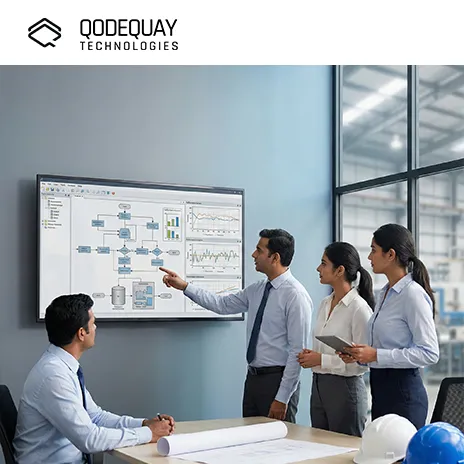
Digital twins for operations are living digital models that mirror real operational assets, processes or systems using real-time data, so you can monitor, predict and optimise performance. Unlike a 3D model or dashboard, a true twin combines real-time data integration, behaviour modelling, state awareness, historical context, simulation and decision support, turning operations from reactive into intelligent.
Digital Twins for Operations are virtual replicas of real-world assets, processes, or systems that help you monitor, predict, and optimize performance in real time. And if you are a CTO, CIO, Product Manager, Startup Founder, or Digital Leader, this is one of the most practical technologies you can invest in right now, because it turns operations from reactive into intelligent.
Operations is where strategy meets reality.
You can design a perfect process on paper, but the real world is messy:
Digital twins give you a way to see, understand, and improve that reality without guessing.
In this article, you will learn what Digital Twins for Operations are, why they matter, how they work, real-world examples, best practices, and future trends that will shape the next decade.
Digital Twins for Operations are living digital models that mirror real operational systems using real-time data.
A basic 3D model is not a digital twin.
A digital twin is different because it has:
A digital twin for operations can represent:
Digital Twins for Operations matter because they reduce downtime, improve efficiency, and make operations measurable.
As a leader, you care about:
Digital twins directly support these goals.
Instead of relying on manual reporting and delayed dashboards, you get a live operational brain.
And yes, this is a competitive advantage.
Because when two companies sell the same product, the company that runs operations better usually wins.
Digital twins improve performance by turning operational data into predictive insights and automated actions.
Traditional operations often look like this:
Digital twin operations look like this:
This reduces downtime and increases throughput.
A digital twin is different because it models behavior, not just metrics.
A dashboard answers:
A digital twin answers:
Dashboards show. Digital twins understand and predict.
Operational digital twins come in several forms depending on complexity.
These represent individual equipment.
Examples:
These represent interconnected assets.
Examples:
These represent workflows and operations.
Examples:
These represent large-scale connected systems.
Examples:
Digital twins create value when downtime is expensive and complexity is high.
A digital twin detects early vibration anomalies in a motor.
Instead of a breakdown:
This is one of the highest ROI use cases.
A building twin monitors HVAC usage.
It simulates different configurations and identifies:
This can reduce energy bills significantly, especially for large facilities.
A factory twin simulates throughput changes.
You can test:
without disrupting production.
A digital twin of a data center can optimize:
This improves uptime and reduces power consumption.
A twin can predict:
This improves customer satisfaction and cost control.
Digital twins work by combining IoT data, simulation models, and analytics.
A typical stack includes:
These collect real-time signals:
Data is transmitted through:
Data is stored and processed using:
This includes:
This is where decisions happen:
AI makes digital twins predictive and adaptive.
Without AI, a twin may only mirror data.
With AI, the twin can:
For example:
A digital twin can learn that:
AI turns the twin into a decision engine, not just a visual model.
The biggest challenges are data integration, accuracy, and change management.
If sensors are inaccurate or missing, your twin becomes unreliable.
Operational systems often include legacy equipment.
Connecting everything is harder than expected.
A twin is only useful if it reflects reality.
You must continuously validate it.
Operations teams may resist new tools.
A twin must be usable and aligned with real workflows.
A twin must solve high-value problems.
A 3D twin that looks cool but does nothing is just expensive wallpaper.
Digital twins succeed when you focus on outcomes, not visuals.
Here are best practices that work:
You measure ROI by comparing downtime, cost, and efficiency before and after deployment.
Key ROI metrics include:
Even small improvements can be huge.
Example:
If a factory reduces downtime by 5% and produces thousands of units per day, the savings can be massive.
Digital twins are a core pillar of Industry 4.0 because they connect physical operations with digital intelligence.
Industry 4.0 includes:
Digital twins unify these into one operational layer.
They become the interface between:
The future is real-time, autonomous, and connected to spatial computing.
Here are the trends you will see:
More organizations will buy modular twins instead of building from scratch.
Twins will shift from “daily updates” to continuous synchronization.
Twins will not only predict problems, they will recommend and execute optimizations.
Operators will view twin data through:
This will improve maintenance, training, and safety.
More standards will emerge so twins can integrate across vendors.
The long-term vision is not one twin per asset.
It is a connected ecosystem of twins across the entire enterprise.
Digital Twins for Operations are becoming the operational advantage of the next decade. They give you a way to see what is happening in real time, understand why it is happening, and predict what will happen next, before it becomes expensive.
For CTOs, CIOs, and digital leaders, this is not just an engineering project. It is a strategy for resilience, efficiency, and scalability.
And when you want to build digital twins that are not only technically impressive but also designed for the humans who operate them, Qodequay brings the design-first approach. At Qodequay (https://www.qodequay.com), you start with real operational needs, then use technology as the enabler to solve human problems with measurable outcomes.
A dashboard shows metrics: the temperature right now, this week's uptime, units produced. A digital twin models behaviour, so it answers why temperature is rising, what happens if you increase load, which component is likely to fail next and which maintenance schedule minimises downtime. Dashboards show; digital twins understand and predict.
Four main types. Asset twins represent individual equipment such as pumps, turbines, HVAC units and industrial robots. System twins represent interconnected assets like a substation, a manufacturing line or a water treatment facility. Process twins model workflows such as hospital patient flow or warehouse picking. Network twins cover large connected systems, including telecom, logistics and smart city infrastructure.
Predictive maintenance is one of the highest-ROI use cases: a twin detects early vibration anomalies so maintenance and spare parts are scheduled before a breakdown. Other proven cases are energy optimisation of building HVAC, production line simulation of speed, staffing and machine changes, data centre cooling and failover planning, and logistics and fleet prediction of delays, fuel and maintenance.
A typical stack has five layers: sensors and IoT devices capturing temperature, vibration, pressure, location, energy and flow; connectivity through OPC-UA, Modbus, MQTT, 5G and edge gateways; a data platform with time-series databases and streaming pipelines; a twin modelling layer of physics-based, statistical and machine learning models plus 3D visualisation; and an operations layer for alerts, dashboards, maintenance workflows and control integration.
Data integration, accuracy and change management. Inaccurate or missing sensors make the twin unreliable; legacy equipment makes integration harder than expected; models must be continuously validated against reality; operations teams may resist tools that do not fit real workflows; and the twin must solve high-value problems, because a 3D twin that looks good but does nothing is expensive wallpaper.

As the CEO and Founder of Qodequay Technologies, I bring over 20 years of expertise in design thinking, consulting, and digital transformation. Our mission is to merge cutting-edge technologies like AI, Metaverse, AR/VR/MR, and Blockchain with human-centered design, serving global enterprises across the USA, Europe, India, and Australia. I specialize in creating impactful digital solutions, mentoring emerging designers, and leveraging data science to empower underserved communities in rural India. With a credential in Human-Centered Design and extensive experience in guiding product innovation, I’m dedicated to revolutionizing the digital landscape with visionary solutions.
Follow the expert :

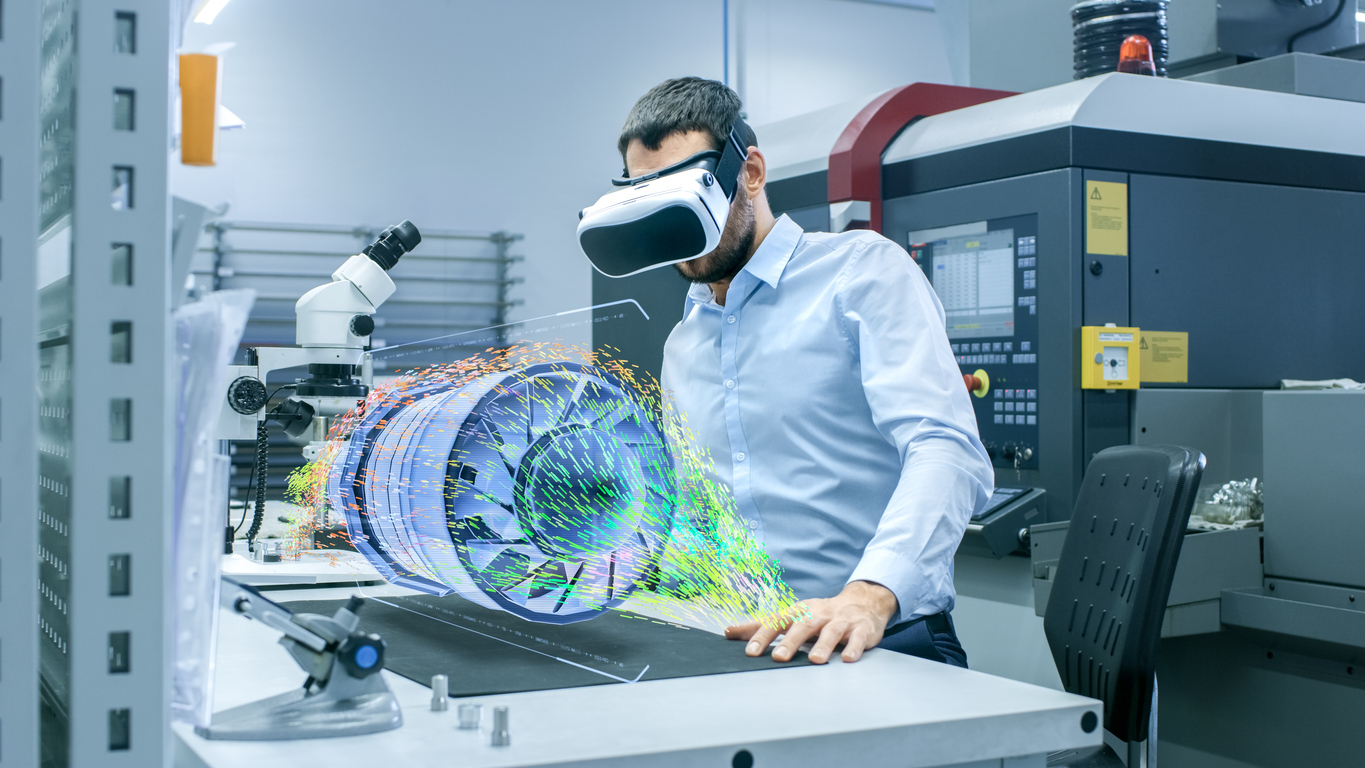
October 23, 2026
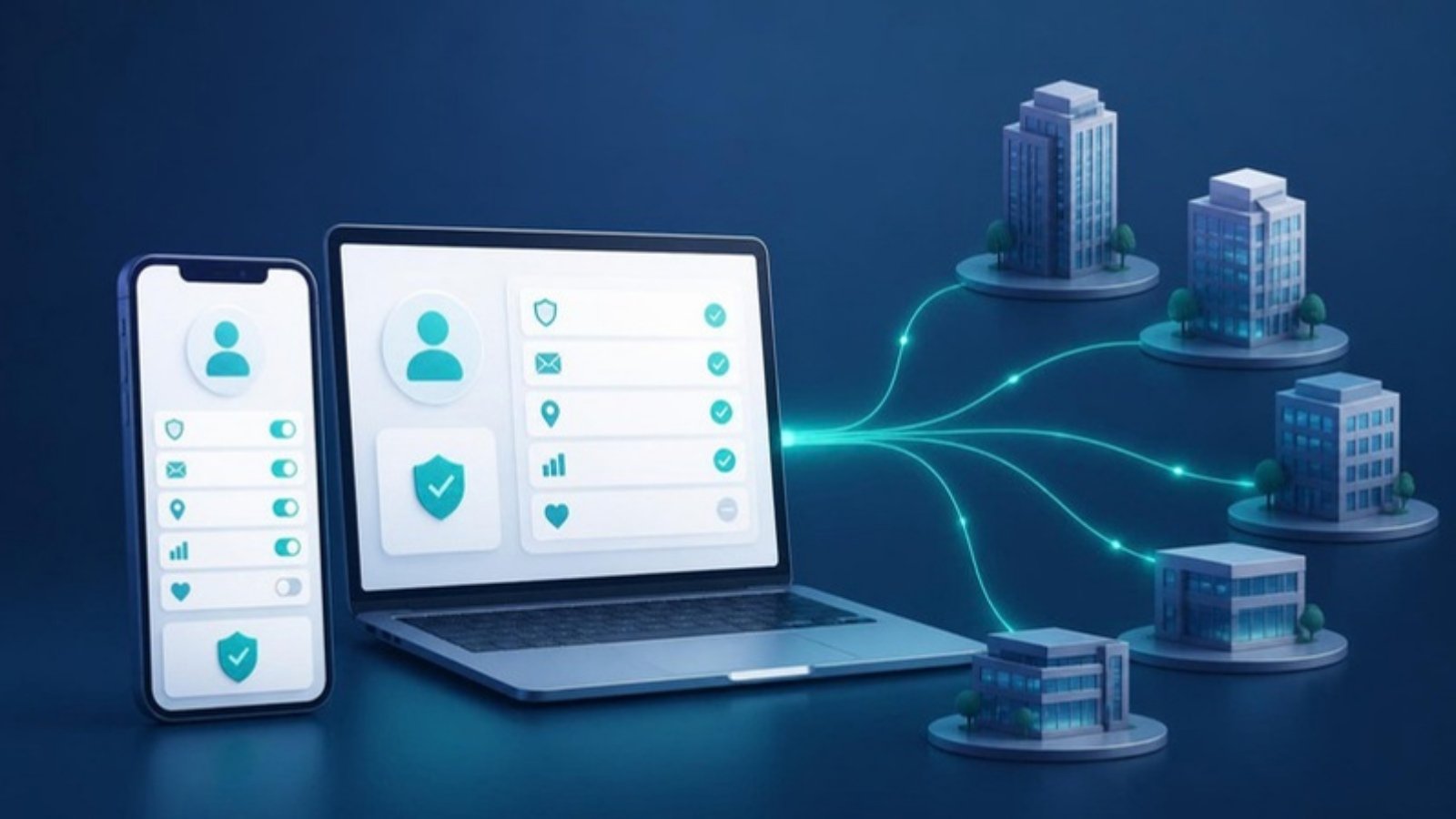
October 22, 2026
October 21, 2026
October 20, 2026

October 19, 2026
Monthly insights on AI, VR and DPDPA compliance — straight from our team to your inbox.
Free 30-minute consultation with our team — or see our products in action.