DPDPA Penalties Up to ₹250 Crore: The Real Cost of Waiting
July 2, 2026
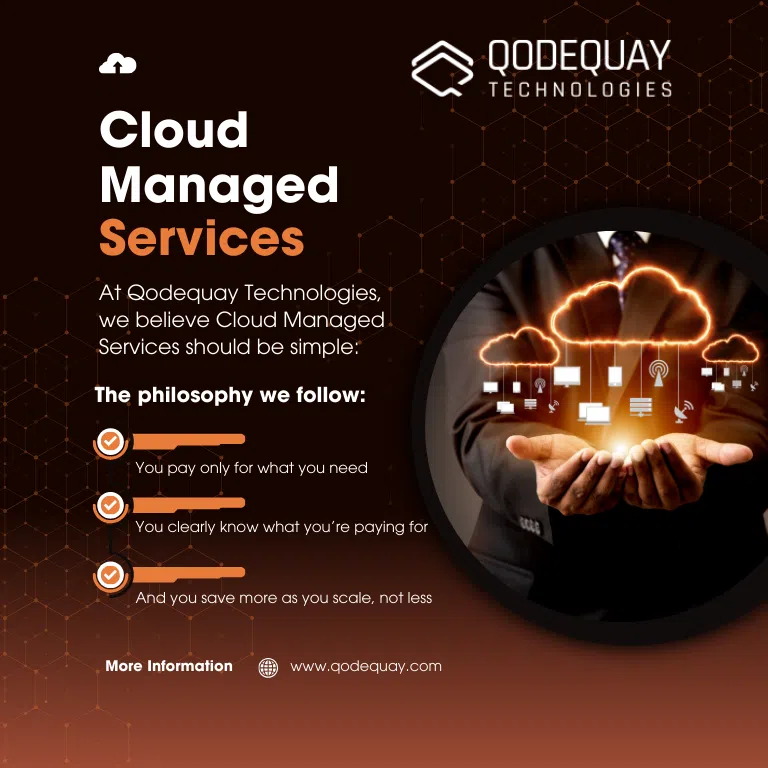
LSI terms used: managed cloud services, cloud operations, cloud cost optimization, FinOps, right-sizing, proactive monitoring, cloud governance, AWS managed services, Azure managed services, GCP managed services, cloud security, SLA, DevOps, cloud support.
Cloud Managed Services matter because your cloud is either a growth engine or a silent budget leak, and most teams are too busy shipping to babysit infrastructure.
You already know the promise of cloud: speed, scale, resilience, and global reach. But in the real world, cloud often turns into something else entirely: unpredictable bills, half-configured services, alert fatigue, and a growing fear of “the next invoice”.
This is exactly why CTOs, CIOs, Product Managers, Startup Founders, and Digital Leaders care about Cloud Managed Services.
Because cloud is not just technology. It is operations, cost discipline, governance, and decision-making under pressure.
In this article, you’ll learn what Cloud Managed Services actually include, how pricing should work (and how it often doesn’t), what makes a FinOps-led approach different, and how to choose a partner that behaves like a long-term ally, not a vendor with a quota.
Cloud Managed Services are a structured way to run, optimize, secure, and support your cloud environments without building a large internal cloud operations team.
That includes the daily reality of cloud:
The best Cloud Managed Services feel boring, in a good way. Nothing breaks. Costs stay controlled. Support is responsive. Leadership gets clarity.
The worst Cloud Managed Services feel like paying rent on confusion.
Cloud becomes expensive because scaling increases complexity, and complexity multiplies waste.
Cloud pricing is not “high” by default. It becomes high when:
A classic example is a company that starts on AWS with one small production setup. In year one, the bill is manageable. By year three, they have:
That is not a cloud problem. That is an operating model problem.
And that’s where Cloud Managed Services should step in.
Cloud Managed Services should include proactive operations, cost control, and continuous improvement, not just reactive helpdesk support.
A modern managed service model typically covers:
You get alerting, escalation, and resolution workflows so issues do not wait until business hours.
You get a process that continuously identifies waste, improves usage efficiency, and makes spending predictable.
You get baseline hardening, vulnerability management, IAM hygiene, and audit-friendly reporting.
You get right-sizing, scaling strategy, availability improvements, and smarter architecture decisions.
You get tagging standards, environment controls, resource policies, and documentation.
This is why Cloud Managed Services are not just “cloud engineers on retainer”. They are cloud operations as a product.
You need Cloud Managed Services when your cloud is business-critical and your internal team cannot sustainably run operations, security, and cost control at the same time.
Here are clear signals:
A strong managed service partner reduces key-person dependency. That alone can be worth the investment.
Yes, Cloud Managed Services should be simple, because complexity in billing and scope is usually intentional.
A healthy model looks like this:
That last point matters. Many providers quietly do the opposite: the bigger you get, the more they extract.
Cloud should reward maturity and scale. Your managed services model should too.
It looks like modular service tiers, transparent scope, and clear responsibility boundaries.
For example:
The best providers let you start lean, then expand scope as your cloud footprint grows.
That is not just fair pricing. It is also good long-term strategy.
Cloud bills are confusing because cloud pricing is granular by design, and most companies do not have a FinOps process to translate that granularity into decisions.
Cloud providers charge for:
Even worse, cloud cost is often shared across teams without ownership.
That’s why the goal is not “lower cloud cost”. The goal is controlled cloud cost.
Cloud Managed Services should make cloud cost legible.
FinOps is the discipline of managing cloud cost through shared accountability across engineering, finance, and leadership.
FinOps is not a tool. It is a practice.
A FinOps-led approach typically includes:
When Cloud Managed Services include FinOps, you stop treating cloud spend as a scary black box.
You start treating it like a controllable system.
Proactive monitoring means you detect issues before customers do, and you fix patterns, not just symptoms.
Reactive monitoring is: “An alert fired, someone restarted something, ticket closed.”
Proactive monitoring is: “Why did this happen, what trend caused it, and how do we prevent it?”
It includes:
This is the difference between “support” and “operations”.
Right-sizing reduces cost by matching resources to real usage, not fear-based provisioning.
Many environments are oversized because teams are trying to avoid risk. The result is constant waste.
Right-sizing can include:
A practical example: A staging environment running 24/7 at 30 percent CPU utilization is not “safe”. It is “expensive”.
Right-sizing is a discipline. Managed services should run it continuously, not once a year.
Fair pricing is transparent, predictable, and aligned with your outcomes, not hidden margins.
You should expect:
A clean philosophy is:
When you see a managed service provider making money mainly through complexity, you are not buying support. You are buying a trap.
It can reduce cost because some partners receive additional billing discounts that they can pass through to you.
This is common across AWS, Azure, and GCP ecosystems.
The key is trust and transparency. A good partner will:
This model can be powerful when combined with FinOps, because you get savings from both:
You evaluate them by how they behave when nothing is broken, because that’s when long-term value is created.
Here’s what to look for:
A simple rule: If they cannot explain your cloud cost in plain language, they cannot manage it.
You should expect fewer incidents, faster resolution, and measurable cost optimization within the first 60–90 days.
While exact results vary, mature organizations often achieve:
The biggest long-term gain is not just savings. It is confidence.
When leadership trusts the cloud bill, teams stop slowing down.
They help you ship faster because you stop spending roadmap time on operational chaos.
For Product Managers, cloud operations problems create:
For founders, the impact is sharper:
Cloud Managed Services create breathing room, and breathing room is where good product decisions happen.
A partner mindset means your provider optimizes for your long-term success, even when it reduces their short-term revenue.
This includes:
In other words: trust beats tactics.
You avoid them by demanding clarity in scope, billing, and responsibilities from day one.
Common traps include:
A good managed services relationship should feel like your cloud is getting calmer every month.
Not noisier.
Cloud Managed Services will become more FinOps-driven, automation-heavy, and outcome-based, because businesses will no longer tolerate unpredictable cloud economics.
Here are the trends you should expect:
More leadership teams will demand cost forecasting, anomaly alerts, and unit economics reporting.
AI-assisted operations (AIOps) will help correlate incidents, reduce noise, and suggest fixes faster.
Managed services will include more continuous compliance checks and policy-as-code.
Right-sizing, scheduling, and storage lifecycle will run as ongoing programs.
The market is moving toward transparency. Providers who rely on confusion will lose trust.
The direction is clear: cloud operations will become more like a product subscription, and less like a consulting engagement.
Cloud is supposed to make your business faster, smarter, and more resilient, not anxious about the next invoice.
When Cloud Managed Services are done right, you get something rare in technology: clarity. You know what’s running, why it’s running, what it costs, and what to do next. You also get a team that acts like a partner, not a vendor, because long-term relationships beat short-term margins.
That is exactly where design-first thinking meets technology execution. And that is why Qodequay (https://www.qodequay.com) positions cloud operations as a human problem first: aligning people, process, and pricing, then using technology as the enabler.

As the CEO and Founder of Qodequay Technologies, I bring over 20 years of expertise in design thinking, consulting, and digital transformation. Our mission is to merge cutting-edge technologies like AI, Metaverse, AR/VR/MR, and Blockchain with human-centered design, serving global enterprises across the USA, Europe, India, and Australia. I specialize in creating impactful digital solutions, mentoring emerging designers, and leveraging data science to empower underserved communities in rural India. With a credential in Human-Centered Design and extensive experience in guiding product innovation, I’m dedicated to revolutionizing the digital landscape with visionary solutions.
Follow the expert :


July 2, 2026

July 2, 2026
July 2, 2026
July 2, 2026

July 2, 2026
Monthly insights on AI, VR and DPDPA compliance — straight from our team to your inbox.
Free 30-minute consultation with our team — or see our products in action.