
Shashikant Kalsha
As the CEO and Founder of Qodequay Technologies, I bring over 20 years of expertise in design thinking, consulting, and digital transformation. Our mission is to merge cutting-edge technologies like AI, Metaverse, AR/VR/MR, and Blockchain with human-centered design, serving global enterprises across the USA, Europe, India, and Australia. I specialize in creating impactful digital solutions, mentoring emerging designers, and leveraging data science to empower underserved communities in rural India. With a credential in Human-Centered Design and extensive experience in guiding product innovation, I’m dedicated to revolutionizing the digital landscape with visionary solutions.

Our LATEST POSTS FROM Shashikant Kalsha
Why VR Classrooms Are a Game Changer for Schools
Posted on February 10, 2026 by Shashikant Kalsha
Why are VR classrooms a game changer for schools? Quick answer VR classrooms are a game changer because they turn abstract learning into direct experience, which improves engagement and retention. Students walk inside the human body, stand in a reconstructed ancient city or manipulate physical forces instead of reading about them. The strongest gains are […]
Beyond Books: Learning Comes Alive with Virtual Reality
Posted on by Shashikant Kalsha
What is virtual reality learning, and why does it make learning come alive? Quick answer Virtual reality learning is an educational approach where learners use VR headsets to enter immersive environments built for learning and skill practice: virtual classrooms, science labs, simulations, historical reconstructions and role-play scenarios. It makes learning come alive by creating presence, […]
Experience Education the Way Students Remember It
Posted on by Shashikant Kalsha
Why do students remember immersive learning more than lectures? Quick answer Students remember experiences because the brain stores action, emotion and context more deeply than plain information. Immersive learning, delivered through VR, AR, simulations and digital labs, makes learners active participants who make decisions, practise skills and receive feedback, so they remember outcomes and cause-and-effect […]
A Huge Green Flag for the Future of Learning
Posted on by Shashikant Kalsha
Why is immersive learning a green flag for the future of learning? Quick answer Because it shifts learning from passive content consumption to active experience and skill-building, which is how humans naturally learn. Immersive learning combines action, emotion, context, feedback and repetition through VR classrooms, AR overlays, simulations, gamification and AI tutors, closing the gap […]
How VR Is Revolutionizing Risk Management Education
Posted on by Shashikant Kalsha
How is VR revolutionising risk management education? Quick answer By putting learners inside realistic virtual scenarios where they must identify, assess and respond to risk under pressure, safely. VR closes the gap between knowing a procedure and performing it in a crisis, builds experience memory, creates auditable training records for compliance, and delivers measurable outcomes […]
Learning Risk Without Real-World Consequences
Posted on by Shashikant Kalsha
What does it mean to learn risk without real-world consequences? Quick answer It means practising high-stakes scenarios in a virtual environment where mistakes teach you but harm no one. VR risk management training reverses the traditional order: you experience the chemical spill, fire evacuation or cyber breach first, safely, make decisions, see outcomes and repeat […]
Why Simulation-Based Learning Matters in Risk Education
Posted on by Shashikant Kalsha
Why does simulation-based learning matter in risk education? Quick answer Because risk is a performance skill, not a memorisation skill. Simulation-based learning lets people practise hazards, cyber threats, compliance dilemmas and crisis response in realistic conditions, building practice memory the brain reuses during real incidents. It produces behaviour data rather than completion metrics, and VR […]
Training Future Risk Leaders Through Virtual Reality
Posted on by Shashikant Kalsha
How does virtual reality train future risk leaders? Quick answer By placing emerging leaders inside realistic crisis scenarios where they must lead, decide and communicate as incident commander, safety lead, cybersecurity lead or operations manager. VR gives them experience before experience: rehearsing a cyber breach, safety incident or supply chain disruption builds situational awareness, decision-making […]
How VR Improves Risk Awareness and Decision-Making
Posted on by Shashikant Kalsha
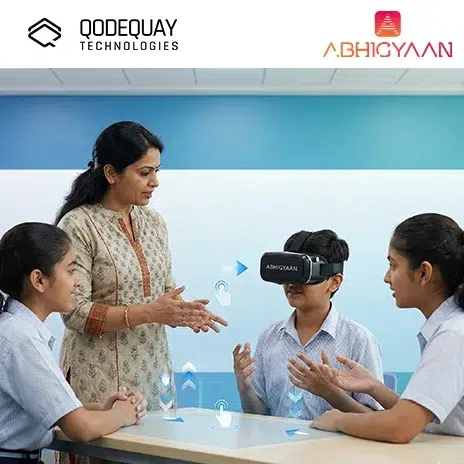
How does VR improve risk awareness and decision-making? Quick answer By turning risk education into a lived experience. VR trains attention inside realistic environments, so people learn to spot early warning signs such as blocked exits, missing PPE or a suspicious email, and it builds behavioural muscle memory through repeated, consequence-free practice, so they decide […]
Why Traditional Risk Training Is No Longer Enough
Posted on by Shashikant Kalsha
Why is traditional risk training no longer enough? Quick answer Because modern threats evolve faster than annual training cycles and exploit human behaviour under pressure, not policy knowledge. Classroom and slide-based programmes prove attendance for audits, but employees who score 90% on a module still click realistic phishing emails or skip safety steps during a […]
The Future of Education Is Immersive and Interactive
Posted on by Shashikant Kalsha
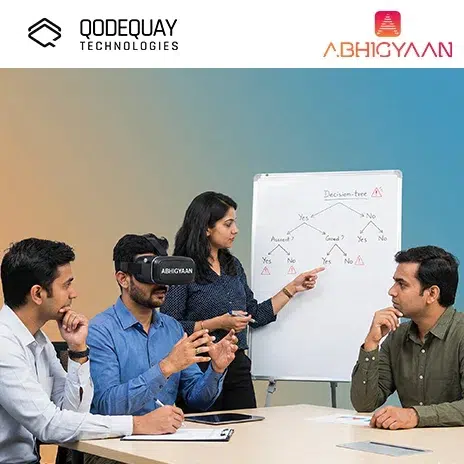
Why is the future of education immersive and interactive? Quick answer Because the world no longer rewards memorisation; it rewards capability. Immersive education places learners inside realistic environments using VR, AR, mixed reality, simulations, AI tutors and gamification, so they learn by doing rather than only reading or watching. That improves retention, engagement, skill mastery […]
When Learning Becomes an Experience, Not a Lesson
Posted on by Shashikant Kalsha
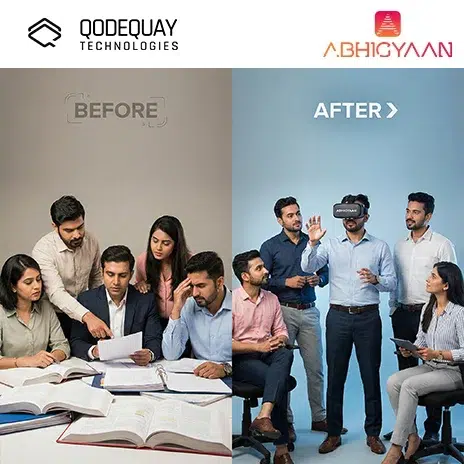
What does it mean when learning becomes an experience, not a lesson? Quick answer It means you stop delivering information and start designing transformation through interaction, context and action. A lesson is one-way and assumes people absorb what is presented clearly. An experience is two-way: it makes people think, decide, react, fail safely and try […]
Future VR Skills: What You Need to Learn Now to Stay Relevant in the Next Decade
Posted on February 9, 2026 by Shashikant Kalsha
What VR skills do you need to learn now to stay relevant? Quick answer Spatial UX design, real-time development in Unity or Unreal Engine, optimised 3D asset creation, performance optimisation, AI integration, instructional design and enterprise deployment. VR is a stack rather than a single skill: the most valuable professionals combine design thinking, 3D production, […]
Evolution of VR: How Virtual Reality Went from Sci-Fi to a Business Tool
Posted on by Shashikant Kalsha
How did VR evolve from science fiction into a business tool? Quick answer VR began with 1950s simulation experiments such as the Sensorama and Ivan Sutherland’s 1960s head-mounted display, stalled through the 1990s on cost, latency and weak content, then returned in the 2010s when smartphone displays, cheap sensors and gaming GPUs made standalone headsets […]
VR Design Ethics: How You Build Immersive Experiences Without Breaking Trust
Posted on by Shashikant Kalsha
What is VR design ethics and why does it matter more than ethics in ordinary apps? Quick answer VR design ethics is the practice of building immersive experiences that protect privacy, autonomy, safety and human dignity. It matters more than ethics in ordinary apps because immersion increases vulnerability and influence: you cannot scroll away, your […]
VR Content Creation: How You Build Immersive Experiences That Actually Work
Posted on by Shashikant Kalsha
How is VR content created and what makes it work for business? Quick answer VR content creation is the process of designing and building interactive 3D experiences for a headset, typically through six phases: discovery, UX and interaction design, 3D asset production, development in Unity or Unreal Engine, headset testing, and deployment. It works for […]
Getting Started with VR: A Practical Guide for Digital Leaders and Businesses
Posted on by Shashikant Kalsha
How do you get started with VR in a business? Quick answer Getting started with VR means picking one high-impact use case, choosing a standalone headset such as Meta Quest 3, and running a small pilot with 10–30 participants against defined KPIs before scaling. Training, onboarding, product demos and virtual tours are the easiest first […]
VR Customer Experience: How Virtual Reality Transforms Engagement, Trust, and Loyalty
Posted on by Shashikant Kalsha
How does VR improve customer experience, engagement and conversion? Quick answer VR customer experience uses virtual reality to let customers explore, understand and engage with a product or service through immersive interaction instead of passive browsing. It improves engagement by turning observers into participants and lifts conversion by reducing uncertainty, which is why it works […]
Future VR Trends: What’s Next for Virtual Reality in Business and Technology
Posted on by Shashikant Kalsha
What are the biggest future VR trends for business? Quick answer The biggest future VR trends are mixed reality convergence, AI-driven experiences, lighter and more comfortable headsets, wider enterprise adoption and spatial computing ecosystems. Together they are moving VR from pilots and prototypes to measurable operational value in training, safety, design reviews, remote collaboration and […]
The Role of Virtual Reality in Remote Collaboration
Posted on by Shashikant Kalsha
What role does virtual reality play in remote collaboration? Quick answer Virtual reality gives distributed teams a shared immersive workspace where they meet as avatars, talk through spatial audio and work on the same whiteboards, 3D models and data together, as if co-located. It restores the presence and shared context that video calls lose, so […]