
Shashikant Kalsha
As the CEO and Founder of Qodequay Technologies, I bring over 20 years of expertise in design thinking, consulting, and digital transformation. Our mission is to merge cutting-edge technologies like AI, Metaverse, AR/VR/MR, and Blockchain with human-centered design, serving global enterprises across the USA, Europe, India, and Australia. I specialize in creating impactful digital solutions, mentoring emerging designers, and leveraging data science to empower underserved communities in rural India. With a credential in Human-Centered Design and extensive experience in guiding product innovation, I’m dedicated to revolutionizing the digital landscape with visionary solutions.

Our LATEST POSTS FROM Shashikant Kalsha
Multi-Cloud FinOps: Strategies to Optimize Cloud Spend in 2026
Posted on February 12, 2026 by Shashikant Kalsha
What is managed cloud computing and how does it control cloud spend? Quick answer Managed cloud computing is a service model where you outsource cloud operations, monitoring, optimisation and security to experts while keeping ownership of your cloud strategy. It covers infrastructure management, 24/7 monitoring and incident response, security hardening and compliance, FinOps cost optimisation, […]
Zero Trust 2.0: Implementing Identity-First Security Architecture
Posted on by Shashikant Kalsha
What is identity-first security and how does it relate to zero trust? Quick answer Identity-first security treats identity, not the network, as the primary control layer for protecting systems, applications and data. Every request is checked for who is asking, what they may do, whether the device is trusted and whether the context is risky. […]
Quantum-Safe Cryptography: Protecting Your Data Against 2026 Threats
Posted on by Shashikant Kalsha
What should a modern cybersecurity strategy include? Quick answer Prevention, detection, response and recovery, because attackers will eventually get in. A modern strategy covers identity and access management, network, application, cloud and endpoint security, data protection, security monitoring (SOC), incident response and recovery, employee awareness training and vendor risk management, organised under a framework such […]
Domain-Specific LLMs: Why Niche AI is Outperforming General Models
Posted on by Shashikant Kalsha
What are domain-specific LLMs and when should you use one? Quick answer Domain-specific LLMs are large language models trained or adapted to understand one industry, business function or knowledge area, such as banking compliance or manufacturing SOPs. Use one when accuracy, compliance or domain language is critical and your business cannot tolerate “almost correct”. Most […]
Agentic AI: The Shift from Assistants to Autonomous Teammates
Posted on by Shashikant Kalsha
How do you get real ROI from AI and machine learning in your business? Quick answer Start with a measurable business problem, not a model. AI and machine learning let software learn patterns from data and make predictions or decisions without being explicitly programmed for every rule. The fastest ROI comes from predictive analytics, recommendation […]
Digital Twins & AR in Industry: The Future of Smarter Operations
Posted on February 11, 2026 by Shashikant Kalsha
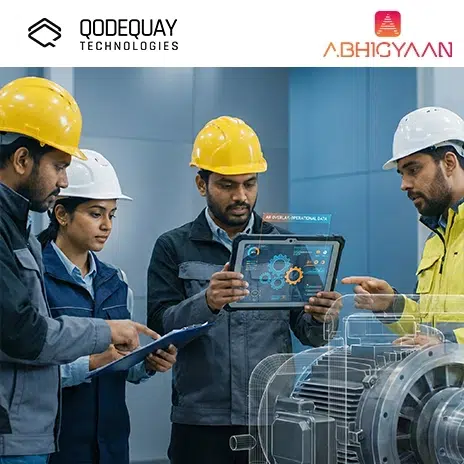
How do digital twins and AR work together in industry? Quick answer Digital twins provide the intelligence and AR provides the interface. A digital twin is a virtual replica of an asset, system or process that updates with real-time IoT data and supports what-if simulation; AR overlays that data and step-by-step guidance on the physical […]
IoT-Based Predictive Excellence: How You Prevent Failures Before They Happen
Posted on by Shashikant Kalsha
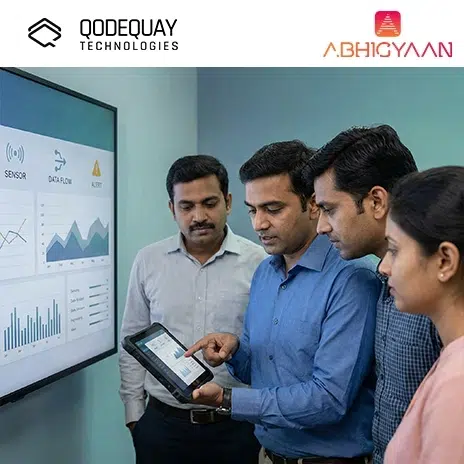
How does IoT predict equipment failures before they happen? Quick answer IoT predicts failures by capturing sensor data (vibration, temperature, pressure, current, acoustic signals), sending it to edge or cloud systems, detecting abnormal patterns, and using machine-learning models to forecast the likely failure type and time-to-failure, then triggering prioritised alerts with a recommended fix. This […]
3D City Twins & Geospatial Mapping
Posted on by Shashikant Kalsha
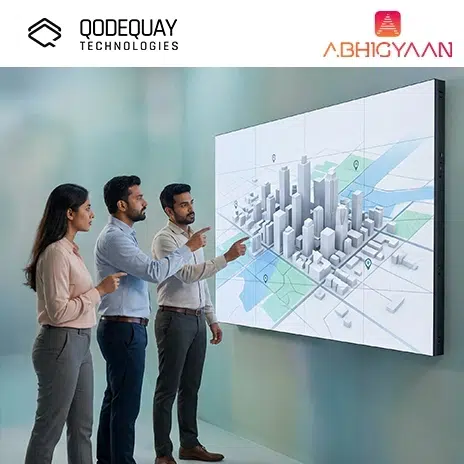
What is a 3D city twin and how is it built? Quick answer A 3D city twin is a digital, spatially accurate model of a city that can simulate and monitor real-world conditions, built on geospatial mapping from GIS, LiDAR, drone imagery, BIM and IoT sensors. It is built in five phases: establish the GIS […]
Digital Twin as a Service (DTaaS)
Posted on by Shashikant Kalsha
What is Digital Twin as a Service (DTaaS)? Quick answer Digital Twin as a Service (DTaaS) is a cloud-based subscription model that provides the tools, infrastructure and integrations needed to build and run digital twins at scale, instead of building the whole stack in-house. It bundles twin modelling, data ingestion, visualisation, simulation, analytics, security and […]
Real-Time Operational Twins
Posted on by Shashikant Kalsha
What are real-time operational twins? Quick answer Real-time operational twins are digital twins that update continuously using live data from assets, systems and processes, so they show what is happening right now: machine status, sensor readings, production throughput, energy consumption, environmental conditions and maintenance indicators. Unlike design or planning twins, they are built for daily […]
Smart Building & Facility Twins
Posted on by Shashikant Kalsha
What are smart building and facility twins? Quick answer Smart building and facility twins are digital replicas of buildings that update in real time using IoT, automation and facility data. They model the physical layout (floors, zones, rooms, assets) and operational systems (HVAC, lighting, elevators, security, energy, water) so you can monitor, simulate and optimise […]
Custom Digital Twin Engineering
Posted on by Shashikant Kalsha
What is custom digital twin engineering? Quick answer Custom digital twin engineering is the process of designing and building a digital twin tailored to your specific assets, workflows and business goals, covering data engineering, system integration, modelling and simulation, 3D visualisation where needed, analytics and AI, automation and governance. It does not mean reinventing everything; […]

Predictive Maintenance Systems
Posted on by Shashikant Kalsha
What are predictive maintenance systems? Quick answer Predictive maintenance systems are platforms that monitor asset health and predict failures using real-time sensor data, analytics and machine learning, so maintenance happens when risk is detected rather than on a fixed schedule or after a breakdown. They detect signals such as unusual vibration, rising temperature, pressure instability […]
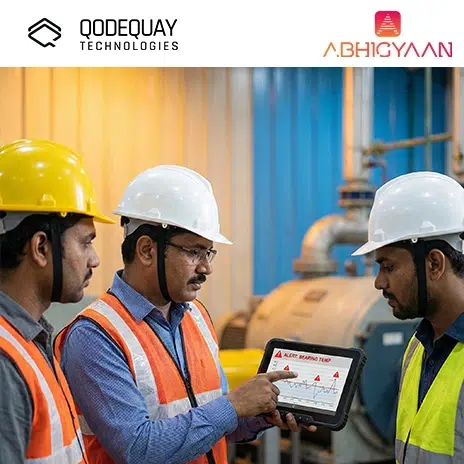
Geospatial & Infrastructure Synergy
Posted on by Shashikant Kalsha
What is geospatial and infrastructure synergy? Quick answer Geospatial and infrastructure synergy is the integration of location intelligence (GIS, satellite and drone imagery, 3D models and digital twins) with infrastructure asset data, IoT sensors and spatial analytics to improve planning, operations and decision-making. It gives a real-time, visual and operational view of distributed assets, so […]
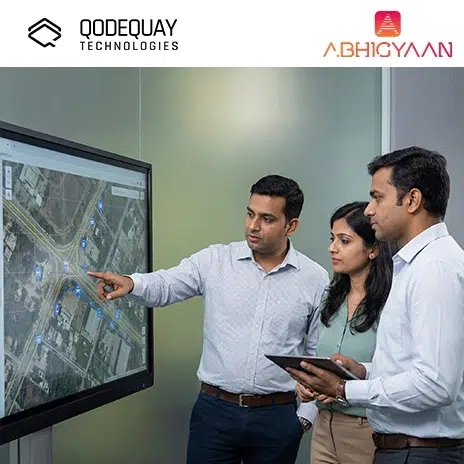
Industrial Digital Modeling & IoT
Posted on by Shashikant Kalsha
What is industrial digital modeling and how does IoT bring it to life? Quick answer Industrial digital modeling is the process of creating a structured digital representation of industrial assets, processes and systems: machines and production lines, plant layouts, asset hierarchies (plant, line, machine, component), workflows and system relationships. IoT supplies the live data (temperature, […]
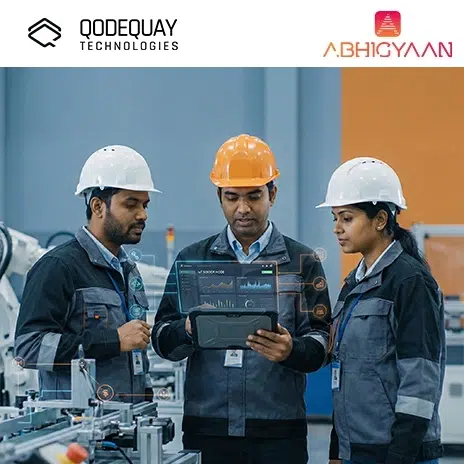
Asset Lifecycle Modeling
Posted on by Shashikant Kalsha
What is asset lifecycle modeling and why does it matter? Quick answer Asset lifecycle modeling is a structured method of representing an asset’s full life journey, including cost, performance, risk and maintenance behaviour over time, across six phases: plan, acquire, deploy, operate, maintain and retire. It matters because it connects operational reality with financial planning, […]
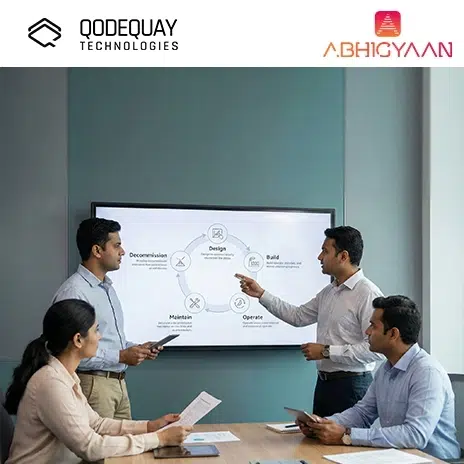
Visualizing Performance with Simulations
Posted on by Shashikant Kalsha
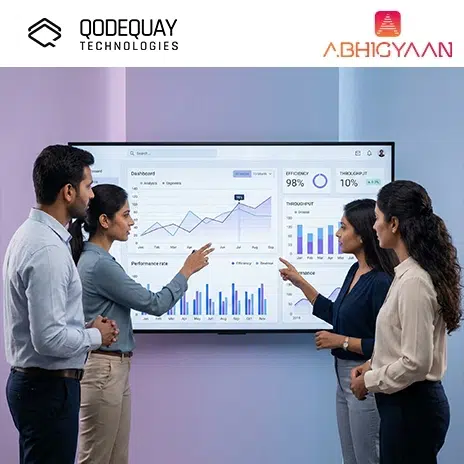
What does visualizing performance with simulations mean? Quick answer Visualizing performance with simulations means using simulation models and visual outputs to understand how a system behaves under different conditions, so decisions can be tested safely before they become expensive mistakes. Instead of relying on spreadsheets, static dashboards or gut instinct, teams model system behaviour over […]
Utility and Infrastructure Resilience
Posted on by Shashikant Kalsha
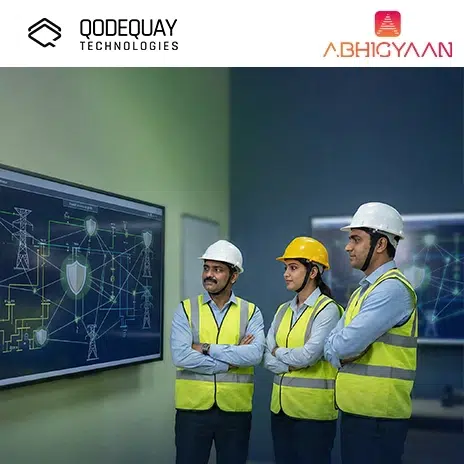
What does utility and infrastructure resilience mean? Quick answer Utility and infrastructure resilience is the ability of essential systems such as power, water, transport and telecom to anticipate disruptions, absorb shocks, recover quickly and adapt over time. It differs from reliability, which focuses on avoiding failures: resilience assumes failures and disruptions will happen and aims […]
Live Data & AR Synergy
Posted on by Shashikant Kalsha
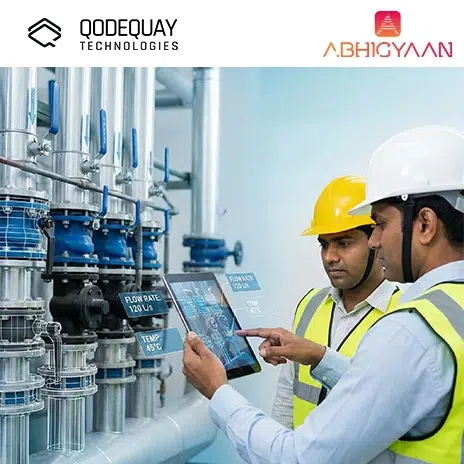
What is live data and AR synergy? Quick answer Live data and AR synergy means overlaying real-time operational data, such as machine status, sensor values, alarms and maintenance history, onto physical assets through an AR interface, so field teams see the right information at the exact moment they need it. It matters because it turns […]
Why Custom 3D Asset Modeling Drives Predictive Analytics
Posted on by Shashikant Kalsha
What is custom 3D asset modeling and why does it matter? Quick answer Custom 3D asset modeling is the creation of unique 3D objects, environments or characters tailored to your product, brand and technical requirements, rather than stock geometry. It matters because 3D assets are now core infrastructure for AR product experiences, VR training, digital […]